Myths and Misconceptions About Clear Aligners: What Patients and Dentists Get Wrong
Twelve common misconceptions about clear aligners debunked one by one — for patients (pain, effectiveness, price) and for dentists (complex cases, profitability, training). With the facts, the numbers, and answers ready for the consultation room.
Clear aligners have existed for over 25 years, but the misinformation surrounding them has barely moved since their early days. Some myths date back to the first generation of products, which really were limited on certain points back in 2000. Others never had any basis and simply spread by word of mouth. The problem: these beliefs are costly on both sides of the chair. A patient who wrongly believes aligners won't work for their case misses out on a comfortable, invisible treatment. A dentist who wrongly believes aligners only cover a handful of simple cases loses patients — and revenue — to better-informed colleagues.
This guide debunks twelve misconceptions: six that hold patients back, and six that hold dentists back themselves. Each myth is checked against current clinical facts, not the facts of 2005.
Why these myths still persist in 2026
Three reasons explain the longevity of these beliefs. First, the experience of relatives who wore braces fifteen or twenty years ago still shapes expectations — without distinguishing between fixed orthodontics and aligners. Second, early-generation aligners (2000s-2010s) really did have genuine biomechanical limitations, now largely surpassed by 3D simulation and precision attachments. Finally, aggressive marketing from certain "mail-order" aligner brands, without dental supervision, tarnished the reputation of the whole technique when the actual problem was the protocol, not the material.
The 6 myths that hold patients back
| Myth | Reality |
|---|---|
| Aligners hurt as much as braces | The pressure applied is lighter and more evenly distributed than with metal braces. Discomfort is limited to mild tension for the first 1-2 days of each new tray, without the mouth injuries caused by brackets and wires. |
| They're less effective than braces | For mild to moderate cases — the majority of adult cosmetic requests — effectiveness is equivalent. Modern aligners also handle rotations, extrusions, and space closure thanks to attachments, which wasn't the case fifteen years ago. |
| You have to remove them to eat, so why bother wearing them much | Removal at mealtimes is exactly what makes treatment comfortable and hygienic — zero dietary restrictions, unlike braces. The 20-22 hour daily rule leaves plenty of time to eat normally. |
| They inevitably cost a fortune | Price varies with case complexity, not with the technique itself. A simple case treated with locally manufactured aligners often costs less than a classic braces treatment of equivalent duration. |
| They're just as visible as braces | Modern optical-grade material (0.7 mm, BPA-free) is nearly invisible at conversational distance. Attachments — small tooth-colored bumps bonded to certain teeth — are visible up close but rarely noticed day to day. |
| Teeth shift back anyway once treatment ends | Relapse exists for every orthodontic technique without post-treatment retention, braces included. Regular wear of a retainer (fixed or removable) prevents this movement regardless of the method originally used. |
The 6 myths that hold dentists back themselves
Some misconceptions don't come from patients but from practitioners, often trained on what aligners could do a decade ago. They limit acceptance of cases that would be perfectly treatable today.
| Myth | Reality |
|---|---|
| Aligners only treat simple cosmetic cases | With optimized attachments, planned IPR, and refinements, today's aligners handle significant rotations, extrusions, complex space closures, and certain Class II/III malocclusions. The real limits concern severe skeletal cases — identical for any non-surgical orthodontics. |
| No need for attachments, they complicate the protocol | Attachments are precisely what took aligners from "limited cosmetic solution" to "complete biomechanical system" between 2010 and today. Skipping them for simplicity means giving up most of the controlled movements now possible. |
| Patients never wear them long enough for it to work | Real-world compliance depends heavily on how thoroughly it's explained during consultation. A patient informed of the direct link between wear time and total treatment duration adheres noticeably better than one who discovers the constraint after the fact. |
| The margin is too thin compared to braces | The calculation should include total clinical time, not just kit price. Fewer adjustment visits, no emergency wire breakages, and a digital workflow that reduces chair time significantly change the real hourly profitability. |
| You need months of training before you can start | A proper certification (intraoral scanner, 3D simulation, treatment planning) is typically completed in one intensive training session, followed by hands-on support on the first cases — not a months-long curriculum. |
| Remote monitoring makes clinical control impossible | A proper protocol never replaces in-office check-up visits — it complements them. Digital monitoring (progress photos, non-wear alerts) actually gives visibility that classic fixed orthodontics doesn't offer between appointments. |
How to address these objections in consultation
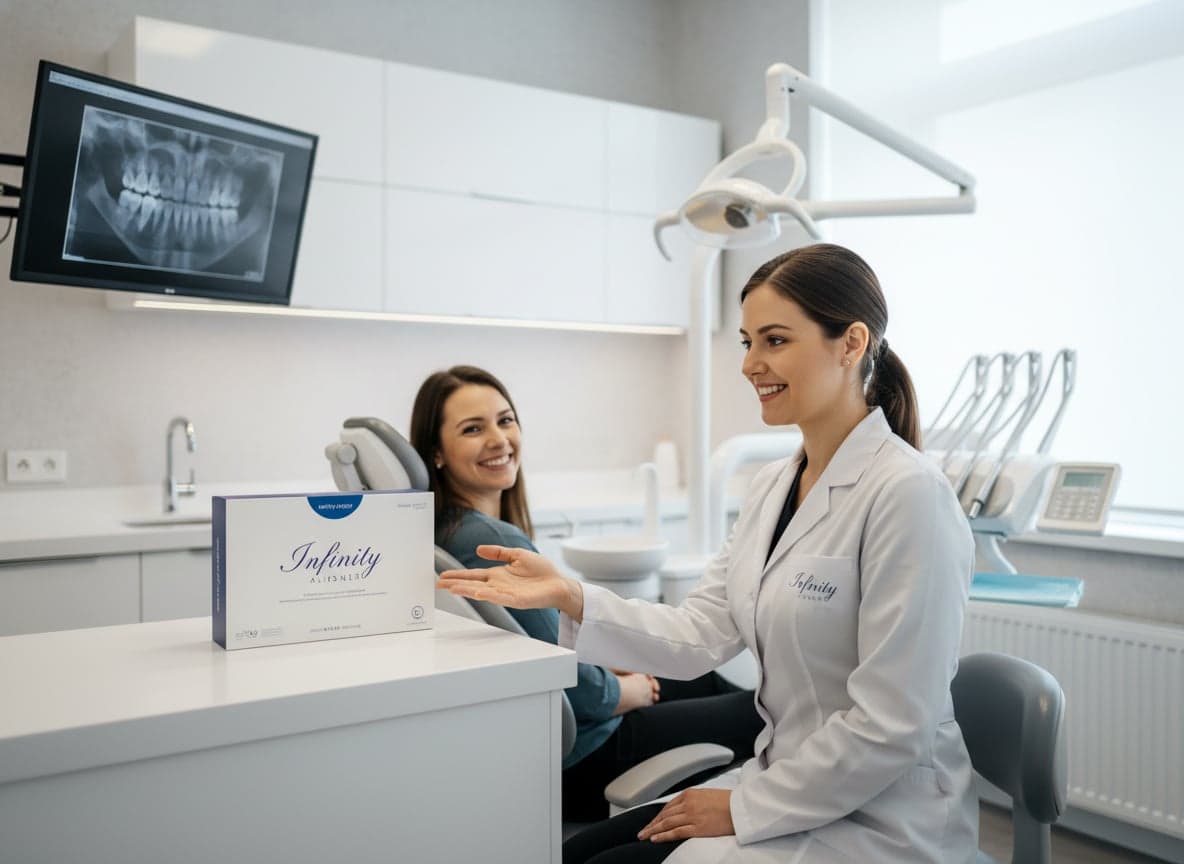
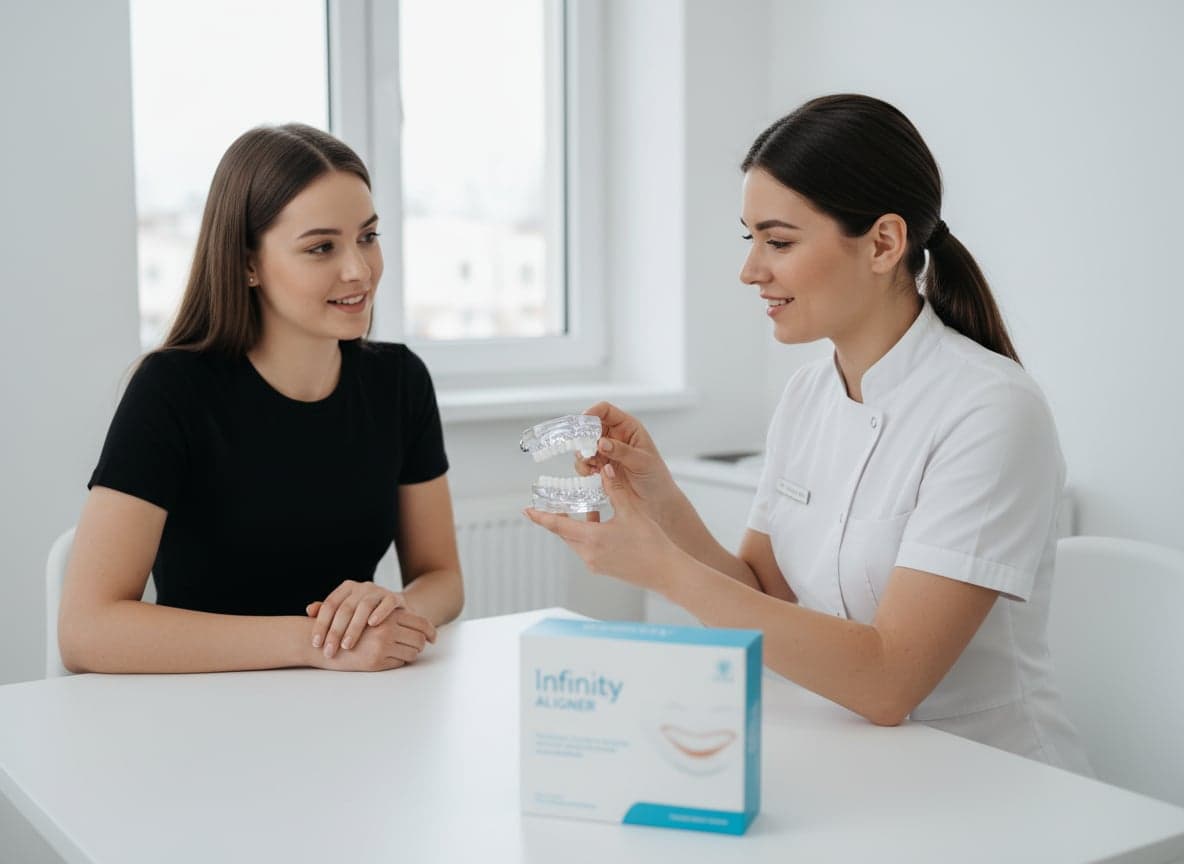
Facing a patient hesitant because of a myth, the best response isn't to contradict them head-on but to reframe: "That was true fifteen years ago — here's what has changed." This approach avoids questioning what the patient believes they know while updating the information.
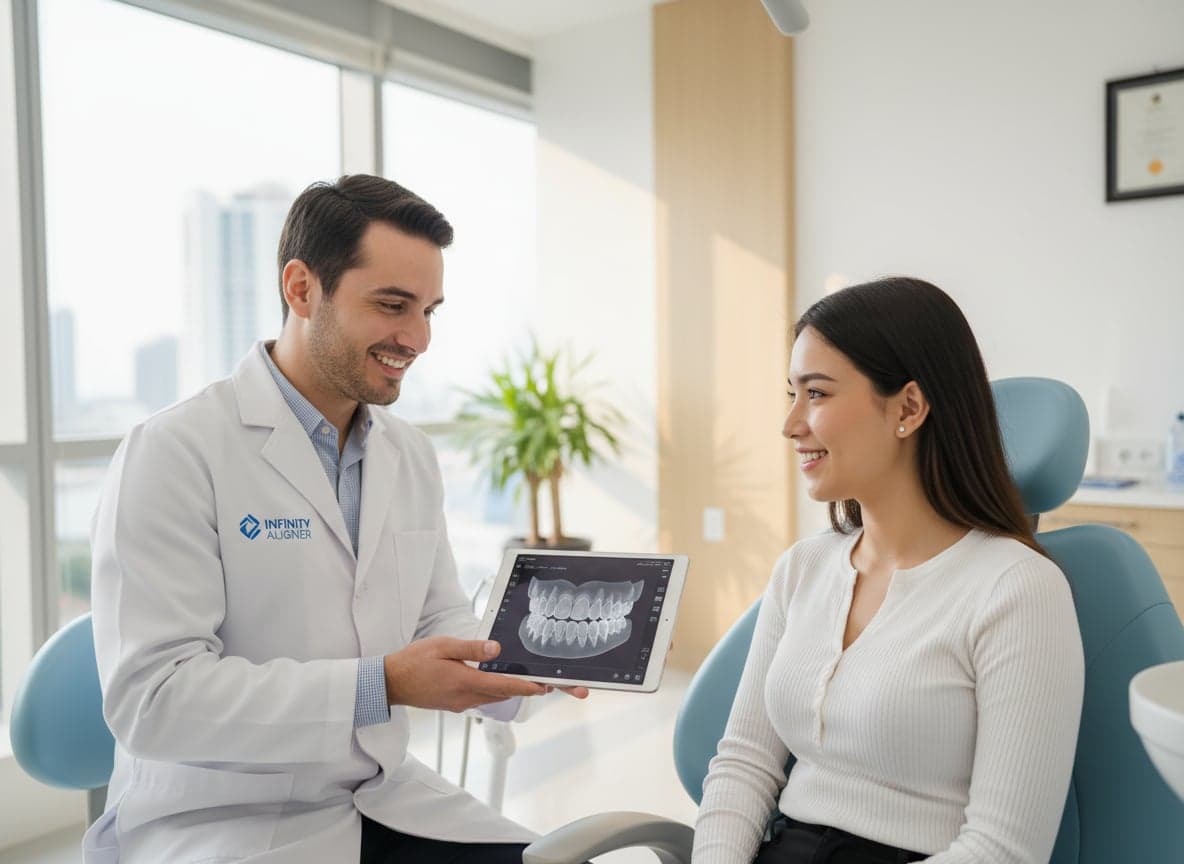
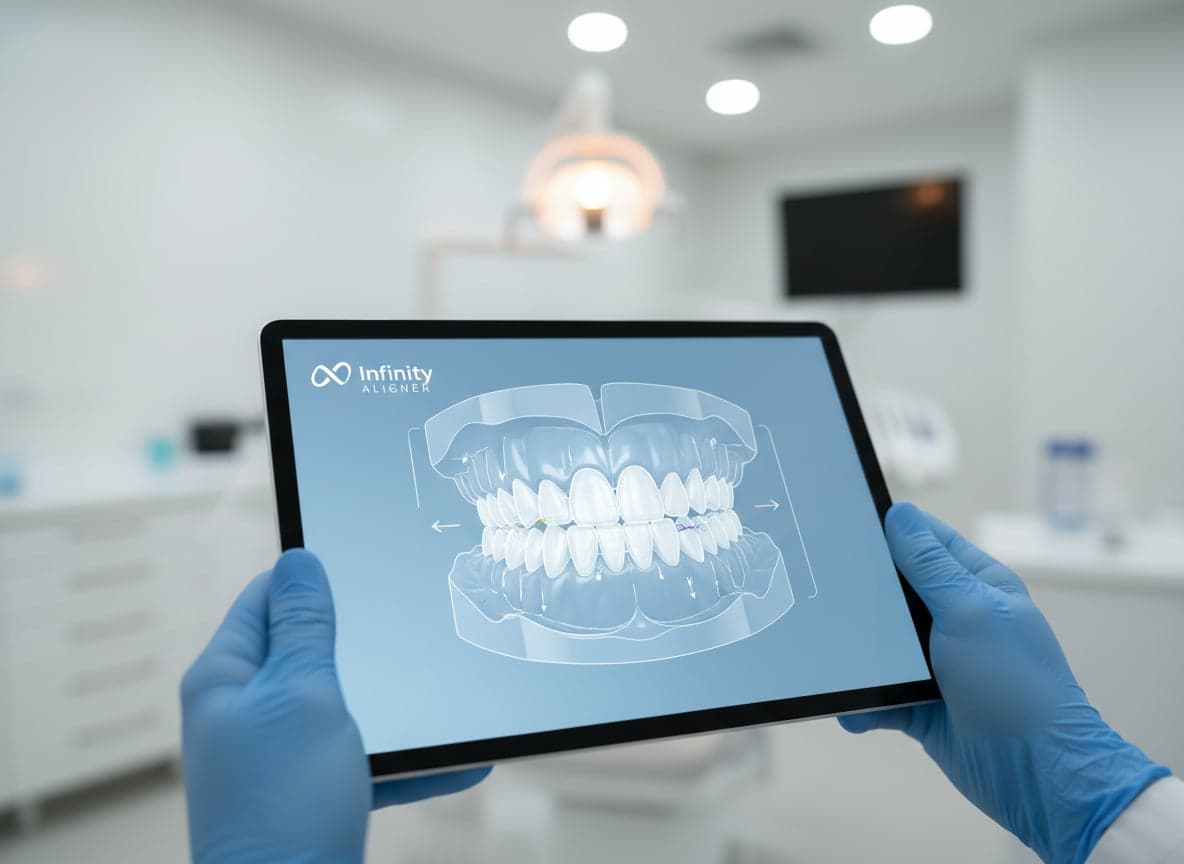
- Show the 3D before/after simulation from the first consultation — a visual myth is debunked with an image, not with explanations
- Present a similar case already treated with attachments to illustrate real biomechanical capability
- Explain the 22-hour rule with concrete daily-life examples rather than as an abstract constraint
- Detail exactly what's included in the quoted price to defuse the hidden-cost myth
Conclusion
Most barriers to clear aligner adoption aren't real limitations of the technique but outdated information, on both the patient and practitioner side. A dentist up to date on current aligner capabilities — and able to demonstrate it simply during consultation — converts more hesitant cases and expands their bracket-free treatment range. Infinity Aligner supports its certified practitioners with the simulation tools and clinical backing needed to answer these objections with evidence, not just arguments.
Infinity Aligner
Clinical & editorial team
More articles
How to Choose Clear Aligners in Tunisia
Clear Aligners vs Braces: Complete Comparison

How Much Do Clear Aligners Cost in Tunisia?
How Long Does Clear Aligner Treatment Take?
How to Clean and Care for Your Clear Aligners Daily
Clear Aligners for Teenagers: What Parents Need to Know
Gap Teeth & Diastema: Can Clear Aligners Fix Them?
Can You Play Sports with Clear Aligners?

3D Smile Simulation: How It Works and What to Expect

Orthodontic Relapse: Why Teeth Move After Treatment
Intraoral Scanner vs Traditional Impressions: What's the Difference?

Clear Aligners for Adults: Is It Ever Too Late?
Wisdom Teeth and Clear Aligners: Are They Compatible?

Clear Aligners: A Versatile Therapeutic Approach in Orthodontics

Orthodontics and Periodontal Health: What Every Patient Needs to Know
The Technology Behind Clear Aligners: From Design to Tray

How to Prepare for Your Orthodontic Consultation: 10 Questions to Ask
Bruxism and Clear Aligners: Can You Correct and Protect at the Same Time?

Class II Malocclusion and Clear Aligners: What Treatment Options Exist?
Clear Aligners and Dental Implants: Protocol, Timing and Clinical Cases
Digital Workflow and Aligner Biomechanics: The Advanced Practitioner Protocol
The Limits of Clear Aligners: Identifying Complex Cases Beyond Their Reach
Aligner Manufacturing: Thermoforming, 3D Printing and Polymer Science
Invisible Orthodontics in 2030: Predictive AI, Direct Printing and Active Materials
Smile Without Borders: The Price of Aligners Between Tunisia, Europe and Canada
Attachments in Invisible Orthodontics: The Silent Levers of Biomechanics

The Smile Beyond the Mirror: The Profound Impact of Dental Alignment on Psychological Well-being
Tunisia: The New Eldorado of Digital Dentistry and Medical Tourism
Post-Orthodontic Retention: The Forgotten Step That Decides Everything
What You Can (and Cannot) Eat With Clear Aligners
Teeth Whitening and Clear Aligners: Can You Treat and Whiten at the Same Time?
TMJ and Clear Aligners: How Invisible Orthodontics Acts on Jaw Pain
The Different Types of Dental Retainer: A Complete Guide After Orthodontic Treatment
The hidden dangers of metal braces: what patients need to know
Root resorption: the silent risk of poorly managed orthodontic treatments
Orthodontics and cavities: how metal braces compromise dental hygiene
Orthodontic relapse: why teeth return to their original position
Braces and chronic pain: the underestimated impact on daily quality of life
Intraoral scanner vs conventional impressions: dimensional analysis and clinical implications
CAD/CAM digital workflow in orthodontics: from intraoral scanning to aligner fabrication
Deformation, shrinkage and cumulative errors: why the conventional impression chain compromises aligner precision
Intraoral Scanners 2025: Complete Technical and Metrological Comparison
Why Choose Infinity Aligner? The Complete Guide for Dental Practitioners
Composite Selection for Aligner Attachments: Mechanical Analysis and Clinical Protocol
TMJ and Malocclusion: Differential Diagnosis and Clinical Approach for the Practitioner
Travelling with Clear Aligners: The Complete Guide for Stress-Free Trips
The First Month with Aligners: What to Expect Week by Week
Pre-Prosthetic Orthodontics: Preparing the Site Before Implants or Veneers
How to Present Aligners to a Hesitant Patient — A Consultation Script
Anterior Open Bite and Aligners: Protocol, Intrusion and Relapse Risk
Posterior & Anterior Crossbite: Diagnosis and Correction with Clear Aligners
Tobacco, Cigarettes and Clear Aligners: Everything You Need to Know
Invisalign vs Infinity Aligner: Complete Price Comparison in Tunisia (2026)
What Happens If You Don't Wear Your Aligners 22 Hours a Day?
Sleep Apnea and Orthodontics: The Dentist's Role in Screening and Management

Clear Aligners Before a Wedding: How Many Months Should You Plan?

Ramadan and Clear Aligners: A Guide to Wearing Them While Fasting
At-Home Clear Aligners Without a Dentist: Risks to Know Before You Order Online
Consult a certified dentist
Our 200+ certified partners in Tunis, Sfax, Sousse and the francophone zone welcome you.
Book a consultation