Ramadan and Clear Aligners: A Guide to Wearing Them While Fasting

Fasting, iftar, suhoor and Ramadan sweets: how to wear your clear aligners 22 hours a day. A daily timetable, hygiene tips and mistakes to avoid.
Ramadan changes the rhythm of the whole day: no lunch, long evenings, sweets on every table. For an aligner patient, the same question comes up every year: how do you keep up the 20 to 22 hours of daily wear without interrupting treatment? The good news is that fasting and aligners actually go together rather well. Here is how to organise your days.
1. Fasting Works in Your Favour: No Meals to Interrupt During the Day
Aligners come out only to eat and drink. During fasting hours you neither eat nor drink, so your aligners can stay in all day, without the usual removals for lunch or coffee. Depending on the season, the fast lasts roughly 11 to 16 hours at our latitudes, and every one of those hours counts fully towards your wearing time.
The difficulty therefore shifts to the night: between iftar (the meal that breaks the fast) and suhoor (the pre-dawn meal), meals, snacks and drinks follow one another, and this is where aligners too often stay in their case.
2. A Daily Timetable for the 24 Hours
| Moment | Aligners | What to do |
|---|---|---|
| Iftar (breaking the fast) | Out for the meal | Put them in their case, eat, then brush your teeth before putting them back |
| Evening (prayers, visits, sweets) | Out only while you eat or drink anything other than water | Group sweets and drinks into one or two moments rather than snacking all evening |
| Before sleep | In | Full brushing, then aligners back in for the night |
| Suhoor (before dawn) | Out for the meal | Eat and drink at your own pace, brush your teeth, then put the aligners back before the fast begins |
| Dawn to sunset | In | Full wearing time, with no interruption |
In total, you take your aligners out about 2 hours per 24-hour period, often less. That is compatible with the recommended 20 to 22 hours of wear, as long as you do not leave the aligners in their case between meals.
3. Ramadan Sweets: What Your Teeth (and Your Aligners) Think
Dates, chorba, brik, makroudh, zlabia, baklawa: the iftar table is rich in sugar and sticky foods. A few rules so your teeth do not pay for it:
- Always take the aligners out before eating or drinking anything other than water: sugar trapped under an aligner stays in contact with the teeth for hours and promotes cavities
- Brush your teeth, or at the very least rinse your mouth with water, before putting them back, especially after dates, honey pastries and sugary drinks
- Avoid hot drinks with the aligners in: tea, coffee and hot soup can warp or stain the plastic
- Clean your aligners with lukewarm water, never hot water
- Only water (cool or lukewarm) may be drunk with the aligners in
4. Dry Mouth and Hygiene: The Watch Point of Fasting
During the fast, saliva flow is lower and the mouth drier. Saliva is the first natural defence against dental plaque and cavities. Under aligners, plaque builds up all the faster if hygiene slips. A few habits are enough:
- Brush after iftar, before sleep and after suhoor, with a soft brush
- Use dental floss or interdental brushes in the evening: sugar-rich meals leave residue between the teeth
- Clean the aligners once a day with a soft brush, using a suitable product recommended by your dentist
- Drink water regularly between iftar and suhoor to make up for the day’s dehydration and get saliva flowing again
For any religious question about brushing or rinsing during fasting hours, ask an imam or a qualified person. From a dental point of view, simply group the full cleaning into the moments when you are not fasting.
5. Staying Consistent Despite Short Nights
Shifted schedules are the first enemy of consistency: you sleep less at night, nap during the day, eat at unusual times. A few practical tips:
- Set phone reminders after iftar, after the evening snacks and after suhoor: “aligners in?”
- Have a case at every place you eat (the iftar table, the living room, the car, family homes), never a napkin or tissue: that is the most common way to lose an aligner
- Carry a travel toothbrush for meals at relatives’ homes: Ramadan invitations are plentiful
- Put the aligners back before dozing off in front of the television or on returning from prayers: it is the most frequent slip
6. Changing Aligners During Ramadan
A new aligner feels tight for 2 to 3 days, which can make iftar less pleasant. Two tips: switch aligners in the evening, just before sleep, so the sensitivity of the first hours passes overnight; and avoid scheduling the change the day before a big family meal. If your calendar allows, your dentist can shift a change by a few days.
7. Can You Start Treatment During Ramadan?
From a dental standpoint nothing prevents it, but the first weeks need an adaptation period: more saliva, mild discomfort, slightly altered speech. If you have the choice, starting a few weeks before the month begins lets you arrive at the fast already used to them (see our guide to the first month with aligners). Otherwise, do not delay your treatment unnecessarily: talk to your dentist, who can adjust the timing of the first aligner to your schedule.
8. Mistakes to Avoid
- Leaving the aligners in their case all evening “for peace of mind”: it is the surest way to pile up hours without wear
- Snacking continuously between iftar and suhoor: each time the aligners have to come out, and the sugar stays on the teeth
- Drinking tea, coffee or a sugary drink with the aligners in
- Cleaning or rinsing the aligners with hot water
- Going to bed without brushing after the last meal
- Pausing treatment for the whole month: a break of several weeks can let the teeth drift back and lengthen the total treatment time
Frequently Asked Questions
Can aligners stay in during the fast?
From a dental standpoint, they are designed to be worn continuously except during meals and drinks. Religious questions (what the fast allows, what it does not break) are for a competent authority: ask an imam or a person you trust.
What if I fall asleep without my aligners after iftar?
Put them back as soon as you notice, even in the middle of the night. One missed evening does not damage a treatment: it is repetition that counts. If an aligner feels very tight after several days of forgetting, call your dentist.
Should I tell my dentist before Ramadan?
It is a good idea. They can adjust the aligner and appointment schedule, and answer your questions about hygiene during the month.
What about Eid?
Same principle as for any big meal: take the aligners out to eat the pastries, brush before putting them back, and keep the case on you for the family photos.
In Summary
Ramadan does not require a pause in your treatment. Fasting leaves you the whole day with your aligners in; what matters happens between iftar and suhoor: take them out to eat, brush, put them back, and repeat. Keep the case within reach, limit snacking and look after your hygiene. To adapt your plan to your calendar, talk to your Infinity Aligner certified dentist before the month begins.
Infinity Aligner
Clinical & editorial team
More articles

How to Choose Clear Aligners in Tunisia

Clear Aligners vs Braces: Complete Comparison

How Much Do Clear Aligners Cost in Tunisia?

How Long Does Clear Aligner Treatment Take?
How to Clean and Care for Your Clear Aligners Daily

Clear Aligners for Teenagers: What Parents Need to Know

Gap Teeth & Diastema: Can Clear Aligners Fix Them?

Can You Play Sports with Clear Aligners?

3D Smile Simulation: How It Works and What to Expect

Orthodontic Relapse: Why Teeth Move After Treatment
Intraoral Scanner vs Traditional Impressions: What's the Difference?

Clear Aligners for Adults: Is It Ever Too Late?

Wisdom Teeth and Clear Aligners: Are They Compatible?

Clear Aligners: A Versatile Therapeutic Approach in Orthodontics

Orthodontics and Periodontal Health: What Every Patient Needs to Know
The Technology Behind Clear Aligners: From Design to Tray

How to Prepare for Your Orthodontic Consultation: 10 Questions to Ask
Bruxism and Clear Aligners: Can You Correct and Protect at the Same Time?

Class II Malocclusion and Clear Aligners: What Treatment Options Exist?
Clear Aligners and Dental Implants: Protocol, Timing and Clinical Cases

Digital Workflow and Aligner Biomechanics: The Advanced Practitioner Protocol

The Limits of Clear Aligners: Identifying Complex Cases Beyond Their Reach
Aligner Manufacturing: Thermoforming, 3D Printing and Polymer Science
Invisible Orthodontics in 2030: Predictive AI, Direct Printing and Active Materials

Smile Without Borders: The Price of Aligners Between Tunisia, Europe and Canada

Attachments in Invisible Orthodontics: The Silent Levers of Biomechanics

The Smile Beyond the Mirror: The Profound Impact of Dental Alignment on Psychological Well-being

Tunisia: The New Eldorado of Digital Dentistry and Medical Tourism
Post-Orthodontic Retention: The Forgotten Step That Decides Everything
What You Can (and Cannot) Eat With Clear Aligners

Teeth Whitening and Clear Aligners: Can You Treat and Whiten at the Same Time?

TMJ and Clear Aligners: How Invisible Orthodontics Acts on Jaw Pain
The Different Types of Dental Retainer: A Complete Guide After Orthodontic Treatment
The hidden dangers of metal braces: what patients need to know
Root resorption: the silent risk of poorly managed orthodontic treatments

Orthodontics and cavities: how metal braces compromise dental hygiene

Orthodontic relapse: why teeth return to their original position

Braces and chronic pain: the underestimated impact on daily quality of life
Intraoral scanner vs conventional impressions: dimensional analysis and clinical implications
CAD/CAM digital workflow in orthodontics: from intraoral scanning to aligner fabrication
Deformation, shrinkage and cumulative errors: why the conventional impression chain compromises aligner precision
Intraoral Scanners 2025: Complete Technical and Metrological Comparison
Why Choose Infinity Aligner? The Complete Guide for Dental Practitioners
Composite Selection for Aligner Attachments: Mechanical Analysis and Clinical Protocol
TMJ and Malocclusion: Differential Diagnosis and Clinical Approach for the Practitioner
Travelling with Clear Aligners: The Complete Guide for Stress-Free Trips

The First Month with Aligners: What to Expect Week by Week
Pre-Prosthetic Orthodontics: Preparing the Site Before Implants or Veneers
How to Present Aligners to a Hesitant Patient — A Consultation Script
Anterior Open Bite and Aligners: Protocol, Intrusion and Relapse Risk
Posterior & Anterior Crossbite: Diagnosis and Correction with Clear Aligners
Tobacco, Cigarettes and Clear Aligners: Everything You Need to Know
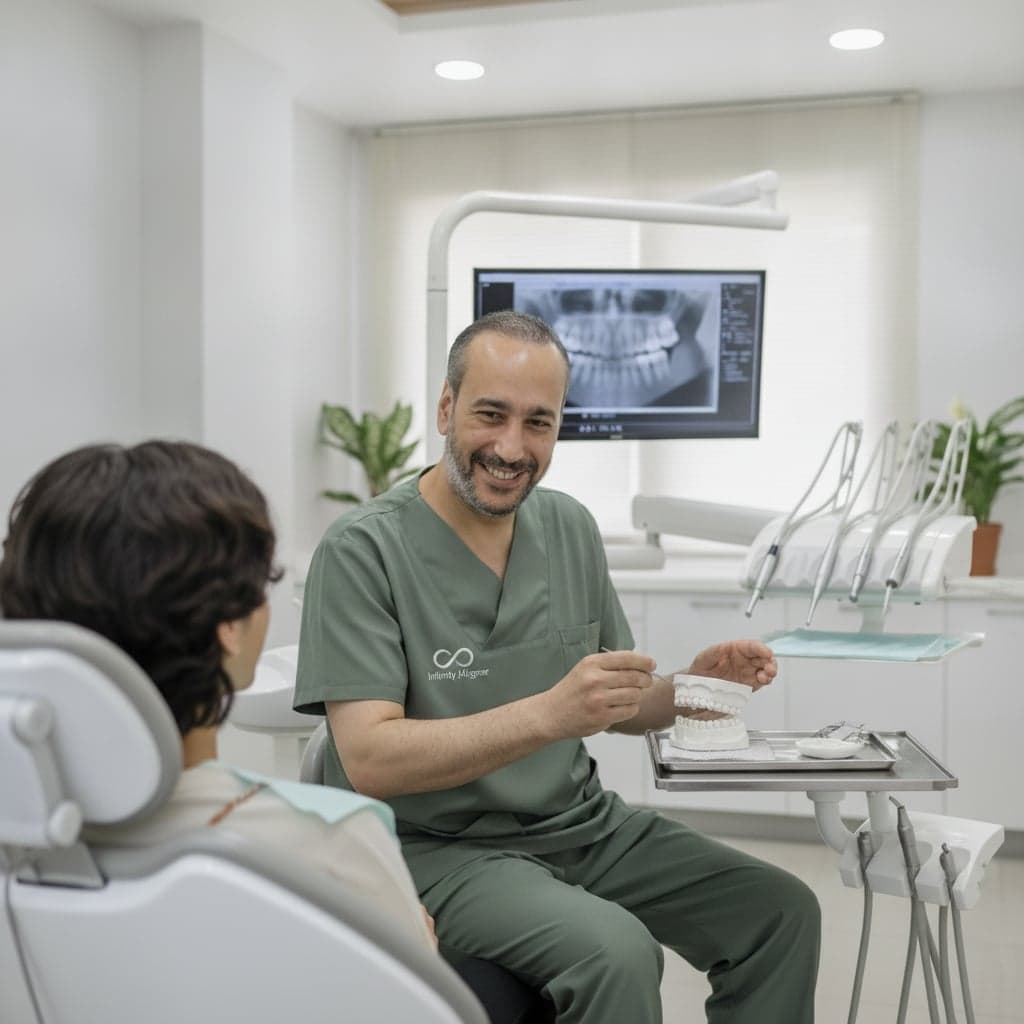
Invisalign vs Infinity Aligner: Complete Price Comparison in Tunisia (2026)
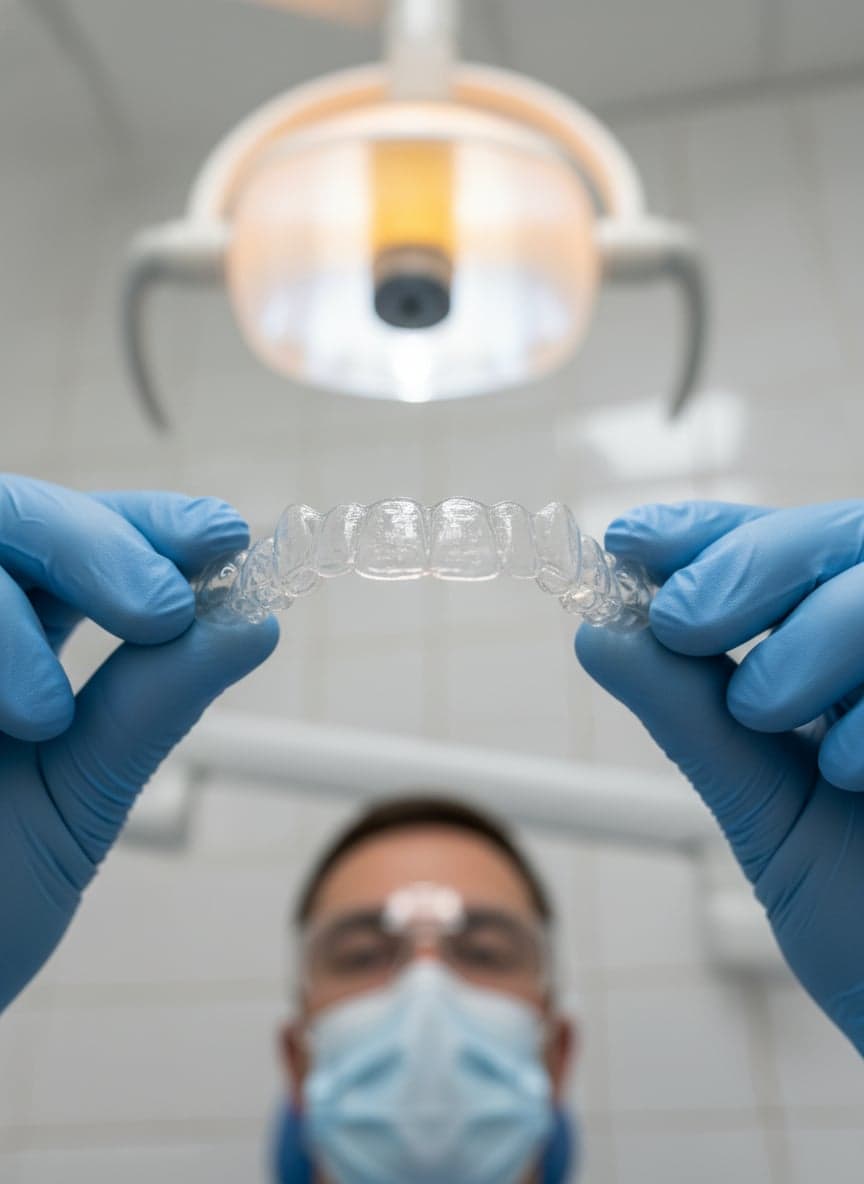
What Happens If You Don't Wear Your Aligners 22 Hours a Day?
Myths and Misconceptions About Clear Aligners: What Patients and Dentists Get Wrong
Sleep Apnea and Orthodontics: The Dentist's Role in Screening and Management

Clear Aligners Before a Wedding: How Many Months Should You Plan?
Consult a certified dentist
Our 200+ certified partners in Tunis, Sfax, Sousse and the francophone zone welcome you.
Book a consultation