Teeth Whitening and Clear Aligners: Can You Treat and Whiten at the Same Time?
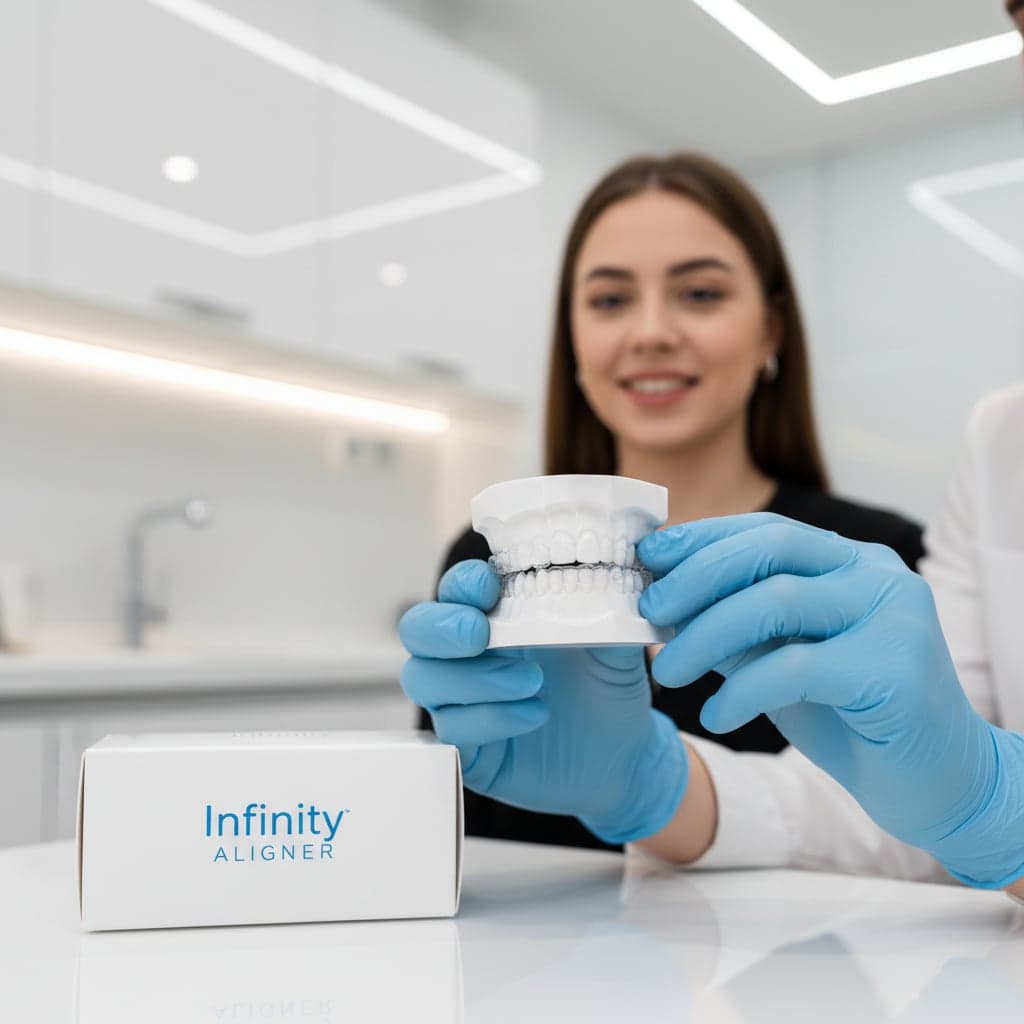
Carbamide peroxide, timing, contraindications, dental sensitivities: everything you need to know about combining whitening and aligners to optimise your aesthetic result.
It is one of the most frequently asked questions in orthodontic consultations from adult patients: can I whiten my teeth while wearing aligners? The answer is yes — and even: the orthodontic tray is an ideal vehicle for whitening gel. But as with any clinical protocol, the right answer depends on the right timing, the right product and the right method.
1. Why Aligners Are Almost Perfect Whitening Trays
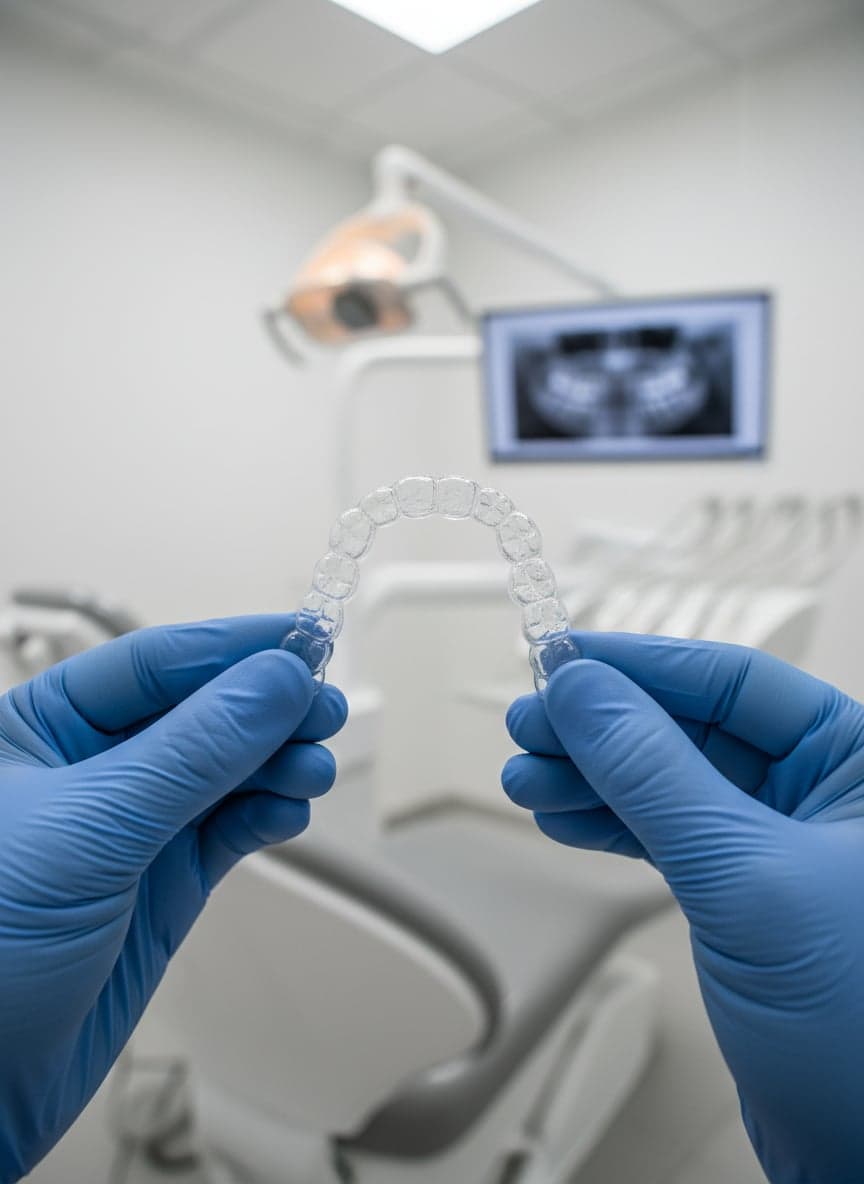
Dental whitening — whether in-office or at home — relies on the same principle: a peroxide-based gel (carbamide or hydrogen) is held in close contact with the enamel surface for a defined period. This close contact is precisely what a well-fitting thermoformed tray guarantees. An aligner tray, custom-fabricated on precise patient models, provides a near-perfect contact seal between the gel and the labial surface of the teeth — far superior to a generic over-the-counter tray. In theory, a patient wearing aligners therefore already has an optimal whitening device at their disposal. In practice, a few fundamental rules must be followed.
2. Which Products to Use — and at What Concentration?
Not all whitening gels are compatible with orthodontic aligner wear. The basic rule is concentration:
| Product | Concentration | Aligner compatible? | Recommended contact time |
|---|---|---|---|
| Carbamide peroxide | 10% (= 3.6% H₂O₂) | Yes ✅ — recommended standard | 6 to 8 hours (overnight wear) |
| Carbamide peroxide | 16% (= 5.8% H₂O₂) | Yes ✅ — under practitioner supervision | 2 to 4 hours |
| Carbamide peroxide | 22% and above | Not advised ⚠️ — sensitivity risk | Short protocol, monitoring required |
| Hydrogen peroxide | 3 to 6% | Yes ✅ — short contact only | Maximum 30 to 60 minutes |
| Hydrogen peroxide | ≥ 15% (in-office use) | No ❌ — professional use only | In-office session only |
| Whitening strips | Variable | Not compatible (do not layer) | Use without aligners |
10% carbamide peroxide applied during overnight wear of the retainer (or the last aligner in the treatment series) is the safest and best-tolerated protocol for a whitening + aligner combination.
3. At What Point in Treatment Can Whitening Begin?
The question of timing is crucial. Several strategies exist depending on the treatment phase:
Before Treatment
Pre-orthodontic whitening is technically possible but not widely advised. The colour of whitened teeth serves as a reference for future restorations (crowns, bonding composites for attachments) — a shade that may shift in the weeks following cessation of whitening. Furthermore, peroxide gel temporarily weakens the bonding of orthodontic attachments if applied within 48 hours prior to their placement.
During Treatment (Active Phase)
This is the most popular and effective strategy. The patient uses the current aligner (the last aligner worn before a series change, typically in the evening) as the gel carrier. Important: gel should not be applied to an aligner bearing active attachments (attachments create gel retention zones that can cause sensitivities). Whitening is therefore recommended from the middle of treatment onwards, once the most significant movements have been performed and the most bulky attachments removed.
At the End of Treatment or During the Retention Phase
This is the ideal time. The clear retainer is a perfect vehicle: well-fitting, without attachments, worn at night. The patient can begin a 10% carbamide gel whitening protocol upon receiving their retainer, for a duration of 2 to 4 weeks.
4. Contraindications and Precautions to Know
- Pregnancy and breastfeeding: whitening is contraindicated as a precaution
- Significant dentinal sensitivity: start with a desensitising toothpaste 2 weeks before the protocol
- Untreated cavities or defective restoration margins: gel infiltrates compromised areas — cavity treatment must precede whitening
- Gingival recession: gel can cause sensitivity on exposed dentine areas
- Devitalised teeth (root canal treated): do not whiten with external peroxide — an internal whitening protocol is required
- Composite resins and ceramics: no peroxide effect on existing restorations — a colour mismatch between natural tooth and crown may appear
5. Expected Results: How Many Shades Whiter Can You Expect?
A 10% carbamide whitening protocol conducted over 2 to 4 weeks achieves an average of 2 to 6 shades of lightening on the VITA scale (the reference standard in prosthetic dentistry). Factors influencing the result include the initial tooth shade (naturally yellowish teeth respond better than tetracycline-related grey shades), the duration of the protocol, the regularity of whitening tray wear and dietary hygiene during the treatment period (avoiding chromogenic foods: coffee, tea, red wine, turmeric).
6. Whitening and Infinity Aligner: A Synergy Built From the Start
At Infinity Aligner, teeth whitening is integrated as an option within the overall treatment plan. The clear retainers delivered at the end of treatment are designed with a slightly reinforced labial seal to maintain carbamide gel in optimal contact with the visible tooth surfaces. The practitioner prescribes the gel appropriate to the patient's sensitivity level and defines the personalised whitening protocol, included in the final treatment summary. The objective: that the patient completes their treatment with not only aligned teeth, but a truly transformed smile.
Infinity Aligner
Clinical & editorial team
More articles
How to Choose Clear Aligners in Tunisia
Clear Aligners vs Braces: Complete Comparison
How Much Do Clear Aligners Cost in Tunisia?
How Long Does Clear Aligner Treatment Take?
How to Clean and Care for Your Clear Aligners Daily
Clear Aligners for Teenagers: What Parents Need to Know
Gap Teeth & Diastema: Can Clear Aligners Fix Them?
Can You Play Sports with Clear Aligners?
3D Smile Simulation: How It Works and What to Expect
Orthodontic Relapse: Why Teeth Move After Treatment
Intraoral Scanner vs Traditional Impressions: What's the Difference?
Clear Aligners for Adults: Is It Ever Too Late?
Wisdom Teeth and Clear Aligners: Are They Compatible?

Clear Aligners: A Versatile Therapeutic Approach in Orthodontics
Orthodontics and Periodontal Health: What Every Patient Needs to Know
The Technology Behind Clear Aligners: From Design to Tray
How to Prepare for Your Orthodontic Consultation: 10 Questions to Ask
Bruxism and Clear Aligners: Can You Correct and Protect at the Same Time?
Class II Malocclusion and Clear Aligners: What Treatment Options Exist?
Clear Aligners and Dental Implants: Protocol, Timing and Clinical Cases
Digital Workflow and Aligner Biomechanics: The Advanced Practitioner Protocol
The Limits of Clear Aligners: Identifying Complex Cases Beyond Their Reach
Aligner Manufacturing: Thermoforming, 3D Printing and Polymer Science
Invisible Orthodontics in 2030: Predictive AI, Direct Printing and Active Materials
Smile Without Borders: The Price of Aligners Between Tunisia, Europe and Canada
Attachments in Invisible Orthodontics: The Silent Levers of Biomechanics

The Smile Beyond the Mirror: The Profound Impact of Dental Alignment on Psychological Well-being
Tunisia: The New Eldorado of Digital Dentistry and Medical Tourism
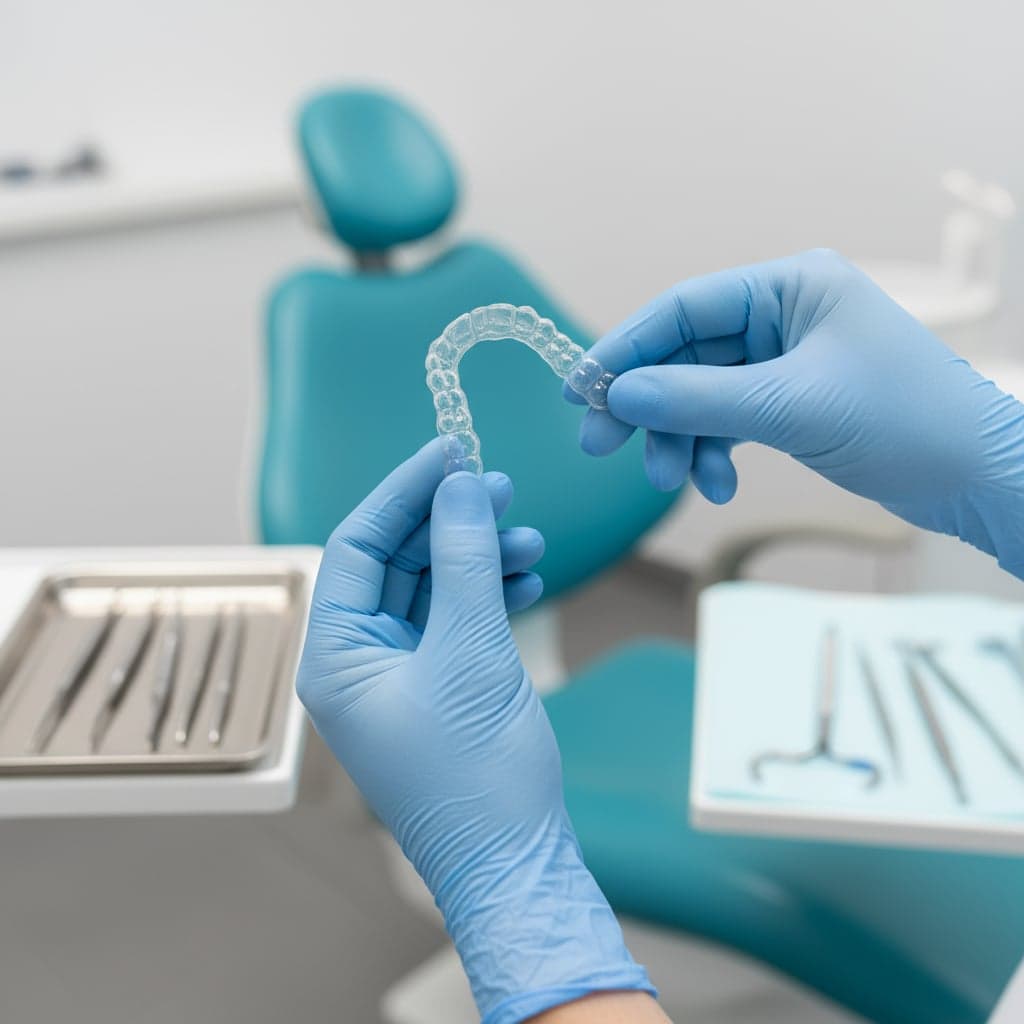
Post-Orthodontic Retention: The Forgotten Step That Decides Everything
What You Can (and Cannot) Eat With Clear Aligners
TMJ and Clear Aligners: How Invisible Orthodontics Acts on Jaw Pain
The Different Types of Dental Retainer: A Complete Guide After Orthodontic Treatment
The hidden dangers of metal braces: what patients need to know
Root resorption: the silent risk of poorly managed orthodontic treatments
Orthodontics and cavities: how metal braces compromise dental hygiene
Orthodontic relapse: why teeth return to their original position
Braces and chronic pain: the underestimated impact on daily quality of life
Intraoral scanner vs conventional impressions: dimensional analysis and clinical implications
CAD/CAM digital workflow in orthodontics: from intraoral scanning to aligner fabrication
Deformation, shrinkage and cumulative errors: why the conventional impression chain compromises aligner precision
Intraoral Scanners 2025: Complete Technical and Metrological Comparison
Why Choose Infinity Aligner? The Complete Guide for Dental Practitioners
Composite Selection for Aligner Attachments: Mechanical Analysis and Clinical Protocol
TMJ and Malocclusion: Differential Diagnosis and Clinical Approach for the Practitioner
Travelling with Clear Aligners: The Complete Guide for Stress-Free Trips
The First Month with Aligners: What to Expect Week by Week
Pre-Prosthetic Orthodontics: Preparing the Site Before Implants or Veneers
How to Present Aligners to a Hesitant Patient — A Consultation Script
Anterior Open Bite and Aligners: Protocol, Intrusion and Relapse Risk
Posterior & Anterior Crossbite: Diagnosis and Correction with Clear Aligners
Tobacco, Cigarettes and Clear Aligners: Everything You Need to Know
Invisalign vs Infinity Aligner: Complete Price Comparison in Tunisia (2026)
What Happens If You Don't Wear Your Aligners 22 Hours a Day?
Myths and Misconceptions About Clear Aligners: What Patients and Dentists Get Wrong
Sleep Apnea and Orthodontics: The Dentist's Role in Screening and Management
Consult a certified dentist
Our 200+ certified partners in Tunis, Sfax, Sousse and the francophone zone welcome you.
Book a consultation