The Smile Beyond the Mirror: The Profound Impact of Dental Alignment on Psychological Well-being

How does invisible orthodontics transform self-confidence, reduce social anxiety and act on the brain? A scientific analysis of the link between aligned smile and mental health.
For decades, orthodontics was perceived through a purely functional or aesthetic lens, limited to correcting an occlusion or the symmetry of a smile. Yet the mouth is far more than a tool for chewing or speech — it is the seat of our most intimate expressions and the primary vector of our social communication. Today, a growing body of scientific literature demonstrates that dental alignment does not merely transform the face — it acts as a powerful catalyst for psychological well-being, unlocking an identity potential that dental misalignment had silently impeded.
1. Dental misalignment: an invisible psychological burden
Dental misalignment is rarely experienced as a mere physical irregularity. For millions of patients, it is a source of permanent "social vigilance" — an anxious attention paid to how others perceive their smile. This vigilance, often unconscious, translates into avoidance behaviours well documented in social psychology literature:
- Inhibition of spontaneous laughter: covering the mouth with the hand, systematically smiling with closed lips
- Avoiding group photos or refusing to appear in profile pictures
- Reduction of public speaking, particularly in professional meetings
- Difficulties in romantic relationships and physical closeness
- Recurring cognitive ruminations about the appearance of teeth in social situations
2. The "Facial Feedback" concept: smiling to feel happy
One of the most fascinating discoveries of cognitive neuroscience over the past thirty years is the "Facial Feedback" theory. Originally proposed by Charles Darwin and formalised by Fritz Strack's work in the 1980s, this theory posits that the physical expression of an emotion on the face sends signals back to the brain that amplify or create that same emotion. In other words: smiling — even without an apparent reason — activates the brain's dopaminergic and serotonergic circuits, inducing a mild improvement in mood. A patient who stops inhibiting their smile due to dental self-consciousness mechanically smiles more often, more broadly and for longer in social interactions, creating a positive feedback loop of well-being.
3. Reducing social anxiety: what the studies show
Social anxiety — defined as an excessive fear of others' judgement in interaction situations — is one of the most prevalent mood disorders in the adult population (approximately 12% in Europe). Several longitudinal studies have assessed its evolution before and after orthodontic treatment:
| Study | Population | Main result |
|---|---|---|
| Klages et al. (2006) — Eur J Orthod | 102 adults, complete treatment | 38% reduction in dentofacial anxiety score at 12 months |
| Helm et al. (2020) — Am J Orthod | 215 aligner patients | 71% report "significant" improvement in public confidence |
| Al-Bitar et al. (2022) — Angle Orthod | 134 teenagers | 44% improvement in self-esteem score (Rosenberg Scale) at 18 months |
| Infinity Aligner Patient Survey (2024) | 312 certified patients | 84% report smiling more often in public at 6 months of treatment |
4. The "Halo Effect": how a smile rewrites social perception
The Halo Effect is a well-documented cognitive bias in social psychology: the perception of a positive characteristic in a person tends to colour all judgements made about them favourably. Studies on smile perception show that individuals with well-aligned teeth are systematically perceived as:
- More intelligent (+10% on perceived competence scales — Muñoz-Reyes study, 2015)
- More trustworthy and honest (+15% on trust scales)
- More attractive (+22% on overall attractiveness scales)
- More likely to be hired at a job interview (Kelton Research study, 2012: 29% advantage)
This modified perception by others is not without effect on the patient themselves. Receiving more smiles, more social approval signals and positive feedback in professional or personal interactions consolidates self-image in a virtuous dynamic: the patient feels more competent, more likeable, more confident — independent of any other variable.
5. Orthodontic treatment as an act of "Self-Care": the identity investment
In contemporary well-being psychology, the concept of "self-care" goes far beyond the realm of spas and beauty rituals. It designates a deliberate and conscious investment in one's overall health — physical, mental and social. Undertaking orthodontic treatment fully belongs to this logic, and research in positive psychology shows that the decision itself — even before the first visible results — generates a measurable beneficial effect on mood and general motivation. This phenomenon, called "anticipatory positive affect," explains why many patients report improvement in their overall well-being within the first weeks of treatment — well before tooth movements are visible in the mirror.
6. The invisibility of aligners: a specific psychological advantage
Clear aligners offer a psychological benefit that traditional braces cannot claim: the preservation of self-image during treatment. Wearing visible metal braces as an adult can paradoxically reinforce social discomfort rather than reduce it, adding a new source of self-consciousness during 12 to 24 months of treatment. Invisible aligners allow a transformation to take place without an external signal — the patient transforms "in silence," without having to publicly explain or assume their treatment.
- Maintenance of professional confidence throughout treatment
- No discomfort during meetings, presentations and interviews
- Freedom to smile normally from day one — even with aligners in place
- Reduced social impact of treatment on daily life
7. When dental aesthetics alone is not enough: the limits of treatment
It would be intellectually dishonest to present orthodontic treatment as a universal solution to self-esteem disorders. For some patients, dental misalignment is the visible expression of a deeper social anxiety or body dysmorphic disorder. In these cases, correcting the teeth without psychological support will not resolve the underlying mechanisms — the patient will simply displace their complex onto another physical characteristic. An attentive practitioner will detect these situations and, where appropriate, refer the patient for complementary psychological support.
Conclusion
Behind every Infinity Aligner treatment, something far greater than a simple dental correction often unfolds — a discreet, progressive and profound identity reconstruction. The science of smiling confirms what patients intuitively feel: aligning your teeth is also realigning your relationship with the world and with yourself. By choosing invisible orthodontics, you are not simply choosing a medical treatment — you are investing in your capacity to smile without restraint, to look others in the eye and to fully occupy your social space. An investment that, by definition, extends far beyond the dental practice.
Infinity Aligner
Clinical & editorial team
More articles
How to Choose Clear Aligners in Tunisia
Clear Aligners vs Braces: Complete Comparison
How Much Do Clear Aligners Cost in Tunisia?
How Long Does Clear Aligner Treatment Take?
How to Clean and Care for Your Clear Aligners Daily

Clear Aligners for Teenagers: What Parents Need to Know
Gap Teeth & Diastema: Can Clear Aligners Fix Them?
Can You Play Sports with Clear Aligners?
3D Smile Simulation: How It Works and What to Expect

Orthodontic Relapse: Why Teeth Move After Treatment
Intraoral Scanner vs Traditional Impressions: What's the Difference?
Clear Aligners for Adults: Is It Ever Too Late?
Wisdom Teeth and Clear Aligners: Are They Compatible?

Clear Aligners: A Versatile Therapeutic Approach in Orthodontics
Orthodontics and Periodontal Health: What Every Patient Needs to Know
The Technology Behind Clear Aligners: From Design to Tray

How to Prepare for Your Orthodontic Consultation: 10 Questions to Ask
Bruxism and Clear Aligners: Can You Correct and Protect at the Same Time?

Class II Malocclusion and Clear Aligners: What Treatment Options Exist?
Clear Aligners and Dental Implants: Protocol, Timing and Clinical Cases
Digital Workflow and Aligner Biomechanics: The Advanced Practitioner Protocol
The Limits of Clear Aligners: Identifying Complex Cases Beyond Their Reach
Aligner Manufacturing: Thermoforming, 3D Printing and Polymer Science
Invisible Orthodontics in 2030: Predictive AI, Direct Printing and Active Materials

Smile Without Borders: The Price of Aligners Between Tunisia, Europe and Canada
Attachments in Invisible Orthodontics: The Silent Levers of Biomechanics
Tunisia: The New Eldorado of Digital Dentistry and Medical Tourism
Post-Orthodontic Retention: The Forgotten Step That Decides Everything
What You Can (and Cannot) Eat With Clear Aligners
Teeth Whitening and Clear Aligners: Can You Treat and Whiten at the Same Time?
TMJ and Clear Aligners: How Invisible Orthodontics Acts on Jaw Pain
The Different Types of Dental Retainer: A Complete Guide After Orthodontic Treatment
The hidden dangers of metal braces: what patients need to know
Root resorption: the silent risk of poorly managed orthodontic treatments
Orthodontics and cavities: how metal braces compromise dental hygiene
Orthodontic relapse: why teeth return to their original position
Braces and chronic pain: the underestimated impact on daily quality of life
Intraoral scanner vs conventional impressions: dimensional analysis and clinical implications
CAD/CAM digital workflow in orthodontics: from intraoral scanning to aligner fabrication
Deformation, shrinkage and cumulative errors: why the conventional impression chain compromises aligner precision
Intraoral Scanners 2025: Complete Technical and Metrological Comparison
Why Choose Infinity Aligner? The Complete Guide for Dental Practitioners
Composite Selection for Aligner Attachments: Mechanical Analysis and Clinical Protocol
TMJ and Malocclusion: Differential Diagnosis and Clinical Approach for the Practitioner
Travelling with Clear Aligners: The Complete Guide for Stress-Free Trips
The First Month with Aligners: What to Expect Week by Week
Pre-Prosthetic Orthodontics: Preparing the Site Before Implants or Veneers
How to Present Aligners to a Hesitant Patient — A Consultation Script
Anterior Open Bite and Aligners: Protocol, Intrusion and Relapse Risk
Posterior & Anterior Crossbite: Diagnosis and Correction with Clear Aligners
Tobacco, Cigarettes and Clear Aligners: Everything You Need to Know
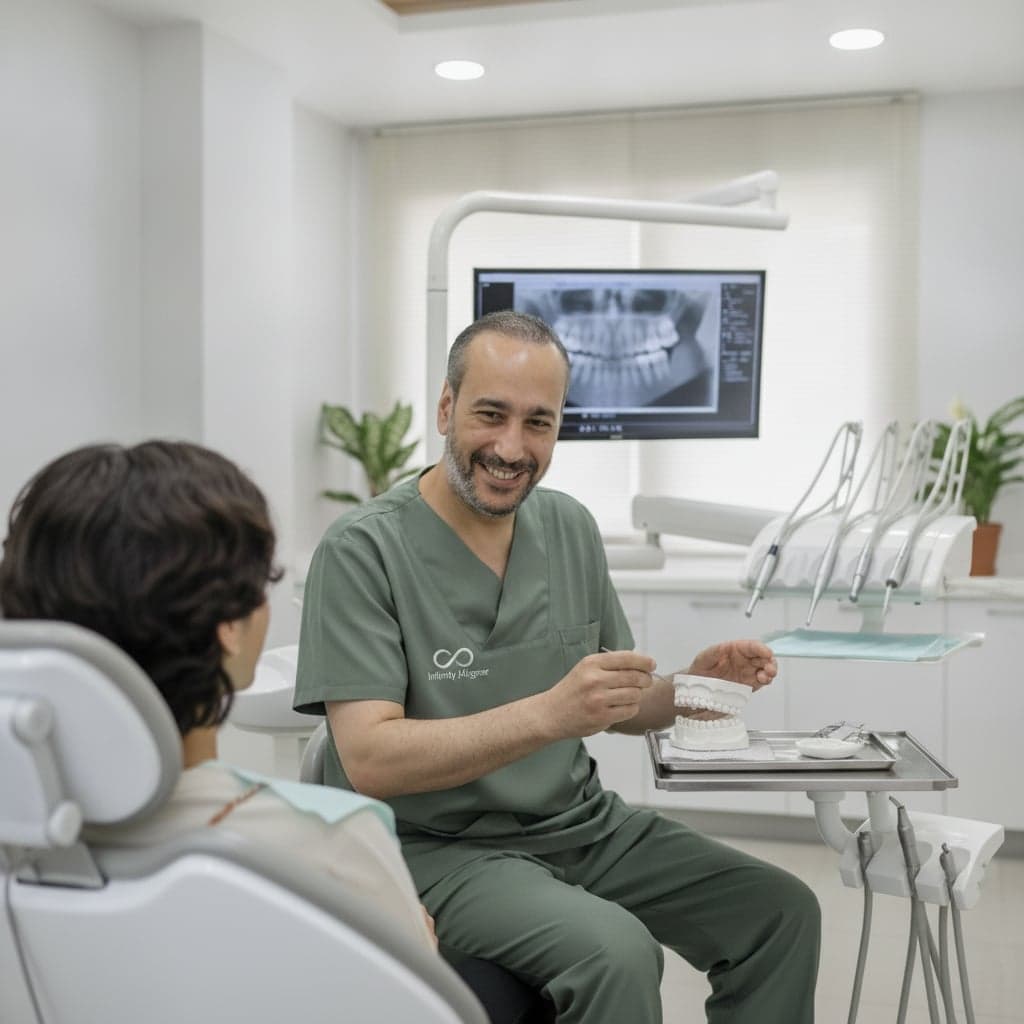
Invisalign vs Infinity Aligner: Complete Price Comparison in Tunisia (2026)
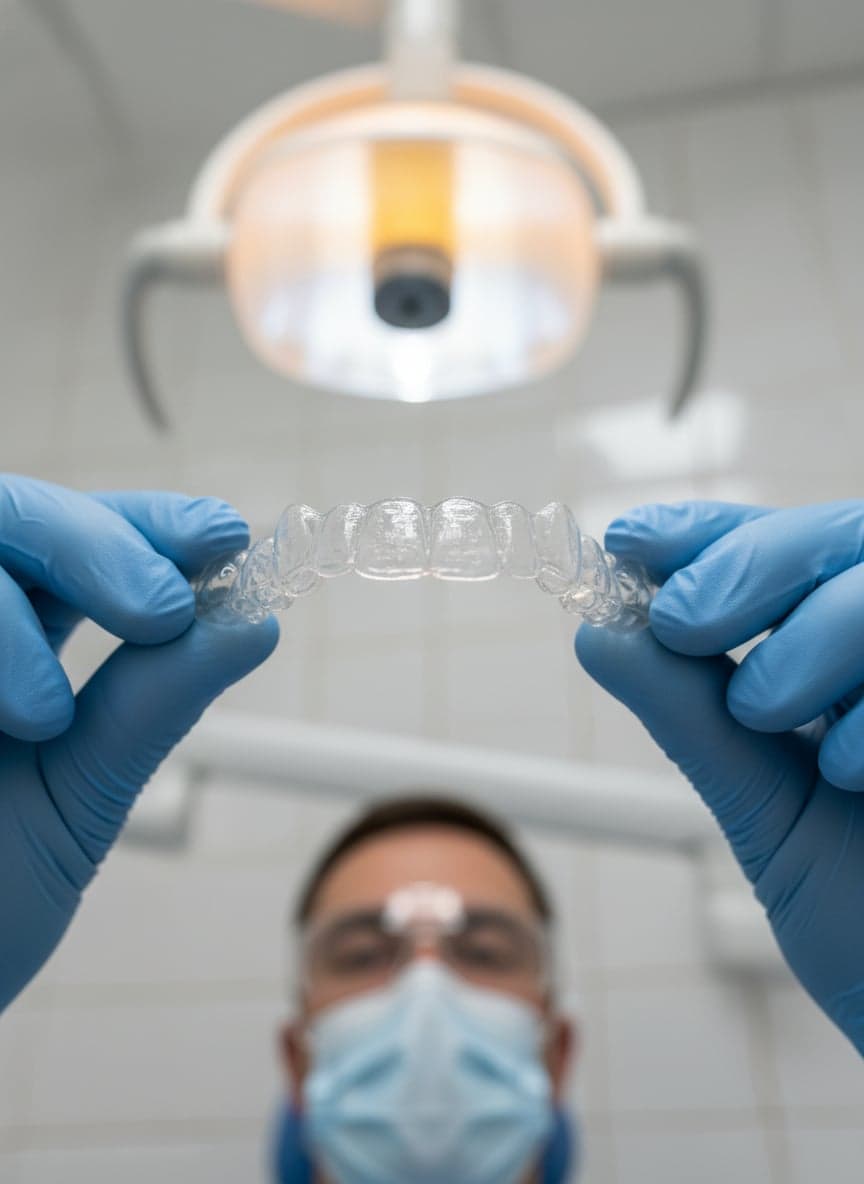
What Happens If You Don't Wear Your Aligners 22 Hours a Day?
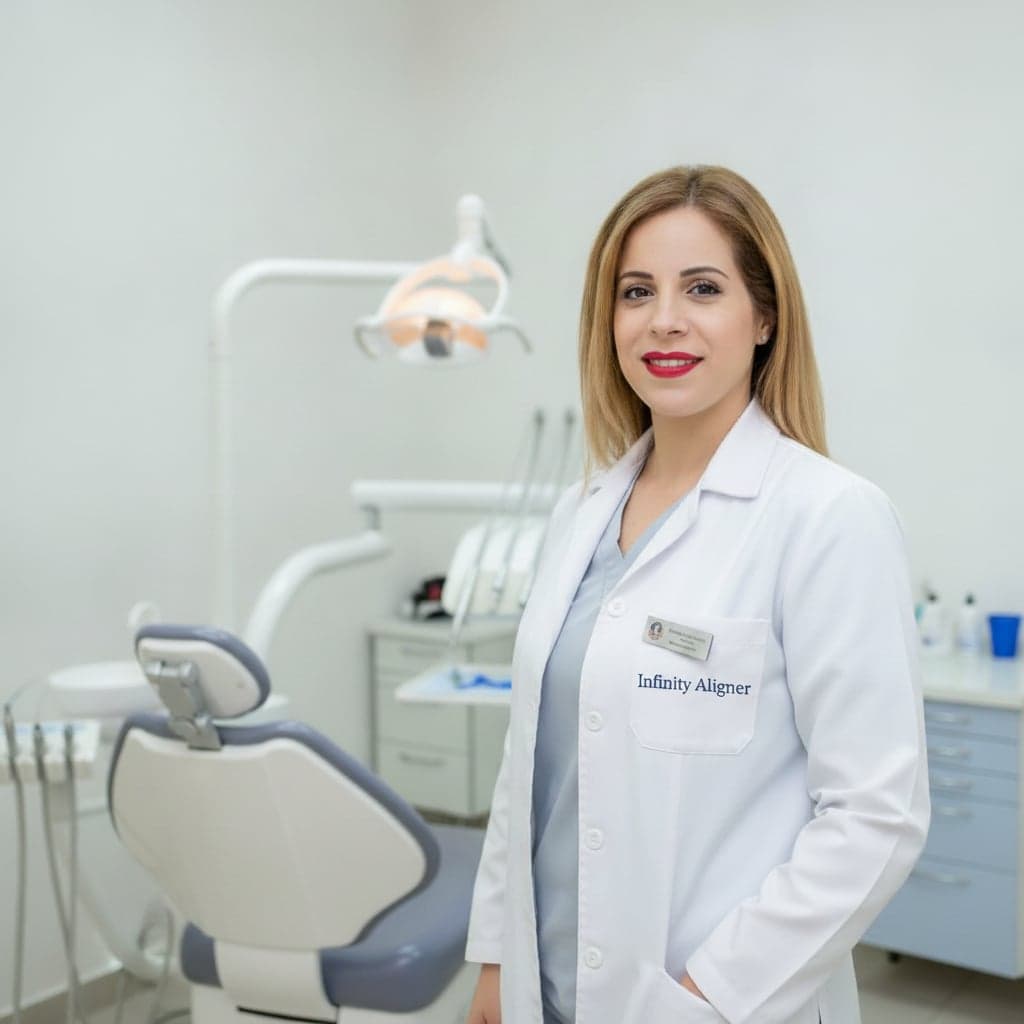
Myths and Misconceptions About Clear Aligners: What Patients and Dentists Get Wrong
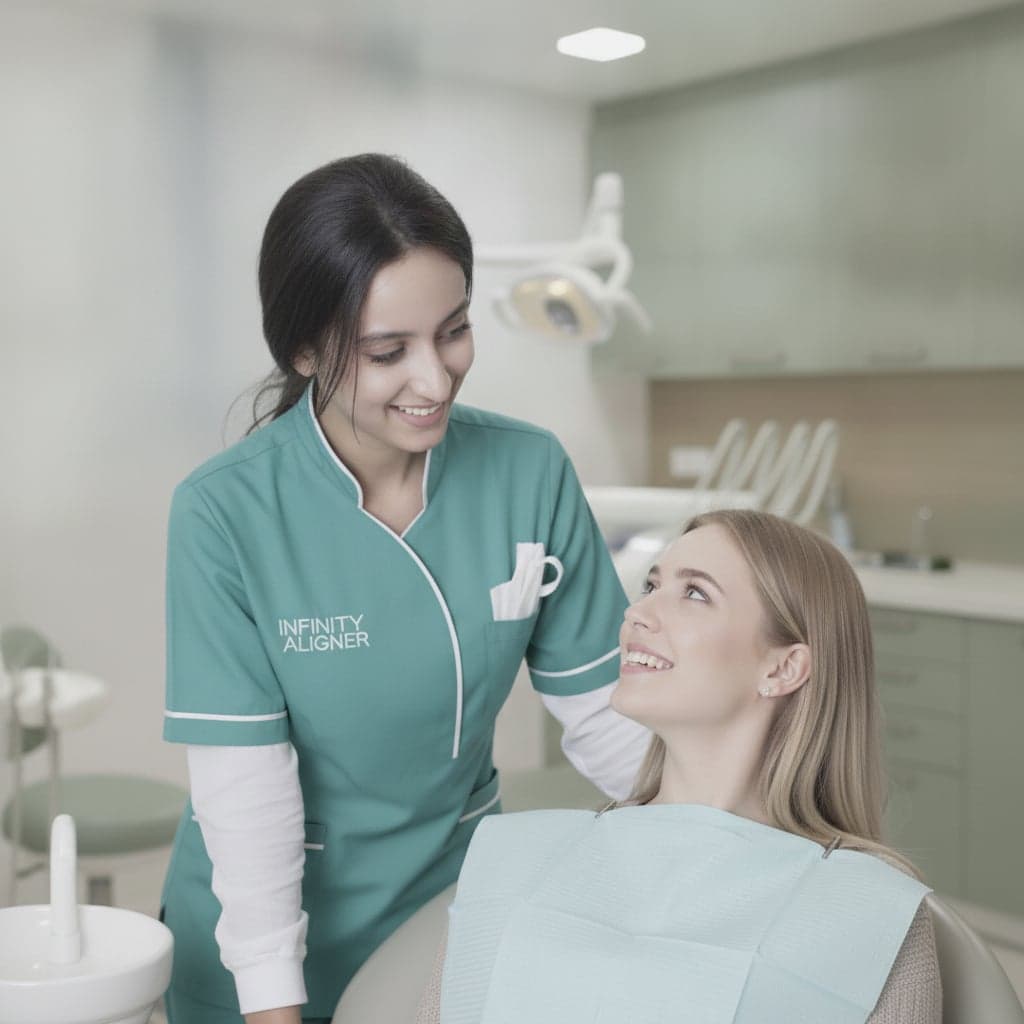
Sleep Apnea and Orthodontics: The Dentist's Role in Screening and Management
Consult a certified dentist
Our 200+ certified partners in Tunis, Sfax, Sousse and the francophone zone welcome you.
Book a consultation