The Different Types of Dental Retainer: A Complete Guide After Orthodontic Treatment
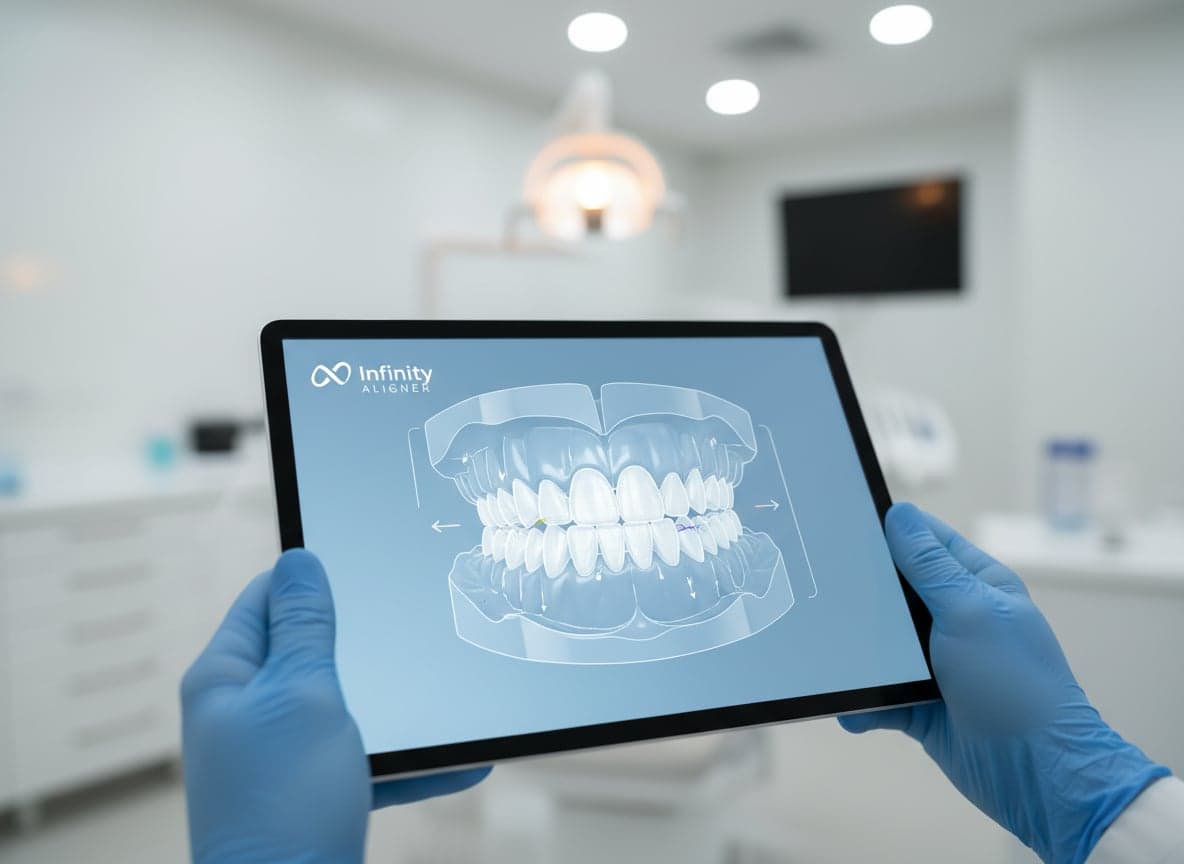
Bonded wire, clear retainer, Hawley appliance or combined retention: discover how each type of retainer protects your smile after aligner treatment, and how to choose the right solution for your situation.
Orthodontic treatment — whether through clear aligners or braces — does not end the day your teeth reach their ideal position. This milestone actually marks the beginning of an equally critical phase: dental retention. Without it, teeth tend to gradually drift back towards their original position, a phenomenon known as orthodontic relapse. Retention is therefore the guarantee that your investment in a beautiful smile remains lasting.
Why Is Retention Essential After Orthodontic Treatment?
Teeth are not rigidly anchored in bone. They are held in place by the periodontal ligament, a network of elastic fibres surrounding each root. During orthodontic treatment, these fibres are stretched and remodelled to allow tooth movement. Once treatment is complete, these fibres retain an "elastic memory" and seek to return to their original state. Without retention, relapse can begin within the first few weeks of stopping aligner wear.
- Relapse is faster in younger patients whose bone growth is not yet complete
- Spaces between incisors (diastemas) and crowding have a particularly high relapse rate
- Longer treatments generally require more prolonged retention
- Certain habits (tongue thrust, bruxism) increase the risk of relapse
- Erupting wisdom teeth can exert pressure on already-aligned front teeth
1. Fixed Retention — The Bonded Lingual Wire
Principle and Placement
Fixed retention consists of a thin metal wire (usually stainless steel or fibreglass) bonded directly to the inner (lingual or palatal) surface of the front teeth. It is most commonly placed on the six lower teeth (canine to canine) and sometimes on the six upper teeth. The bonding is performed with dental composite, the same material used for aesthetic restorations. Placement is painless and requires no anaesthesia.
Advantages
- Maximum effectiveness: the wire works 24/7 without requiring any patient compliance
- Completely invisible from the outside: positioned on the inside of the teeth
- Long-term stability: indicated for patients with a high risk of relapse
- Ideal for closed spaces (diastemas) and corrected significant crowding
- No risk of forgetting, unlike removable appliances
Disadvantages and Precautions
- Rigorous oral hygiene required: the wire creates plaque retention areas, requiring use of superfloss or an interdental brush
- Risk of debonding: impacts, chewing hard or sticky foods can weaken the bonding
- Regular dental follow-up required: an unnoticed debonded wire leaves the tooth free to move
- Possible initial discomfort: the tongue may rub against the wire during the first few weeks
- Not suitable for bruxism patients without additional occlusal protection
For Which Patients?
Fixed retention is particularly indicated after correction of severe crowding, closure of diastemas, or in young patients where relapse is predictable. It is often combined with a removable night guard for the posterior sectors.
2. The Clear (Essix) Retainer
Principle
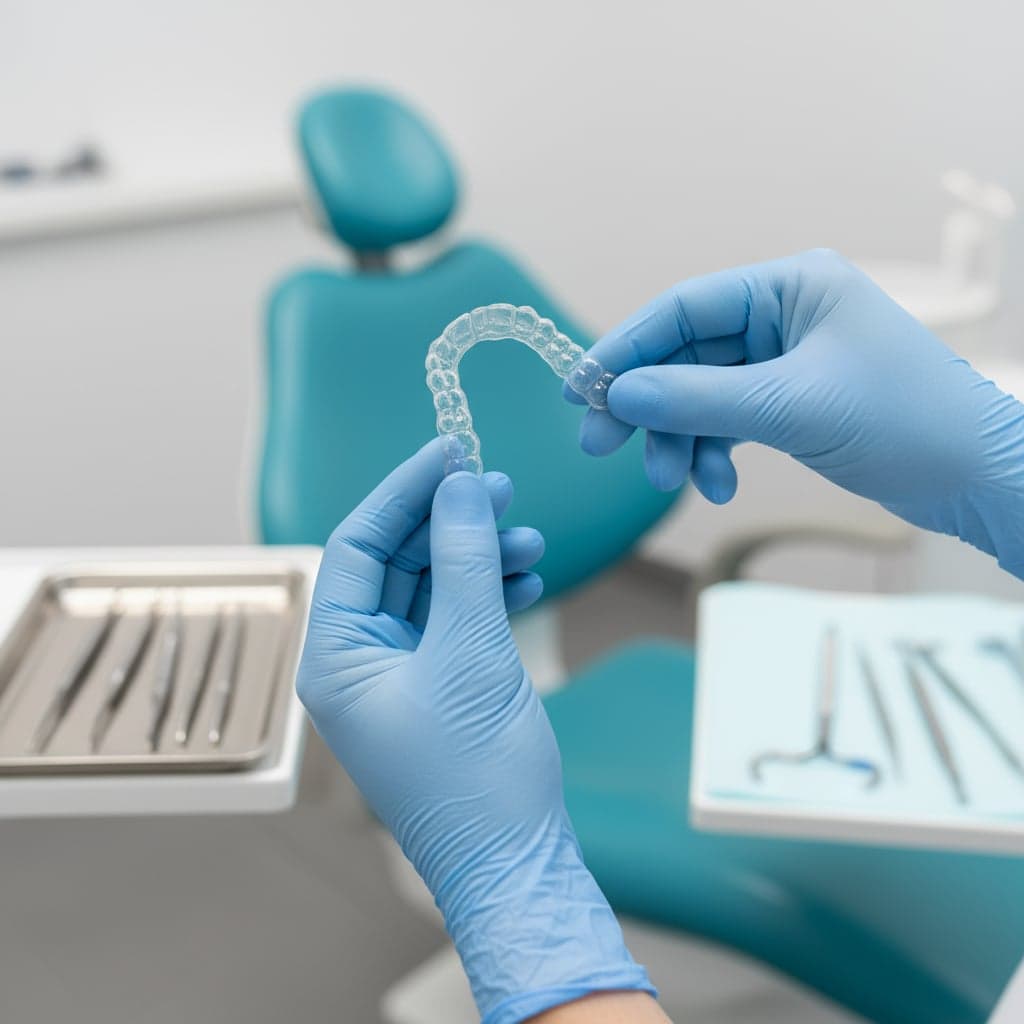
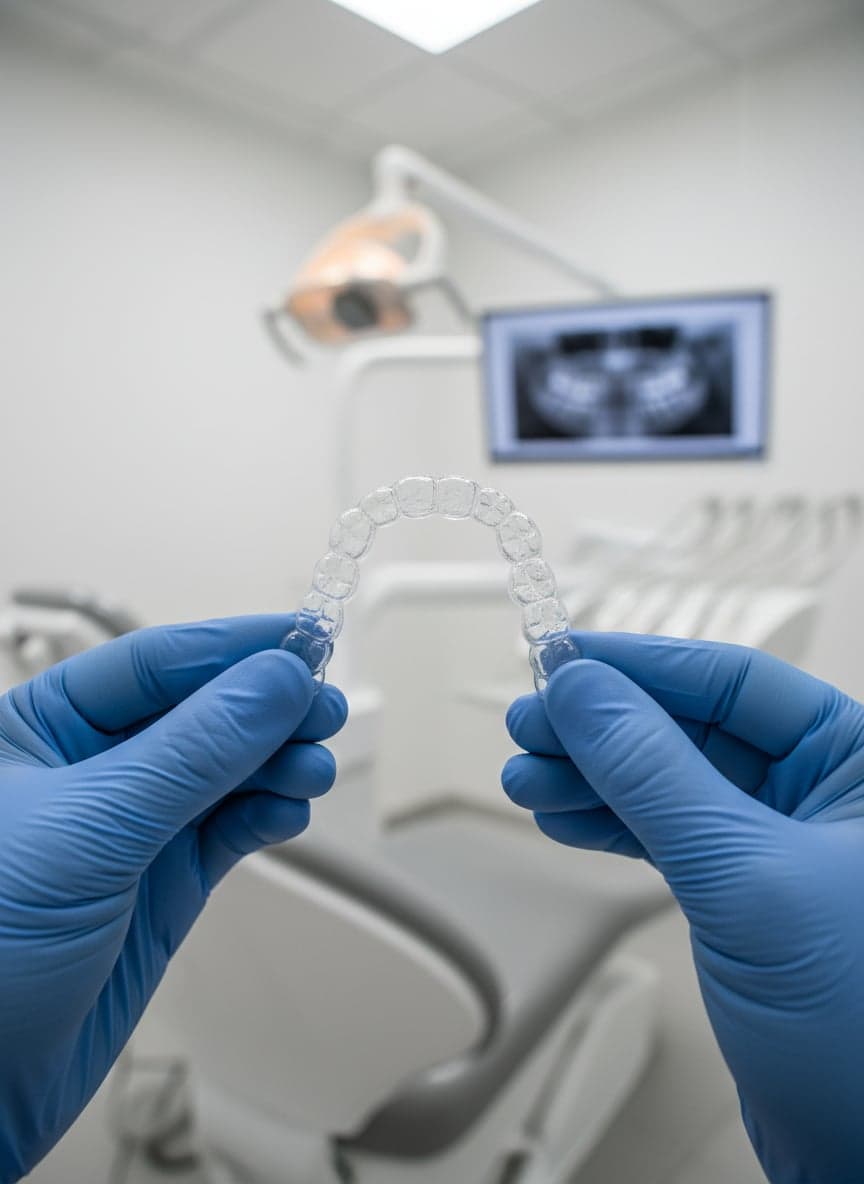
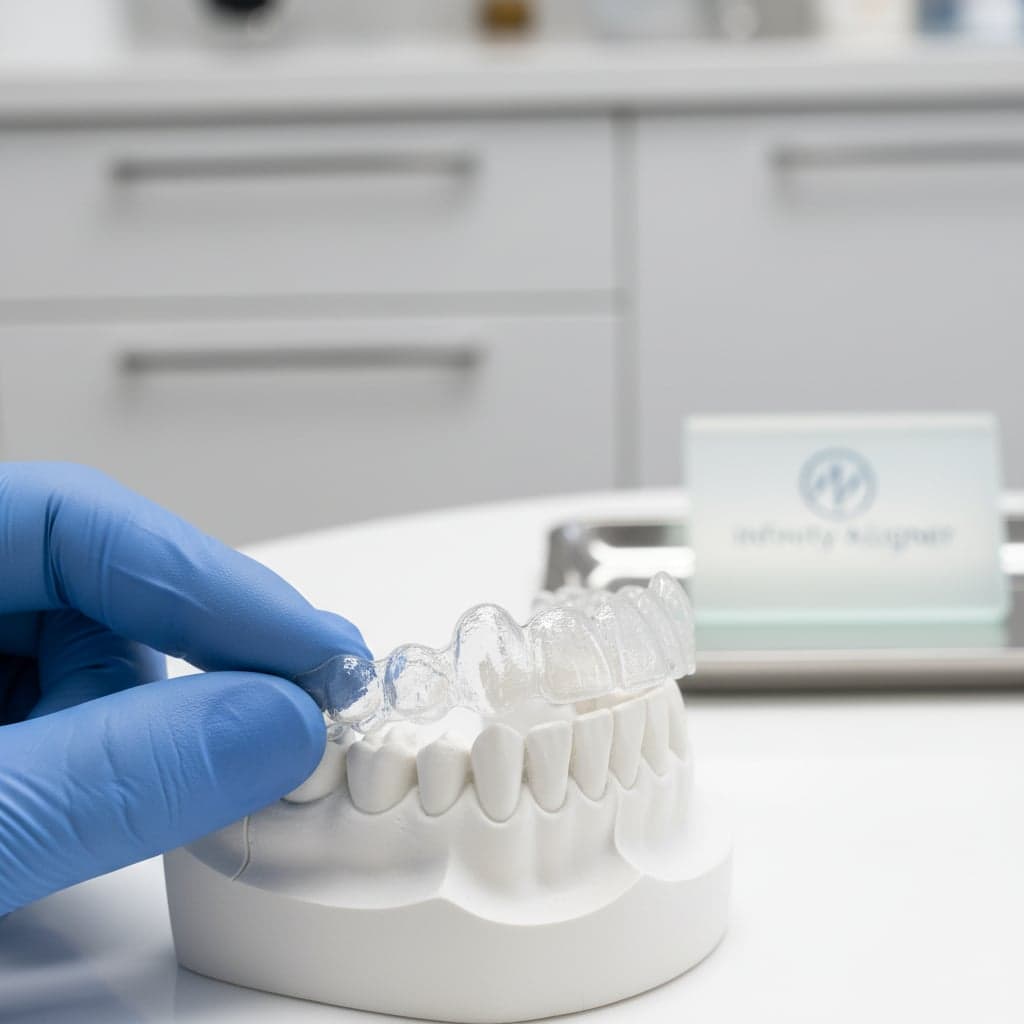
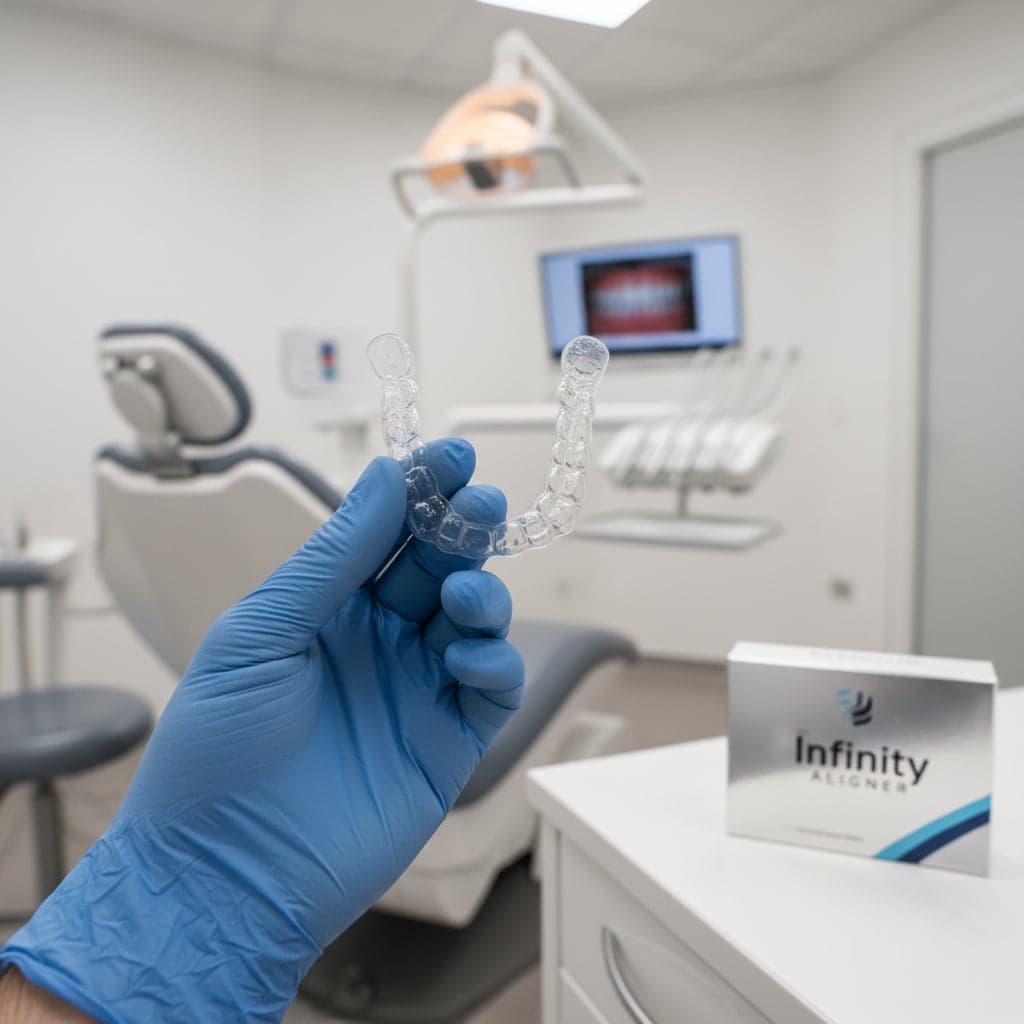
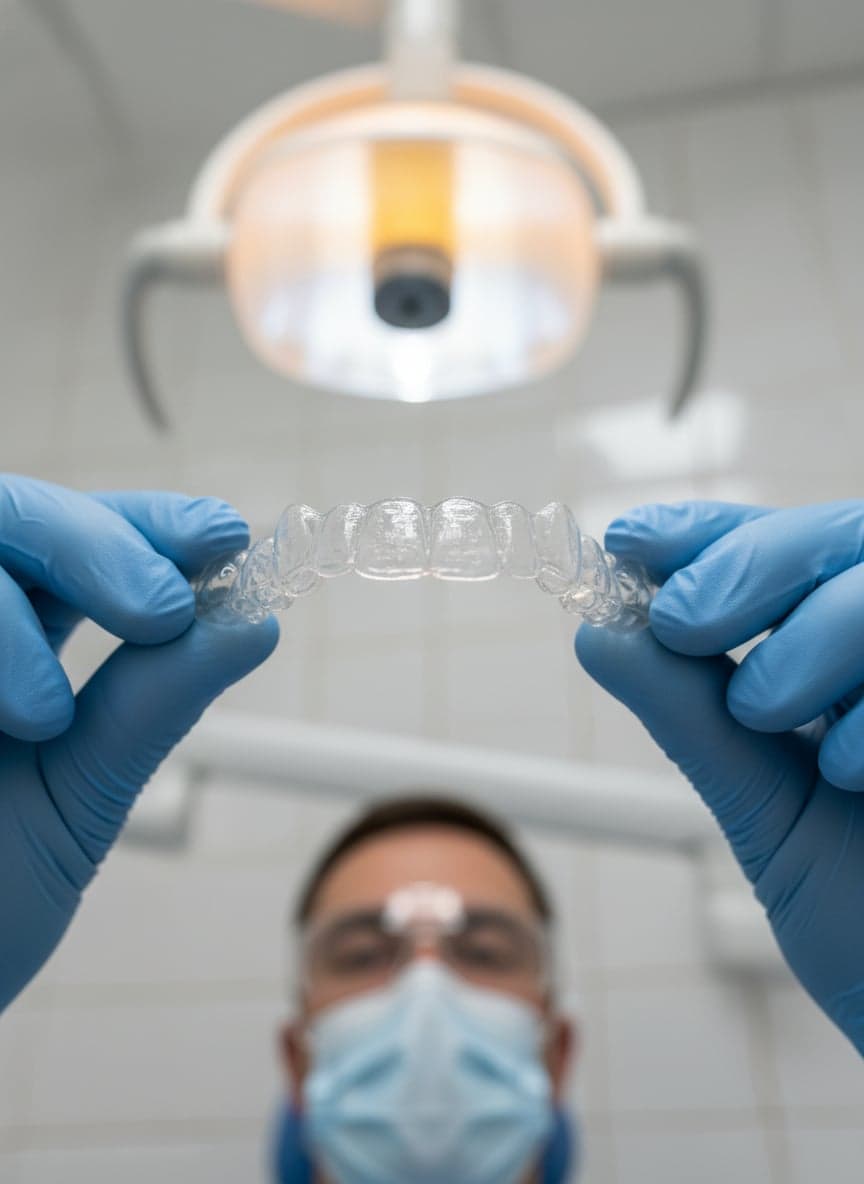
The clear retainer — also known as an Essix retainer — is made by thermoforming rigid plastic over a model of your teeth in their final position. It looks like an orthodontic aligner but is slightly thicker and more rigid. It is worn mainly at night, or according to the practitioner's protocol, full-time during the first few months then only at night.
Advantages
- Highly aesthetic: transparent and discreet, it can be worn during the day if needed without being visible
- Comfortable: perfectly fitting the shape of the teeth, it is generally well tolerated from the first use
- Easy to clean: simply brush with water and mild soap or soak in a cleaning solution
- Reversible and replaceable: if lost or deteriorated, a new retainer can be made from the saved model
- Particularly suitable after aligner treatment: same type of appliance, natural transition
- Also allows mild teeth whitening if used with an appropriate gel
Disadvantages
- Requires good patient compliance: if not worn regularly, its effectiveness is zero
- Limited lifespan: it gradually deteriorates (on average 1 to 3 years) and must be renewed
- Renewal cost: each new retainer represents an additional cost
- Not suitable for severe bruxism patients without reinforced protection
- Can stain with coffee, tea or tobacco if not removed when consuming these substances
For Which Patients?
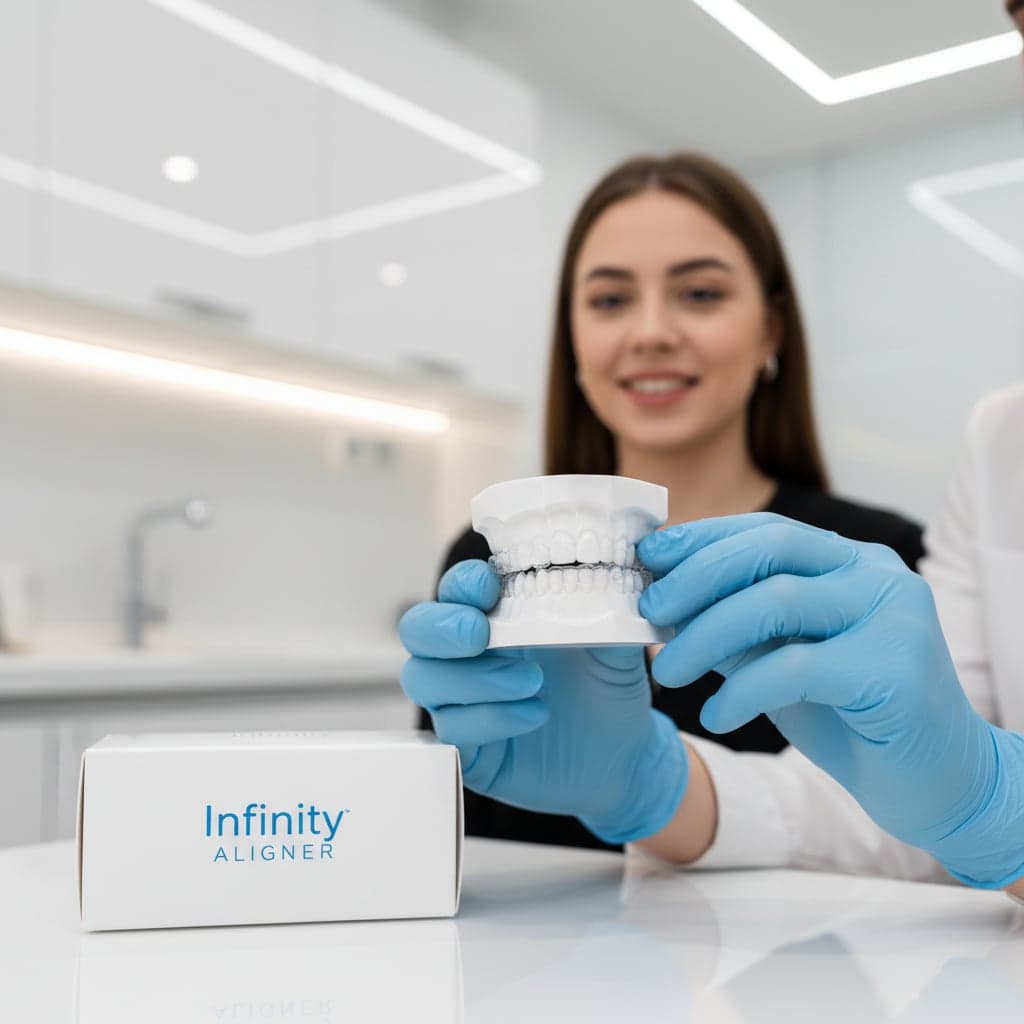
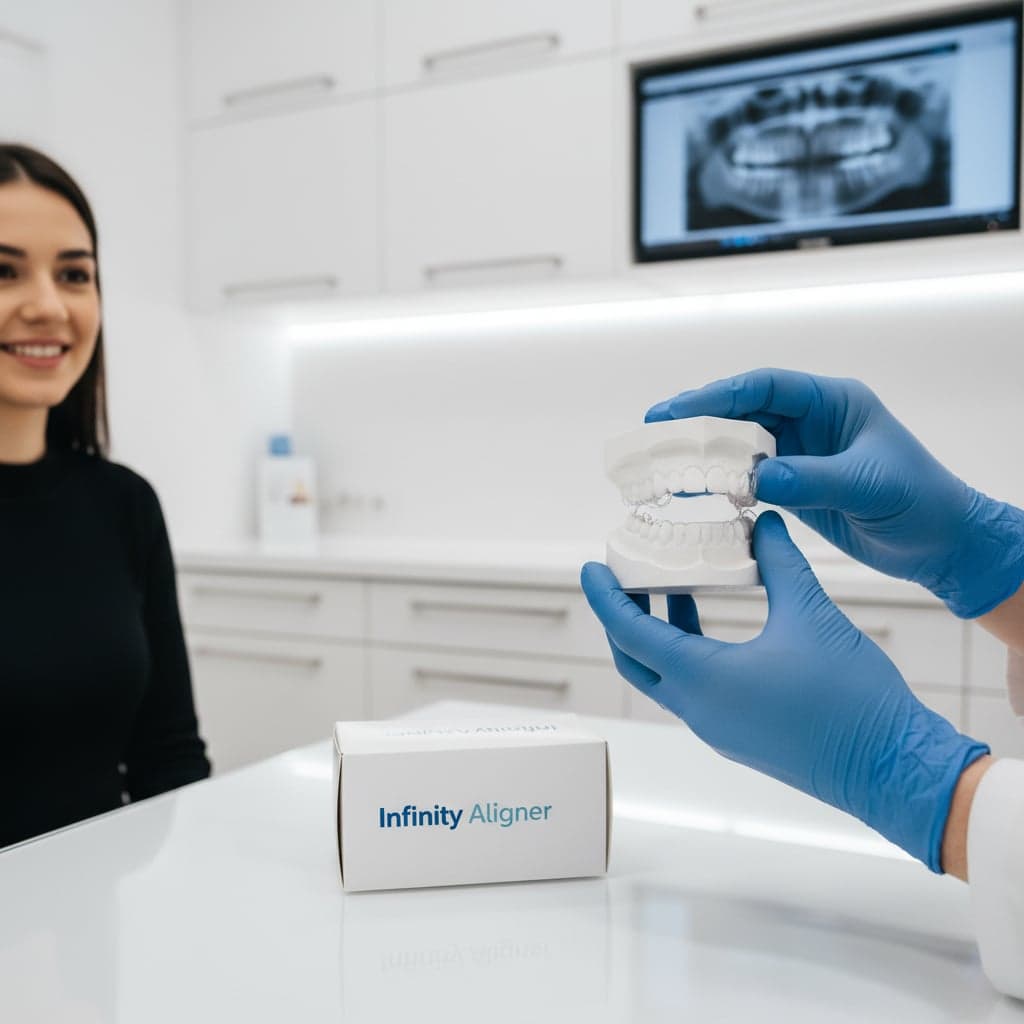
The clear retainer is the naturally recommended retention solution after an Infinity Aligner treatment. The transition is seamless: the patient continues to wear a retainer at night, simply with a reduced frequency. It suits the vast majority of cases, except for specific clinical situations.
3. The Hawley Removable Retainer
Principle
The Hawley appliance is a removable retainer made of an acrylic resin base resting on the palate (or on the lingual surface of the lower teeth) and an active metal wire passing across the front teeth. It is one of the oldest and most proven retention devices. It can be personalised with different resin colours for younger patients.
Advantages
- Robust and durable: well maintained, a Hawley appliance can last several years
- Adjustable: the practitioner can make slight activations if minor corrective movement is needed
- Easily cleanable: the appliance is removed for cleaning and meals
- Allows some tooth-to-tooth movement (natural contacts preserved), which may be beneficial for certain functions
- Generally lower cost than high-quality clear retainers
Disadvantages
- Less aesthetic: the visible metal wire on the outer surface of the teeth makes it less discreet
- Bulky: the resin base occupying the palate can hinder speech and comfort
- Requires total patient compliance: if not worn, no retention is provided
- Less precise than the clear retainer for point-by-point retention of each tooth
- Risk of loss or breakage (rigid material that can fracture on impact)
4. Combined Retention: Fixed + Removable
In many cases, the optimal retention protocol is a combination of both approaches. The dentist may, for example, place a bonded wire on the lower front teeth (high relapse-risk sector) while simultaneously prescribing a clear night guard for the entire arch. This "dual retention" approach offers the best guarantee of long-term stability, particularly after complex treatments or high-relapse-risk cases.
- Recommended for corrections of severe crowding or significant diastemas
- Particularly indicated in patients with bruxism or tongue thrust
- Ideal for patients who have already experienced relapse after a previous treatment
- Associated with regular orthodontic follow-up every 6 to 12 months
Comparison Table of the 4 Types of Dental Retention
| Type | Wear | Discreetness | Hygiene | Durability | Compliance needed | Best for |
|---|---|---|---|---|---|---|
| Bonded wire (fixed) | Permanent | Total (internal) | Demanding | 5–10 years+ | None | Crowding, diastemas, low-compliance patients |
| Clear retainer | Night (after 3–6 months) | Very high | Easy | 1–3 years | High | Post-aligner, compliant patients |
| Hawley appliance | Night or full-time | Low | Easy | 3–5 years | High | Children, mild corrections |
| Combined (wire + retainer) | Wire permanent + night guard | High | Demanding | Long-term | Moderate | Complex cases, high relapse risk |
How Long Should You Wear a Retainer?
The duration of retainer wear is a topic that has evolved considerably over recent decades. For a long time, a 2 to 3-year retention period was recommended, supposedly sufficient for the periodontal fibres to "stabilise." Today, scientific literature is unanimous: teeth have a natural tendency to shift throughout life, independently of orthodontic treatment. The current consensus in the orthodontic community is as follows:
- Intensive phase (0 to 6 months): wear the retainer 22 to 24 hours a day, particularly for removable retainers
- Maintenance phase (6 months to 2 years): night-time wear only, every evening
- Lifelong retention phase: wear 3 to 5 nights per week indefinitely to maintain the result
- Fixed retainer: maintained as long as it is in good condition and well tolerated, potentially for life
- Orthodontic check-ups: every 6 to 12 months to verify the condition of the retainer and absence of movement
What Happens If You Don't Wear Your Retainer?
Abandoning retention is one of the most common reasons for consultation regarding orthodontic relapse. Consequences can appear quickly — sometimes within a few weeks — or progressively over several years. In all cases, the movements observed are often irreversible without a new orthodontic treatment.
- Reappearance of crowding, particularly on the lower incisors
- Re-opening of closed spaces (diastemas)
- Rotation of teeth, especially canines and lateral incisors
- Modification of the occlusion with risk of interferences and TMJ disorders
- Need for a retreatment, often longer and more costly
Retention After an Infinity Aligner Treatment
At Infinity Aligner, the treatment plan systematically integrates the retention protocol from the planning phase. At the end of your last aligner, your certified dentist will provide you with your custom clear retainer manufactured from the digital scan of your final smile. This Infinity Retention retainer is made from the same high-quality thermoplastic material as your aligners, guaranteeing precise retention and maximum comfort. For cases requiring fixed retention, the lingual wire is placed at the same end-of-treatment appointment, ensuring seamless continuity in protecting your smile.
Conclusion
Dental retention is not optional — it is the sine qua non condition for the long-term success of any orthodontic treatment. Whether it is a discreet bonded wire, a comfortable clear retainer, or a combination of both, the choice of retention device must be adapted to your clinical situation, lifestyle and level of compliance. Do not let your smile drift back: a well-worn retainer means a result that lasts a lifetime.
Infinity Aligner
Clinical & editorial team
More articles

How to Choose Clear Aligners in Tunisia

Clear Aligners vs Braces: Complete Comparison

How Much Do Clear Aligners Cost in Tunisia?

How Long Does Clear Aligner Treatment Take?
How to Clean and Care for Your Clear Aligners Daily

Clear Aligners for Teenagers: What Parents Need to Know
Gap Teeth & Diastema: Can Clear Aligners Fix Them?
Can You Play Sports with Clear Aligners?

3D Smile Simulation: How It Works and What to Expect

Orthodontic Relapse: Why Teeth Move After Treatment
Intraoral Scanner vs Traditional Impressions: What's the Difference?

Clear Aligners for Adults: Is It Ever Too Late?
Wisdom Teeth and Clear Aligners: Are They Compatible?

Clear Aligners: A Versatile Therapeutic Approach in Orthodontics

Orthodontics and Periodontal Health: What Every Patient Needs to Know
The Technology Behind Clear Aligners: From Design to Tray

How to Prepare for Your Orthodontic Consultation: 10 Questions to Ask
Bruxism and Clear Aligners: Can You Correct and Protect at the Same Time?

Class II Malocclusion and Clear Aligners: What Treatment Options Exist?
Clear Aligners and Dental Implants: Protocol, Timing and Clinical Cases

Digital Workflow and Aligner Biomechanics: The Advanced Practitioner Protocol

The Limits of Clear Aligners: Identifying Complex Cases Beyond Their Reach
Aligner Manufacturing: Thermoforming, 3D Printing and Polymer Science
Invisible Orthodontics in 2030: Predictive AI, Direct Printing and Active Materials

Smile Without Borders: The Price of Aligners Between Tunisia, Europe and Canada

Attachments in Invisible Orthodontics: The Silent Levers of Biomechanics

The Smile Beyond the Mirror: The Profound Impact of Dental Alignment on Psychological Well-being
Tunisia: The New Eldorado of Digital Dentistry and Medical Tourism
Post-Orthodontic Retention: The Forgotten Step That Decides Everything
What You Can (and Cannot) Eat With Clear Aligners
Teeth Whitening and Clear Aligners: Can You Treat and Whiten at the Same Time?
TMJ and Clear Aligners: How Invisible Orthodontics Acts on Jaw Pain
The hidden dangers of metal braces: what patients need to know
Root resorption: the silent risk of poorly managed orthodontic treatments

Orthodontics and cavities: how metal braces compromise dental hygiene

Orthodontic relapse: why teeth return to their original position

Braces and chronic pain: the underestimated impact on daily quality of life
Intraoral scanner vs conventional impressions: dimensional analysis and clinical implications
CAD/CAM digital workflow in orthodontics: from intraoral scanning to aligner fabrication
Deformation, shrinkage and cumulative errors: why the conventional impression chain compromises aligner precision
Intraoral Scanners 2025: Complete Technical and Metrological Comparison
Why Choose Infinity Aligner? The Complete Guide for Dental Practitioners
Composite Selection for Aligner Attachments: Mechanical Analysis and Clinical Protocol
TMJ and Malocclusion: Differential Diagnosis and Clinical Approach for the Practitioner
Travelling with Clear Aligners: The Complete Guide for Stress-Free Trips

The First Month with Aligners: What to Expect Week by Week
Pre-Prosthetic Orthodontics: Preparing the Site Before Implants or Veneers
How to Present Aligners to a Hesitant Patient — A Consultation Script

Anterior Open Bite and Aligners: Protocol, Intrusion and Relapse Risk
Posterior & Anterior Crossbite: Diagnosis and Correction with Clear Aligners
Tobacco, Cigarettes and Clear Aligners: Everything You Need to Know
Invisalign vs Infinity Aligner: Complete Price Comparison in Tunisia (2026)
What Happens If You Don't Wear Your Aligners 22 Hours a Day?

Myths and Misconceptions About Clear Aligners: What Patients and Dentists Get Wrong
Sleep Apnea and Orthodontics: The Dentist's Role in Screening and Management
Consult a certified dentist
Our 200+ certified partners in Tunis, Sfax, Sousse and the francophone zone welcome you.
Book a consultation