Invisalign vs Infinity Aligner: Complete Price Comparison in Tunisia (2026)
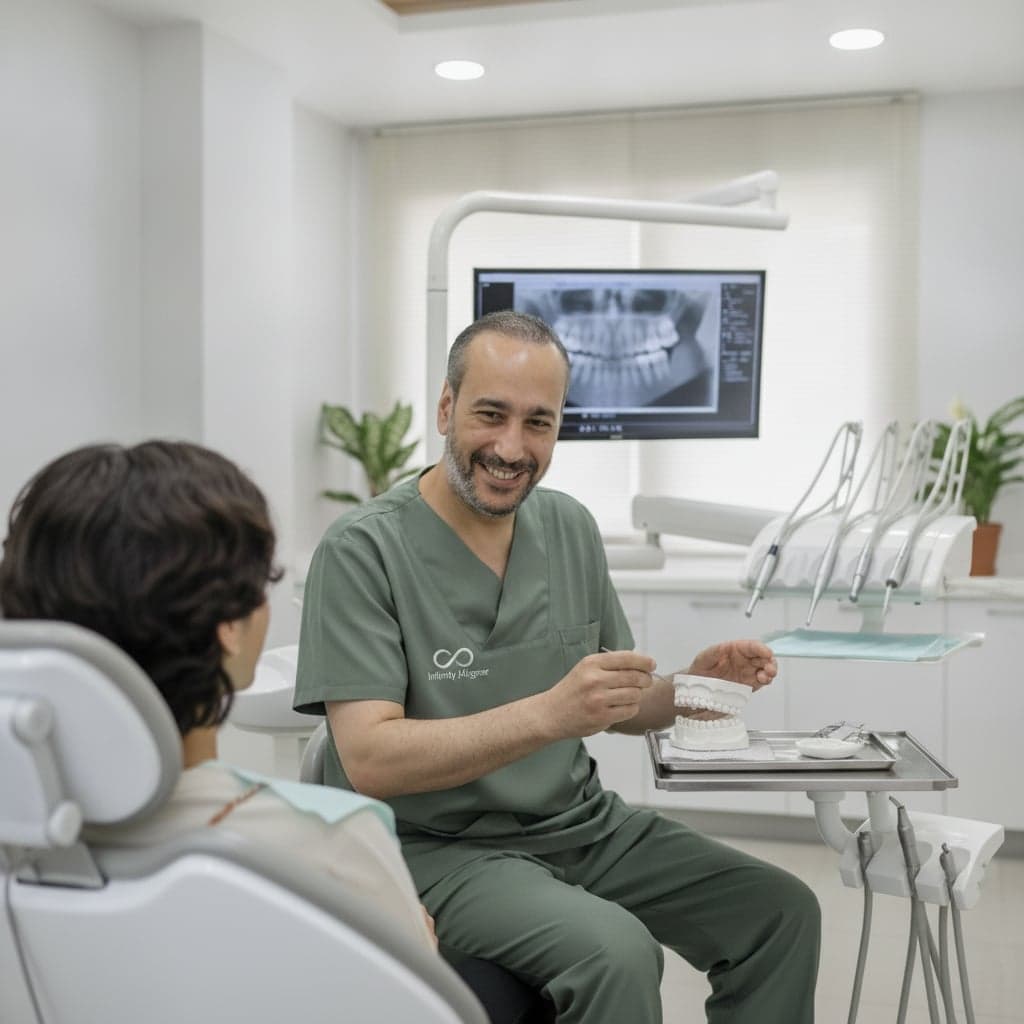
How much do Invisalign aligners really cost in Tunisia compared to Infinity Aligner? A detailed comparison of price, turnaround, technology and clinical support — for patients and dentists alike.
If you are considering clear aligner treatment in Tunisia, two names come up constantly: Invisalign, the pioneering American brand, and Infinity Aligner, the Tunisian manufacturer producing precision orthodontic trays locally. The question everyone asks — patients and dentists alike — is simple: which one to choose, and at what price? This detailed comparison answers directly, based on real price ranges in Tunisia in 2026, manufacturing technology, turnaround times and clinical support.
Let us state our position upfront: Invisalign is an excellent technology that democratised invisible orthodontics worldwide. Our goal is not to disparage it, but to give you an honest, transparent comparison so that you — patient or practitioner — can make an informed decision suited to the reality of the Tunisian market.
The Price Comparison at a Glance
Here are the average price ranges observed in Tunisia for a complete treatment, all fees included (consultation, scan, manufacturing, follow-up and retention). Prices vary according to case complexity and clinic.
| Criterion | Invisalign | Infinity Aligner |
|---|---|---|
| Mild case (1 arch / simple spacing) | 3,500 – 5,500 TND | 1,800 – 2,800 TND |
| Moderate case (both full arches) | 6,000 – 9,000 TND | 2,800 – 4,500 TND |
| Complex case (severe malocclusion) | 9,000 – 14,000 TND | 4,500 – 7,000 TND |
| Manufacturing turnaround | 8 – 12 weeks | 2 – 5 days |
| Place of manufacture | USA / Mexico | Tunisia (local) |
| 3D simulation before treatment | Yes (ClinCheck) | Yes (3D setup) |
| Retention included | Often extra | Included |
The finding is clear: for comparable treatment quality, Infinity Aligner is positioned around 40 to 55% below Invisalign rates in Tunisia. This difference does not come from a compromise on quality, but from the very structure of the model, which we detail below.
Why This Price Gap? Local Manufacturing
The main reason for the gap lies in the production chain. With Invisalign, your digital impression is sent to Align Technology's laboratories in the United States or Mexico. The trays are manufactured there, then shipped back to Tunisia. This international circuit adds logistics, customs and currency costs that flow directly into the final bill — and considerably lengthens turnaround times.
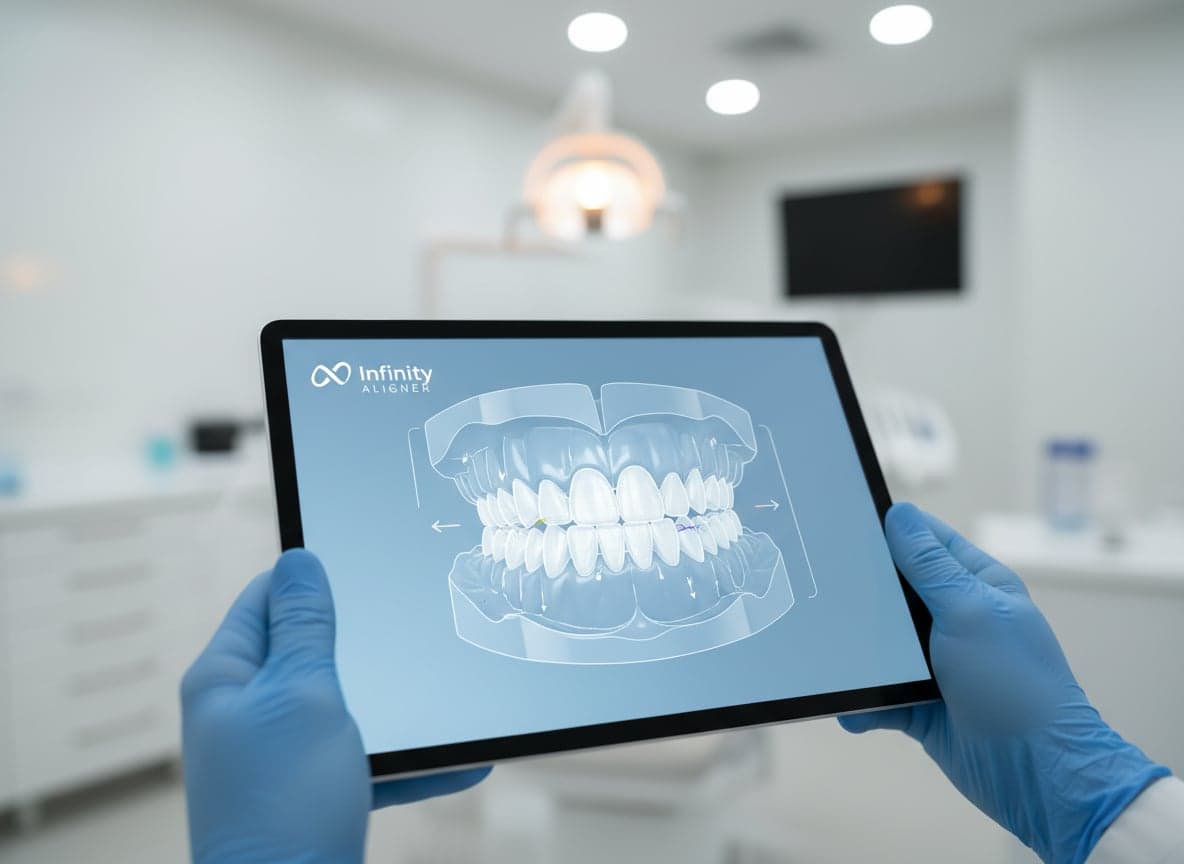
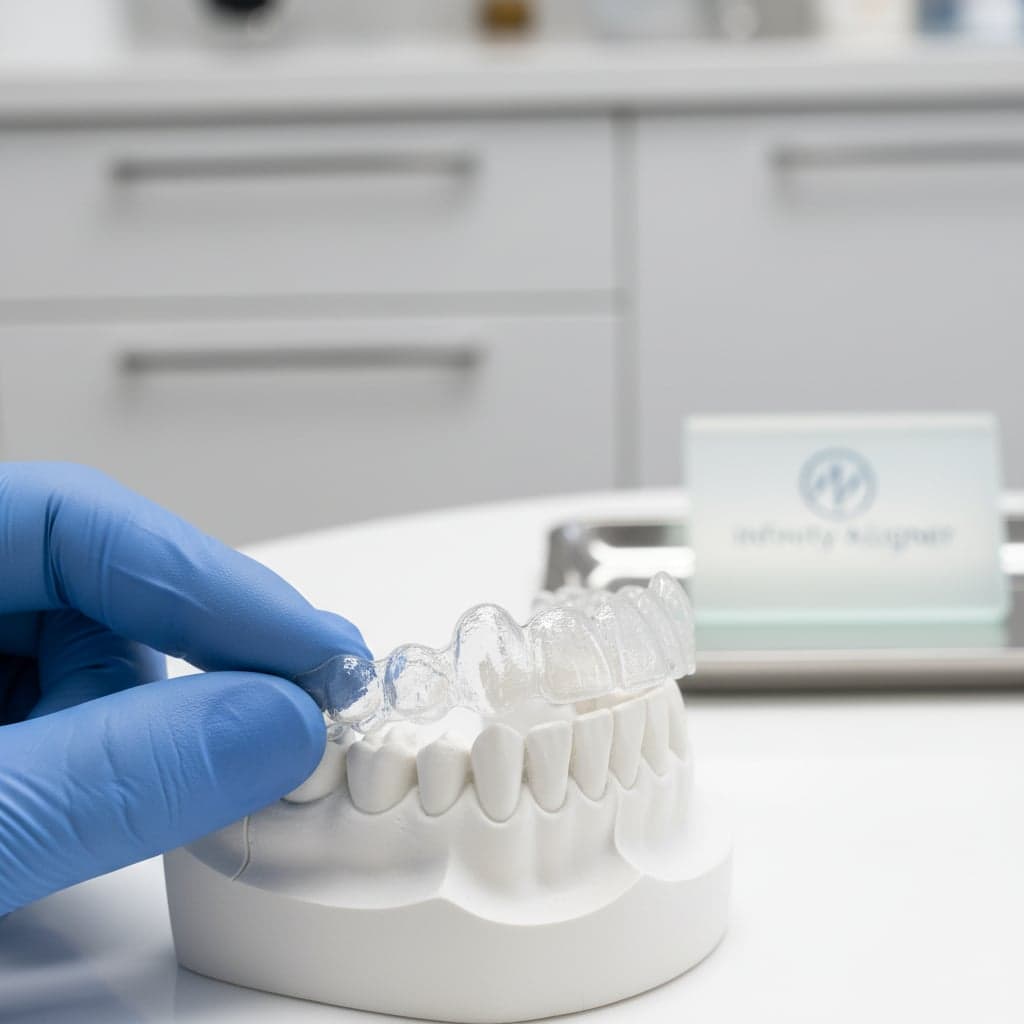
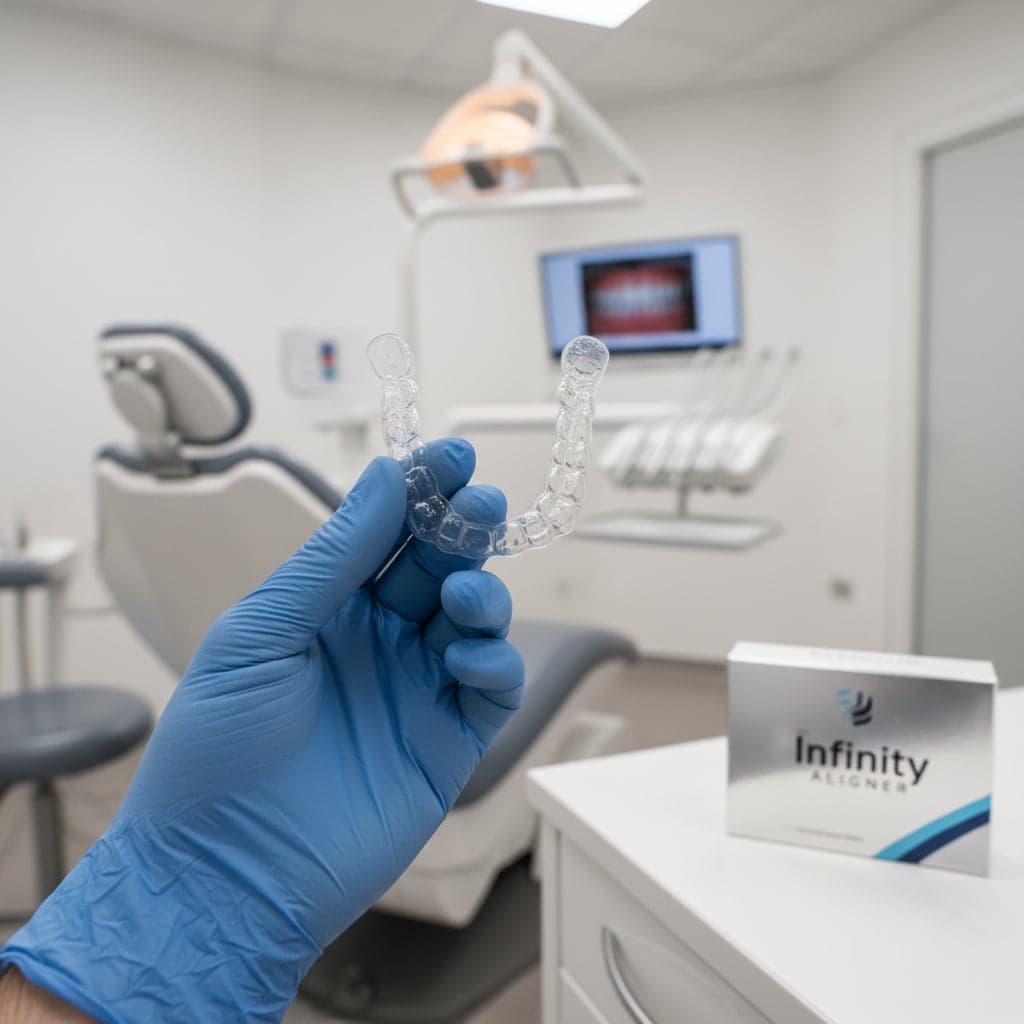
Infinity Aligner manufactures all of its aligners in Tunisia, within an integrated CAD/CAM digital workflow. The intraoral scan taken at the clinic is processed locally, the trays are thermoformed on-site and delivered to the practitioner in 2 to 5 days. This proximity removes import costs and allows an accessible price, with no international intermediary.
- No customs fees or transatlantic shipping passed on to the patient
- Turnaround reduced from several weeks to a few days
- Technical support in French and Arabic, in the same time zone
- Fast re-manufacturing in case of a lost or broken tray
Material Quality and Planning
A lower price legitimately raises the question of quality. On this point, the difference is smaller than imagined. Both solutions rest on the same biomechanical principles: a BPA-free medical thermoplastic, a 3D simulation of tooth movement, and an attachment system for complex movements.
Invisalign uses its patented SmartTrack material, recognised for its elasticity. Infinity Aligner uses a certified medical-grade multilayer thermoplastic, offering comparable transparency and force retention for the vast majority of clinical cases seen in everyday practice. For a standard to moderate case — which represents the overwhelming majority of treatments — the difference in final result is clinically negligible when planning is rigorous.
The determining factor for success is, in fact, neither the brand nor the material: it is the quality of diagnosis and planning carried out by the dentist. An excellent practitioner with Infinity Aligner will achieve better results than a poorly trained practitioner with Invisalign. This is why choosing a certified dentist takes precedence over choosing a brand.
For Patients: What to Remember
If you are a patient in Tunisia, here are the concrete elements to decide.
- Budget: Infinity Aligner saves you between 40 and 55% for an equivalent treatment. For a moderate case, this often represents several thousand dinars.
- Turnaround: you start your treatment in 2 to 5 days instead of waiting several weeks for delivery from abroad.
- Follow-up: a problem, a broken tray, an adjustment? Local re-manufacturing is fast, without waiting for an international parcel.
- Result: for the majority of cases (spacing, mild to moderate crowding, aesthetic alignment), the final result is equivalent.
- When Invisalign may be justified: certain very complex cases or specific practitioner preferences. Discuss this openly with your dentist.
Our advice: do not choose a brand, choose a certified and competent dentist. Ask to see cases they have treated, demand a 3D simulation before committing, and compare the all-inclusive quote (consultation, scan, trays, follow-up AND retention).
For Dentists: The Model That Changes the Game
If you are a practitioner, the choice of your aligner partner has a direct impact on your profitability, your workflow and your patients' satisfaction. Here is why more and more clinics in Tunisia are integrating Infinity Aligner.
| For the clinic | Invisalign | Infinity Aligner |
|---|---|---|
| Practitioner margin | Reduced by high lab cost | Widened (low local lab cost) |
| Delivery turnaround | 8 – 12 weeks | 2 – 5 days |
| Certification & training | Paid, by volume tiers | Included, no imposed quota |
| Clinical support | International, time difference | Local, French-speaking, responsive |
| Patient accessibility | Limits candidate numbers | Expands your patient base |
The key point for a clinic is twofold. On one hand, the lower laboratory cost mechanically widens your margin on each case, without having to raise the patient price. On the other hand, the price accessibility for the end patient considerably expands your pool of candidates: patients who gave up on an Invisalign treatment deemed too expensive become treatable. You treat more cases, with a better margin on each one.
- Certification programme included, with clinical training in case selection, attachment placement and planning
- 3D setup provided for validation before manufacturing — you keep full clinical control
- Short turnaround that improves the patient experience and speeds up treatment starts
- Dedicated clinical contact, reachable in your time zone and in your language
- No imposed volume quota to maintain your certification level
Quick Decision Table
| Your priority | Recommendation |
|---|---|
| Best value for money | Infinity Aligner |
| Shortest treatment turnaround | Infinity Aligner |
| Local manufacturing & personalised support | Infinity Aligner |
| Well-known international brand | Invisalign |
| Standard to moderate case (majority) | Infinity Aligner |
| Expand patient access to treatment | Infinity Aligner |
Conclusion: Value Over Brand
Invisalign remains a historic reference in invisible orthodontics, and nobody disputes that. But in Tunisia, in 2026, economic and logistical reality gives a decisive advantage to local manufacturing. Infinity Aligner offers equivalent treatment quality for the vast majority of cases, at a price 40 to 55% lower, with turnaround reduced from several weeks to a few days and close-proximity support.
For the patient, it is a transformed smile at an accessible cost. For the dentist, it is a widened margin and a broader patient base. In both cases, the right reflex is the same: consult a certified Infinity Aligner dentist, ask for your 3D simulation, and compare all-inclusive quotes. The smartest decision is not to pay for a name — it is to pay for a result.
Infinity Aligner
Clinical & editorial team
More articles
How to Choose Clear Aligners in Tunisia
Clear Aligners vs Braces: Complete Comparison

How Much Do Clear Aligners Cost in Tunisia?
How Long Does Clear Aligner Treatment Take?
How to Clean and Care for Your Clear Aligners Daily
Clear Aligners for Teenagers: What Parents Need to Know
Gap Teeth & Diastema: Can Clear Aligners Fix Them?
Can You Play Sports with Clear Aligners?

3D Smile Simulation: How It Works and What to Expect
Orthodontic Relapse: Why Teeth Move After Treatment
Intraoral Scanner vs Traditional Impressions: What's the Difference?

Clear Aligners for Adults: Is It Ever Too Late?
Wisdom Teeth and Clear Aligners: Are They Compatible?

Clear Aligners: A Versatile Therapeutic Approach in Orthodontics
Orthodontics and Periodontal Health: What Every Patient Needs to Know
The Technology Behind Clear Aligners: From Design to Tray
How to Prepare for Your Orthodontic Consultation: 10 Questions to Ask
Bruxism and Clear Aligners: Can You Correct and Protect at the Same Time?

Class II Malocclusion and Clear Aligners: What Treatment Options Exist?
Clear Aligners and Dental Implants: Protocol, Timing and Clinical Cases
Digital Workflow and Aligner Biomechanics: The Advanced Practitioner Protocol
The Limits of Clear Aligners: Identifying Complex Cases Beyond Their Reach
Aligner Manufacturing: Thermoforming, 3D Printing and Polymer Science
Invisible Orthodontics in 2030: Predictive AI, Direct Printing and Active Materials
Smile Without Borders: The Price of Aligners Between Tunisia, Europe and Canada
Attachments in Invisible Orthodontics: The Silent Levers of Biomechanics

The Smile Beyond the Mirror: The Profound Impact of Dental Alignment on Psychological Well-being
Tunisia: The New Eldorado of Digital Dentistry and Medical Tourism
Post-Orthodontic Retention: The Forgotten Step That Decides Everything
What You Can (and Cannot) Eat With Clear Aligners
Teeth Whitening and Clear Aligners: Can You Treat and Whiten at the Same Time?
TMJ and Clear Aligners: How Invisible Orthodontics Acts on Jaw Pain
The Different Types of Dental Retainer: A Complete Guide After Orthodontic Treatment
The hidden dangers of metal braces: what patients need to know
Root resorption: the silent risk of poorly managed orthodontic treatments

Orthodontics and cavities: how metal braces compromise dental hygiene

Orthodontic relapse: why teeth return to their original position
Braces and chronic pain: the underestimated impact on daily quality of life
Intraoral scanner vs conventional impressions: dimensional analysis and clinical implications
CAD/CAM digital workflow in orthodontics: from intraoral scanning to aligner fabrication
Deformation, shrinkage and cumulative errors: why the conventional impression chain compromises aligner precision
Intraoral Scanners 2025: Complete Technical and Metrological Comparison
Why Choose Infinity Aligner? The Complete Guide for Dental Practitioners
Composite Selection for Aligner Attachments: Mechanical Analysis and Clinical Protocol
TMJ and Malocclusion: Differential Diagnosis and Clinical Approach for the Practitioner
Travelling with Clear Aligners: The Complete Guide for Stress-Free Trips
The First Month with Aligners: What to Expect Week by Week
Pre-Prosthetic Orthodontics: Preparing the Site Before Implants or Veneers
How to Present Aligners to a Hesitant Patient — A Consultation Script
Anterior Open Bite and Aligners: Protocol, Intrusion and Relapse Risk
Posterior & Anterior Crossbite: Diagnosis and Correction with Clear Aligners
Tobacco, Cigarettes and Clear Aligners: Everything You Need to Know
What Happens If You Don't Wear Your Aligners 22 Hours a Day?
Myths and Misconceptions About Clear Aligners: What Patients and Dentists Get Wrong
Sleep Apnea and Orthodontics: The Dentist's Role in Screening and Management
Consult a certified dentist
Our 200+ certified partners in Tunis, Sfax, Sousse and the francophone zone welcome you.
Book a consultation