How to Present Aligners to a Hesitant Patient — A Consultation Script
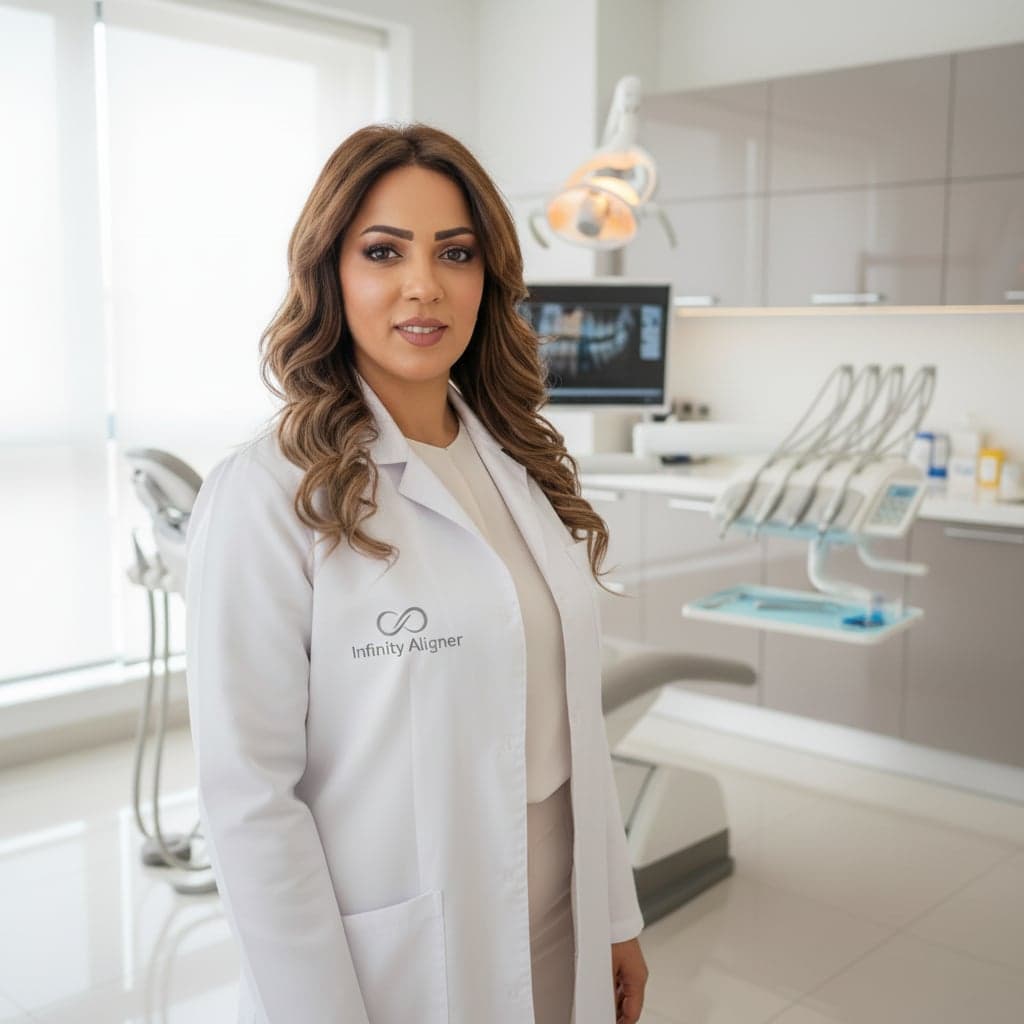
Consultation technique, objection handling and a complete dialogue script to convert a hesitant patient into a committed clear aligner candidate.
The patient is sitting in front of you. They mentioned their teeth in passing, watched a few videos online, maybe compared prices. They're curious — but not yet convinced. This moment, between vague interest and commitment, is the playing field of the modern orthodontic consultation. This guide gives you a structured script, precise phrasing and proven communication techniques to turn hesitation into confidence.
Why Patients Hesitate — and What It Really Means
A patient's hesitation is almost never an objection to treatment itself. It's an implicit request for information, reassurance or permission. Understanding the exact nature of that hesitation is the first skill of the communicating practitioner. The five most common barriers are: price perceived as excessive, fear that it won't work, doubt about their own eligibility, concern about treatment time and decision inertia ("I need to think about it"). Each calls for a different response — and none of them is answered by a price brochure.
Phase 1 — Opening: Creating Psychological Safety
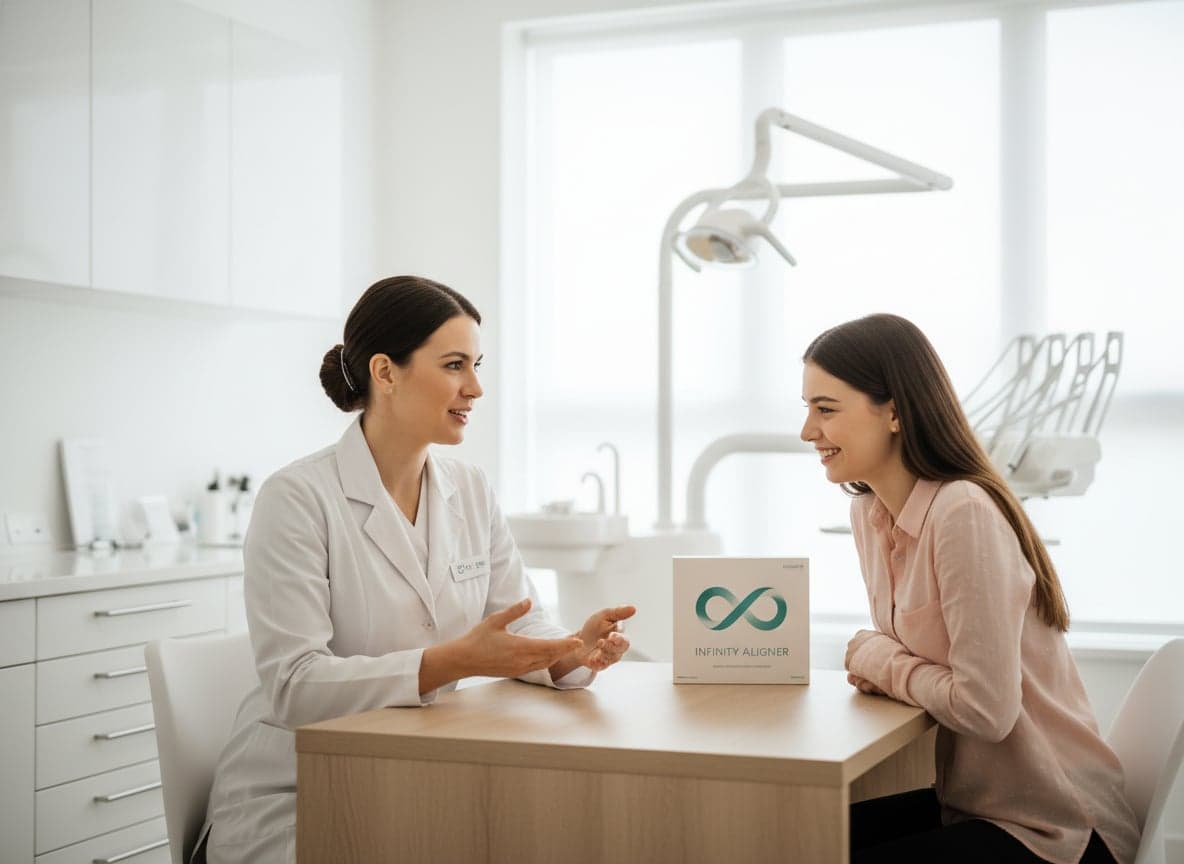
Before any script, there is a posture. A patient who feels judged, rushed or like a number will close off. The first three minutes of a consultation set the emotional register for everything that follows. Start with an open, non-medical question: "What made you start thinking about aligners right now?" This question is strategic: it reveals the patient's primary motivation (upcoming wedding, career change, long-standing insecurity) and gives you the emotional lever on which to build your argument. Listen genuinely. Don't take notes during this phase — maintain eye contact.
- "What made you start thinking about aligners right now?"
- "How long have you been thinking about correcting your teeth?"
- "Are there particular situations where it bothers you — professionally or socially?"
- "What would be different for you if this problem were corrected?"
Phase 2 — Education: Show, Don't Tell
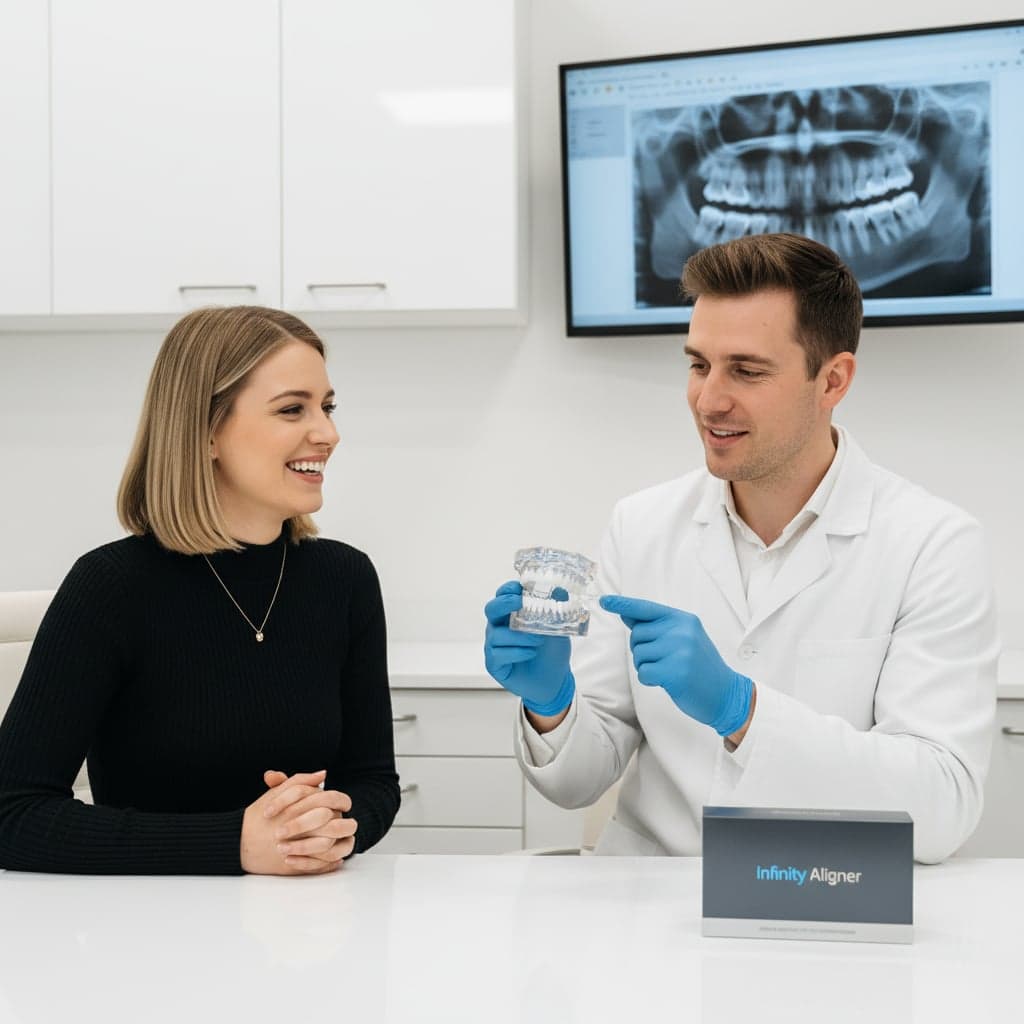
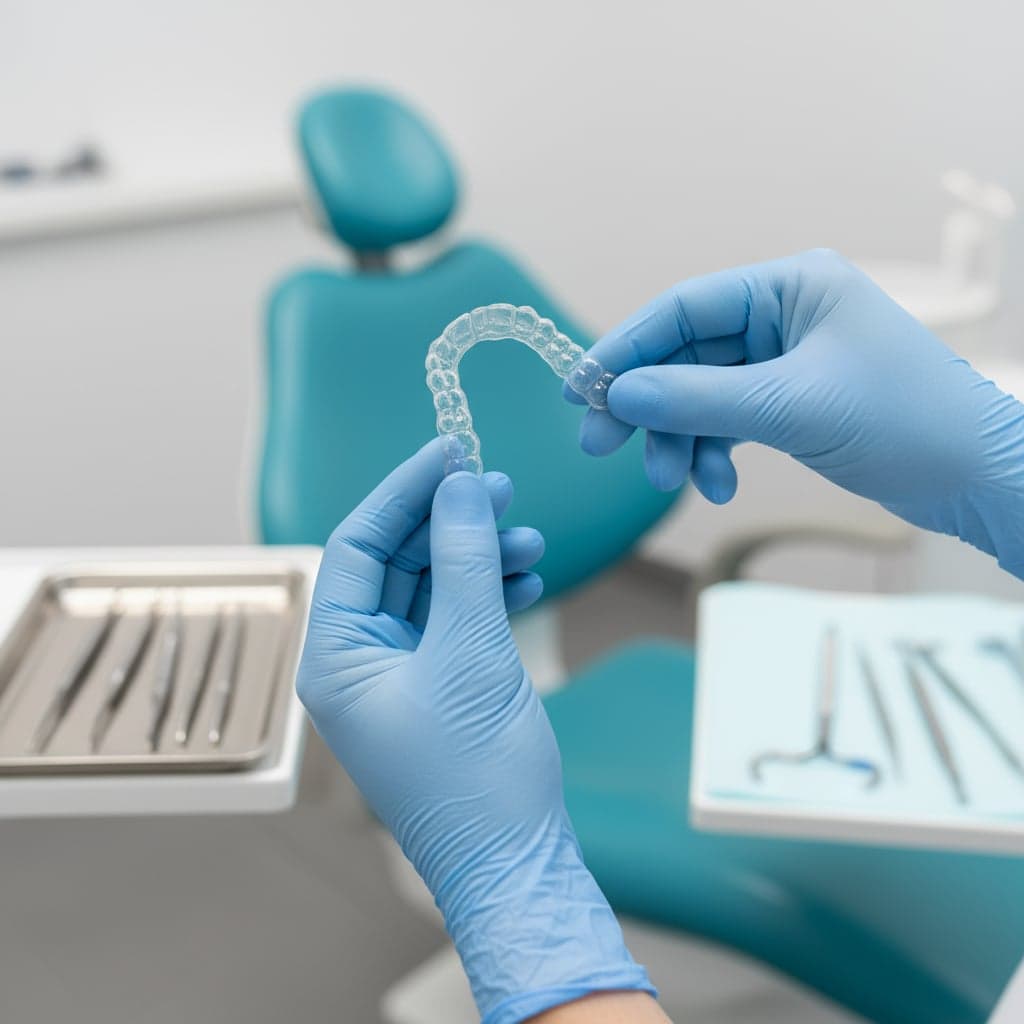
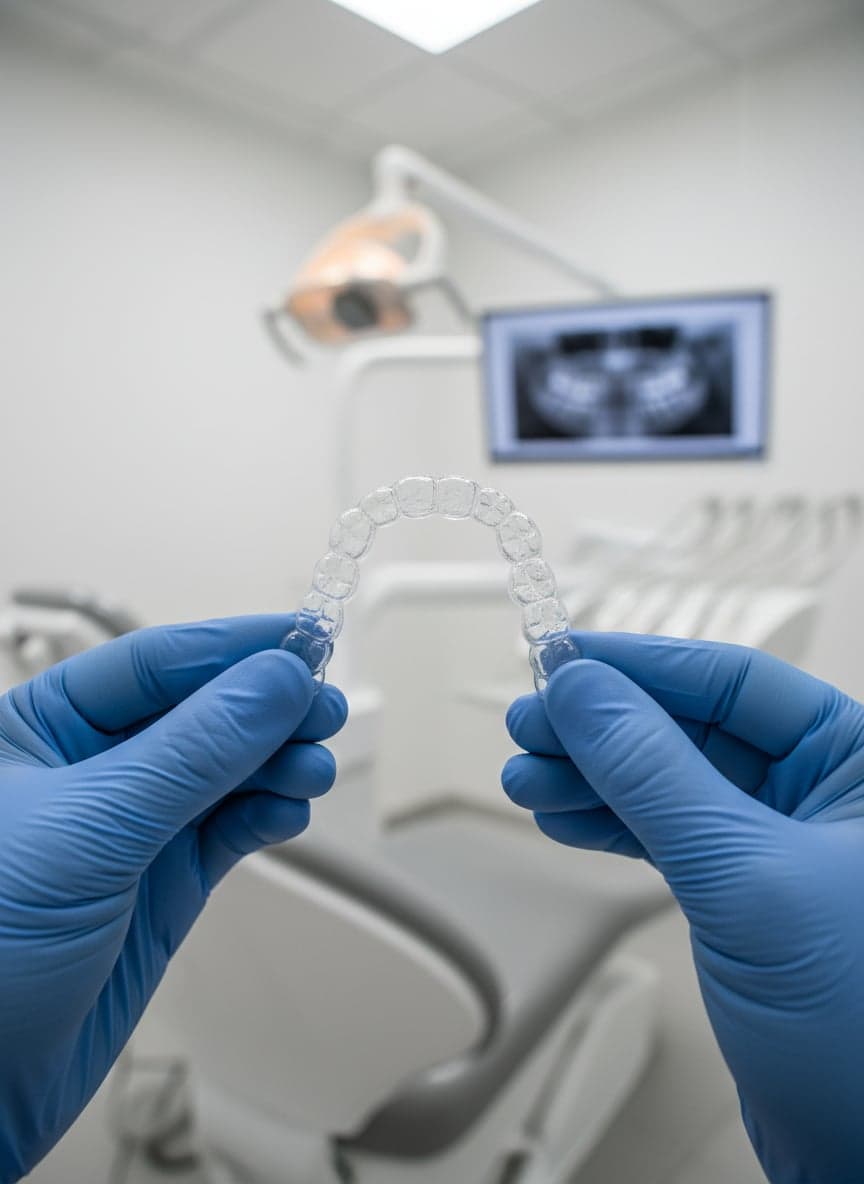
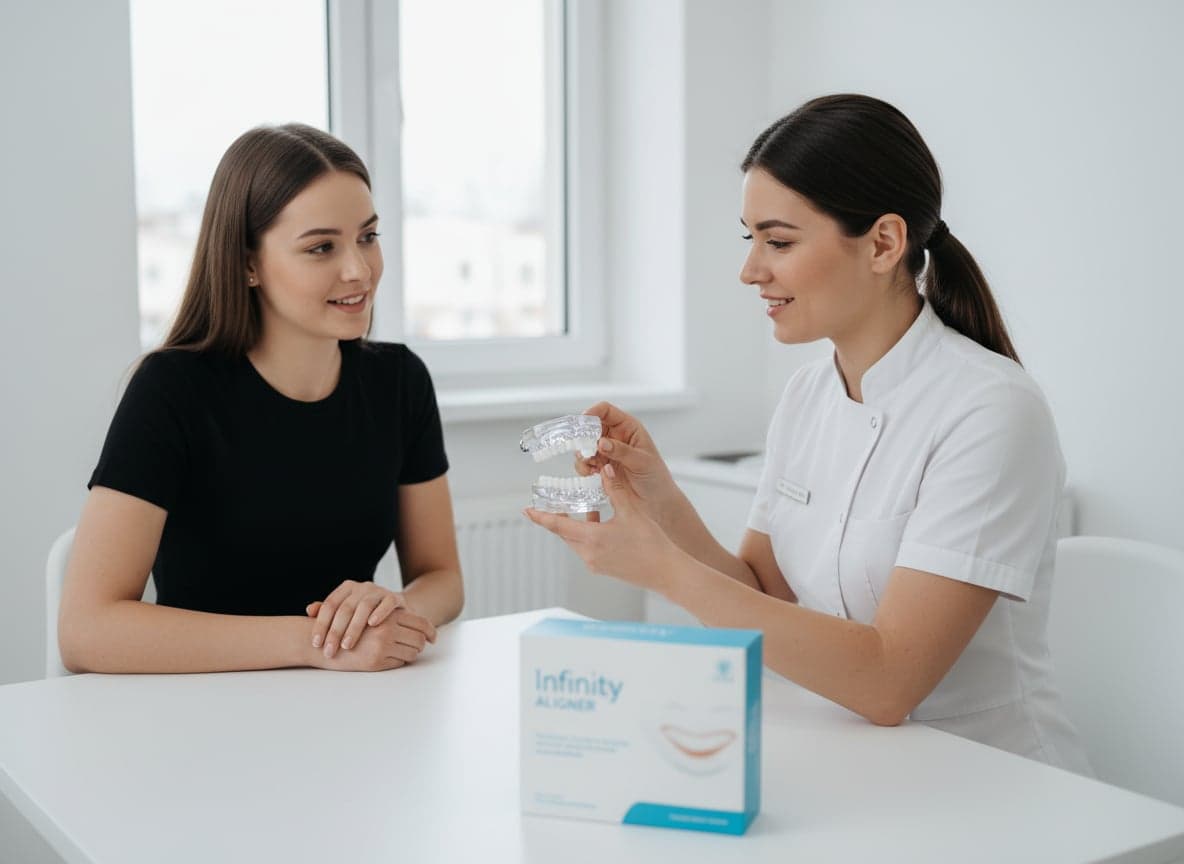
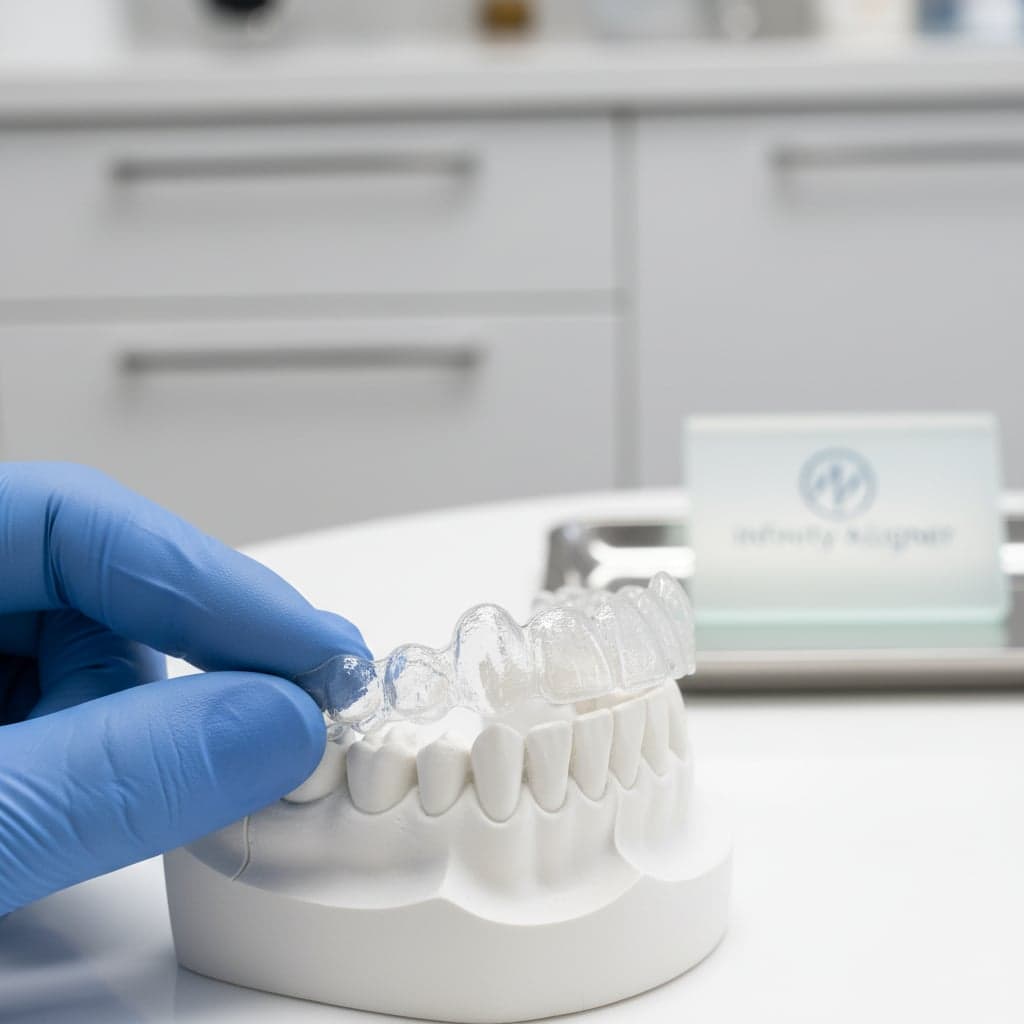
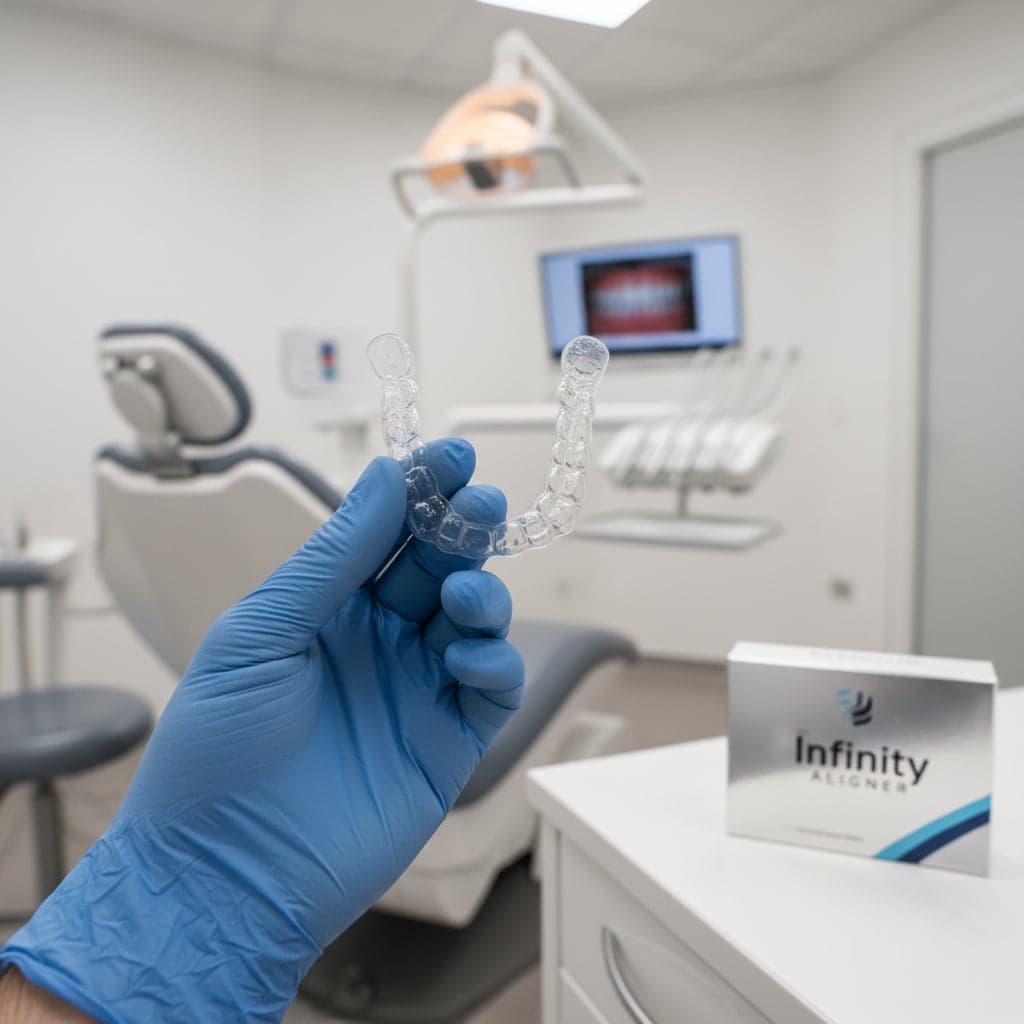
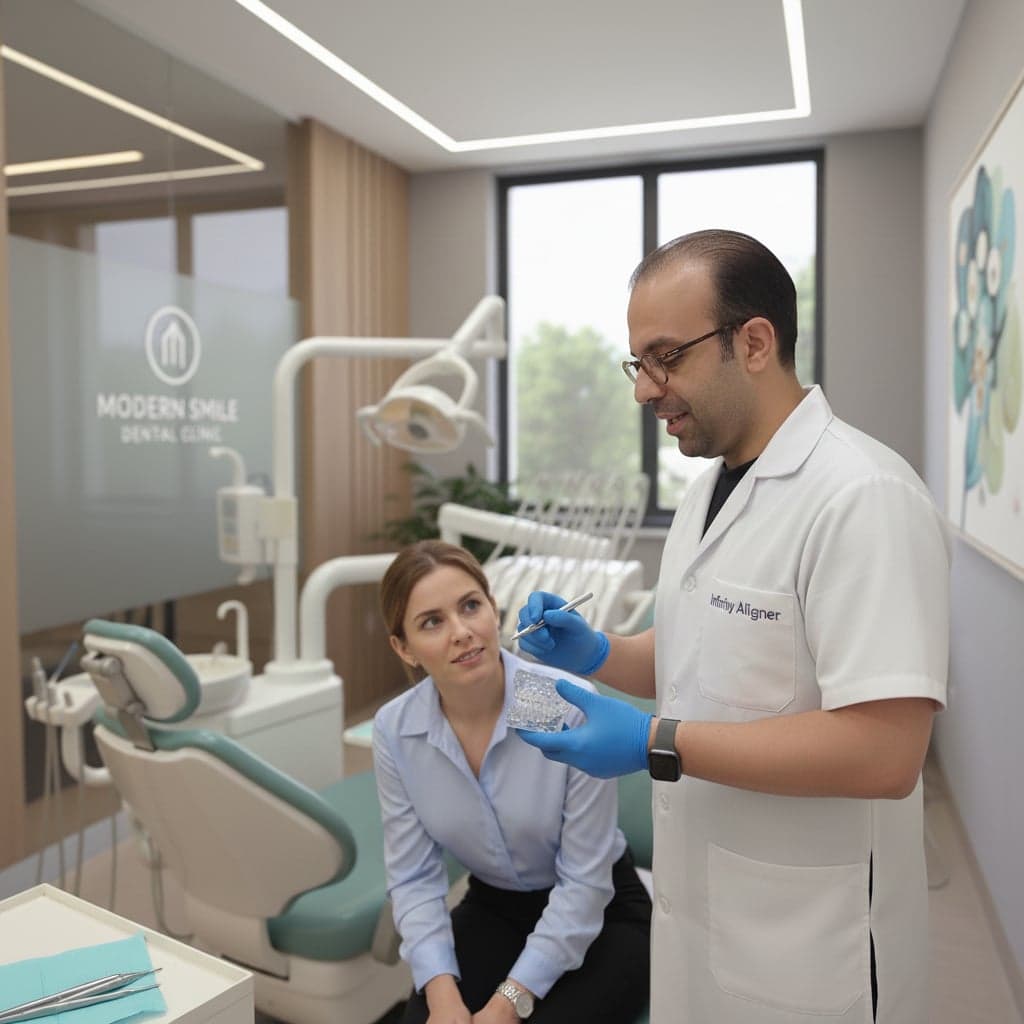
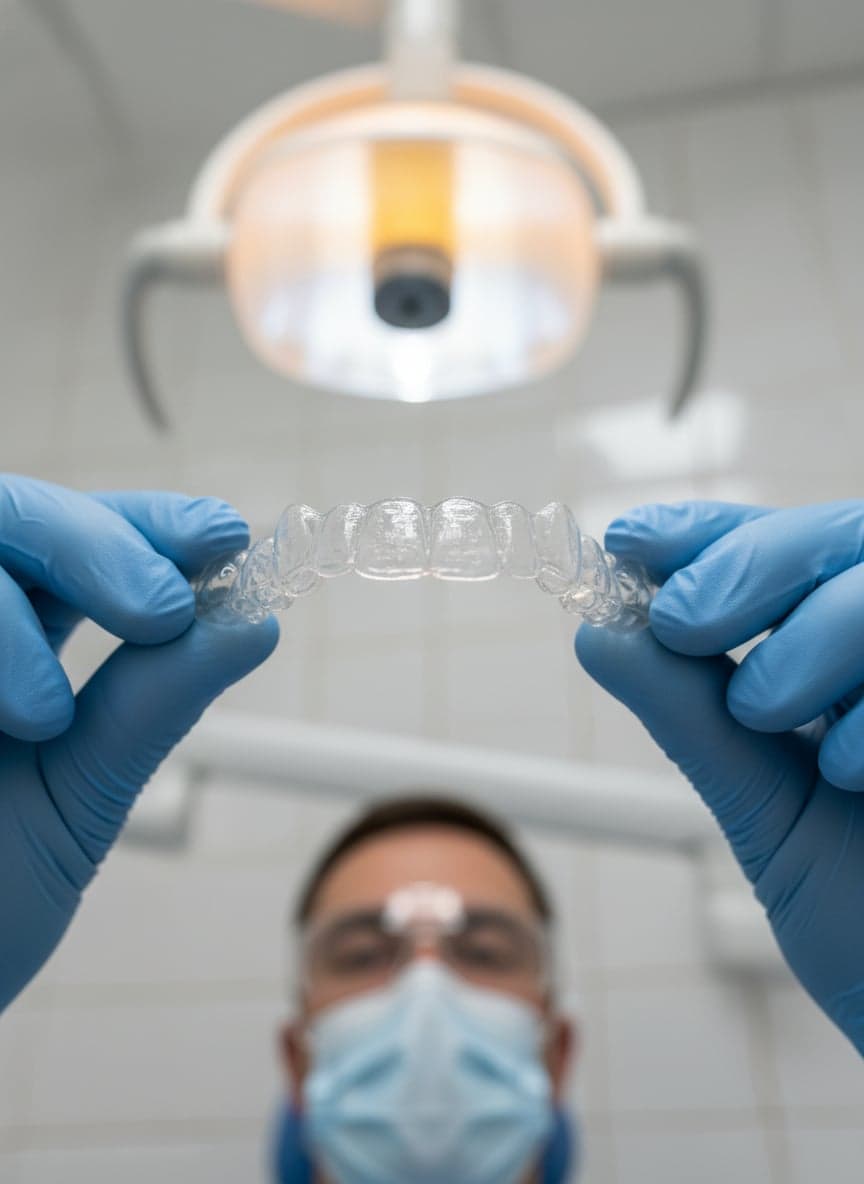
Most patients arrive with inaccurate ideas about aligners: too expensive, limited to mild cases, uncomfortable, not as effective as braces. Your role isn't to correct them head-on — it's to let them discover. Use visual aids systematically. Show a physical aligner. Let them hold it. The object is light, transparent, smooth — it communicates by itself what no speech will convey as effectively. Explain the process in three steps only: the scan, the 3D plan, the fabrication. No more. Simplicity reassures.
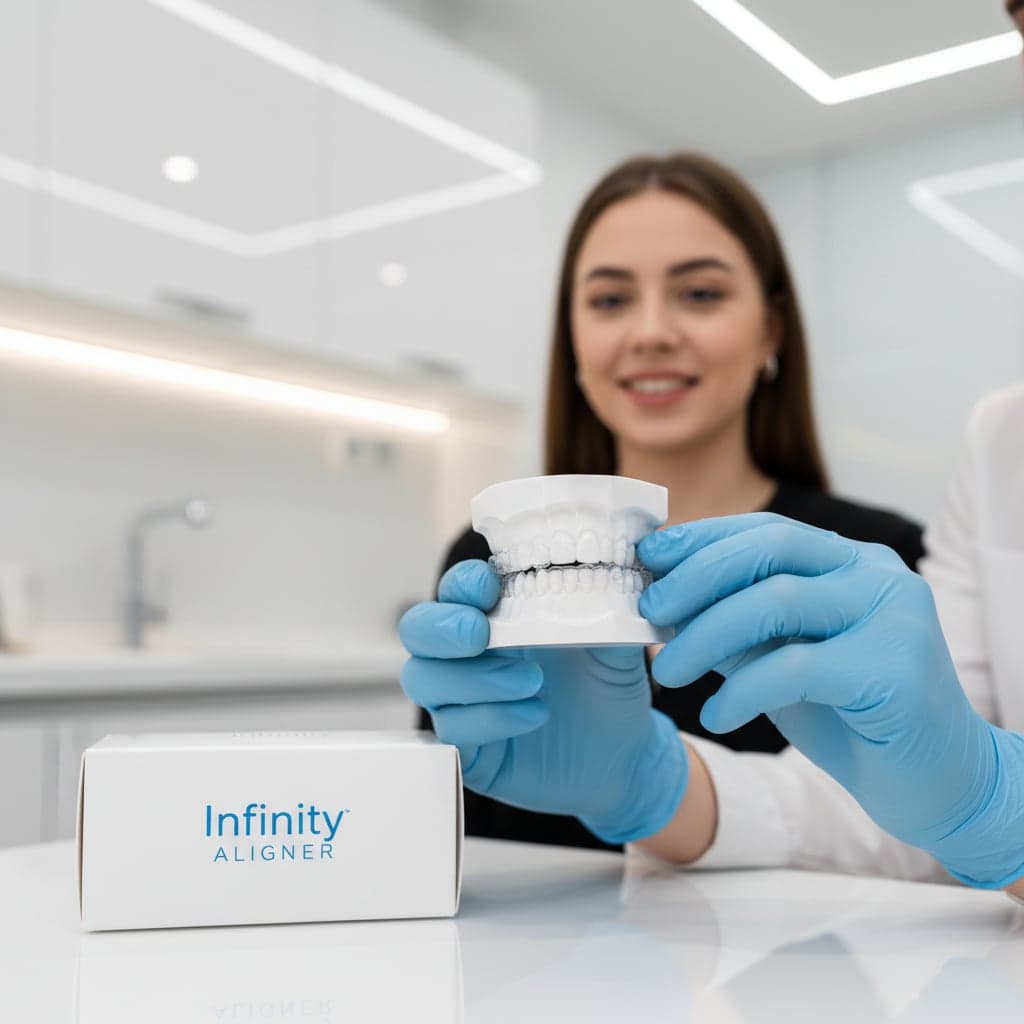
Recommended script: "This is what an Infinity Aligner looks like. [Hand over the aligner.] It's custom-made from a digital scan of your teeth — no impressions, just a two-minute scan. Before anything is manufactured, you receive a 3D simulation that shows you exactly the final result. You approve it, then we produce."
Phase 3 — The 3D Simulation: The Pivotal Moment
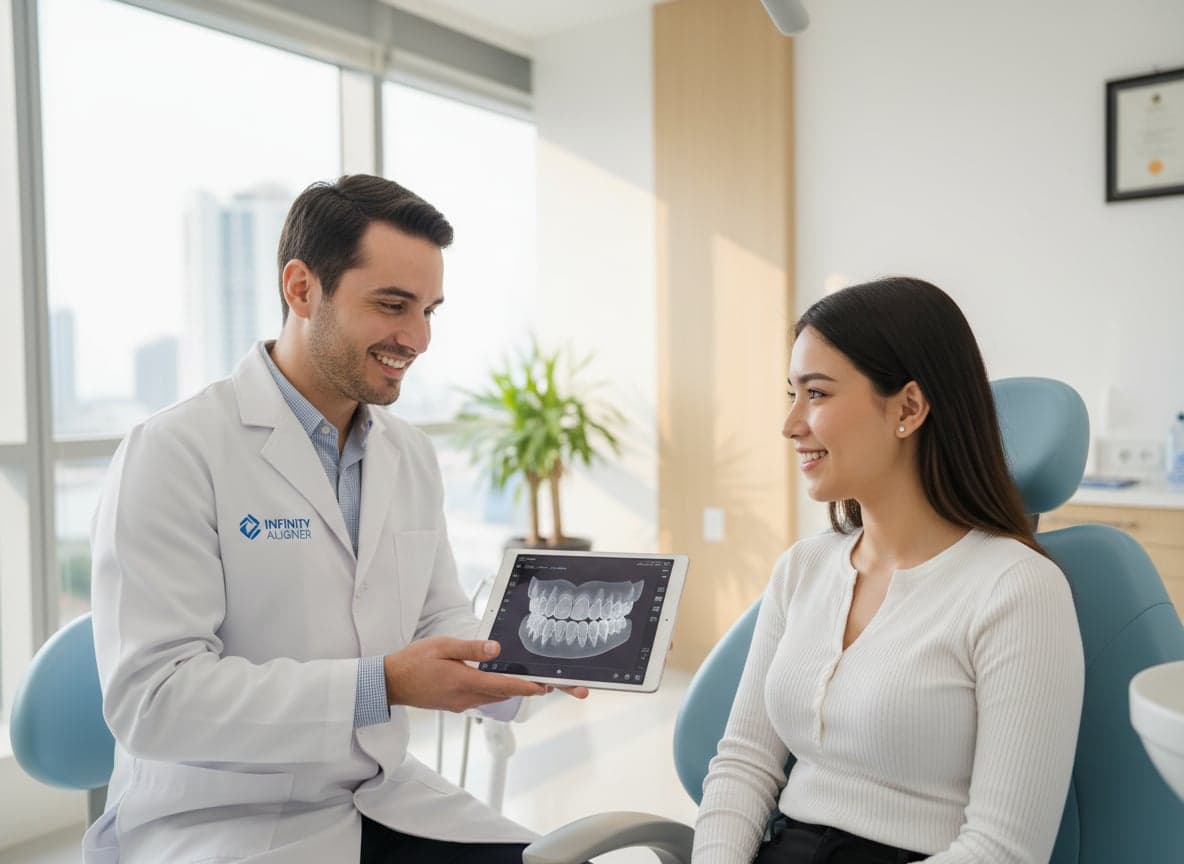
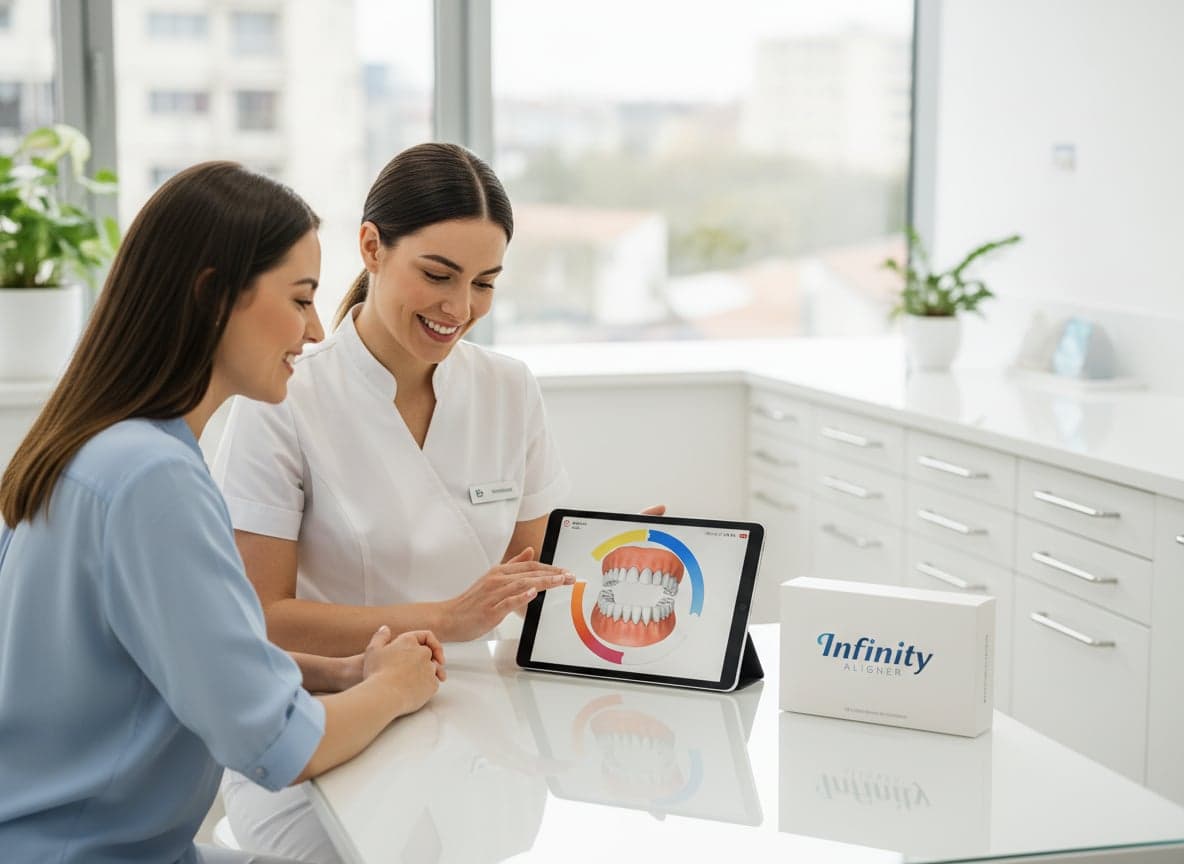
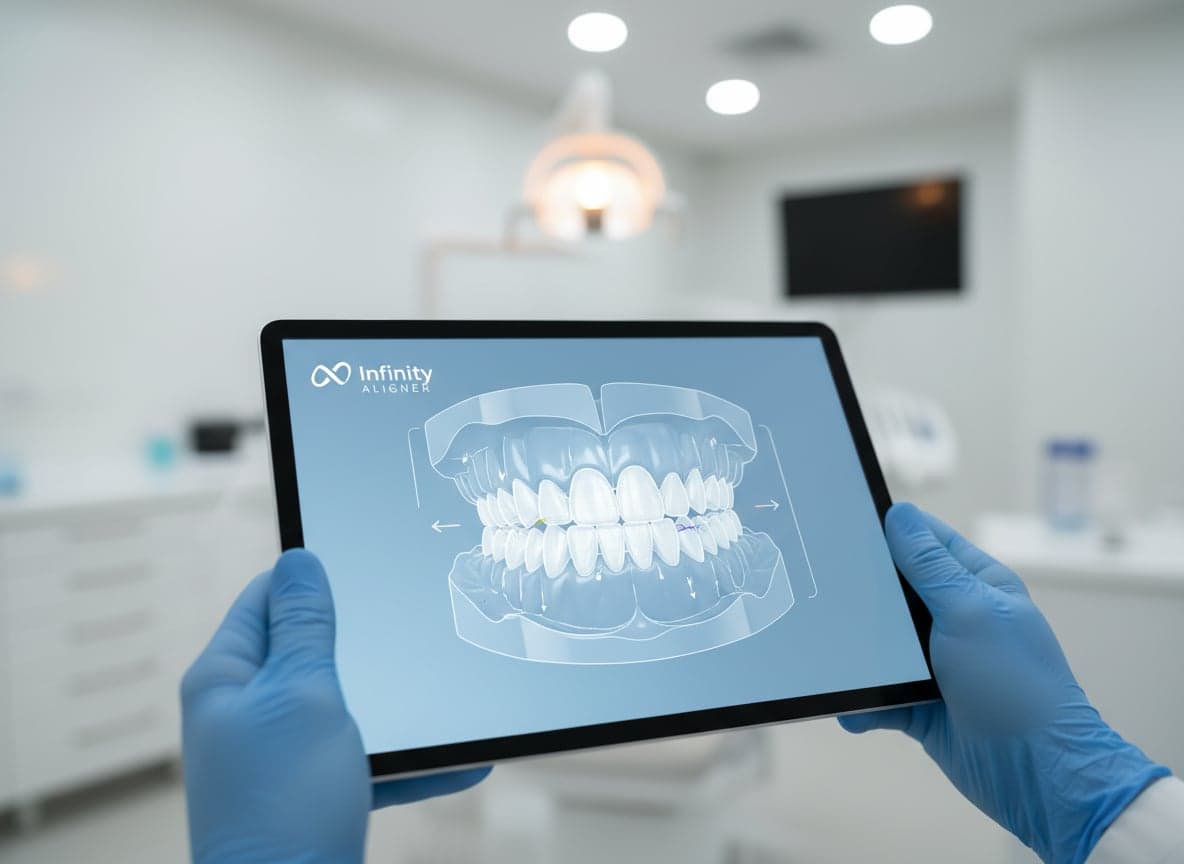
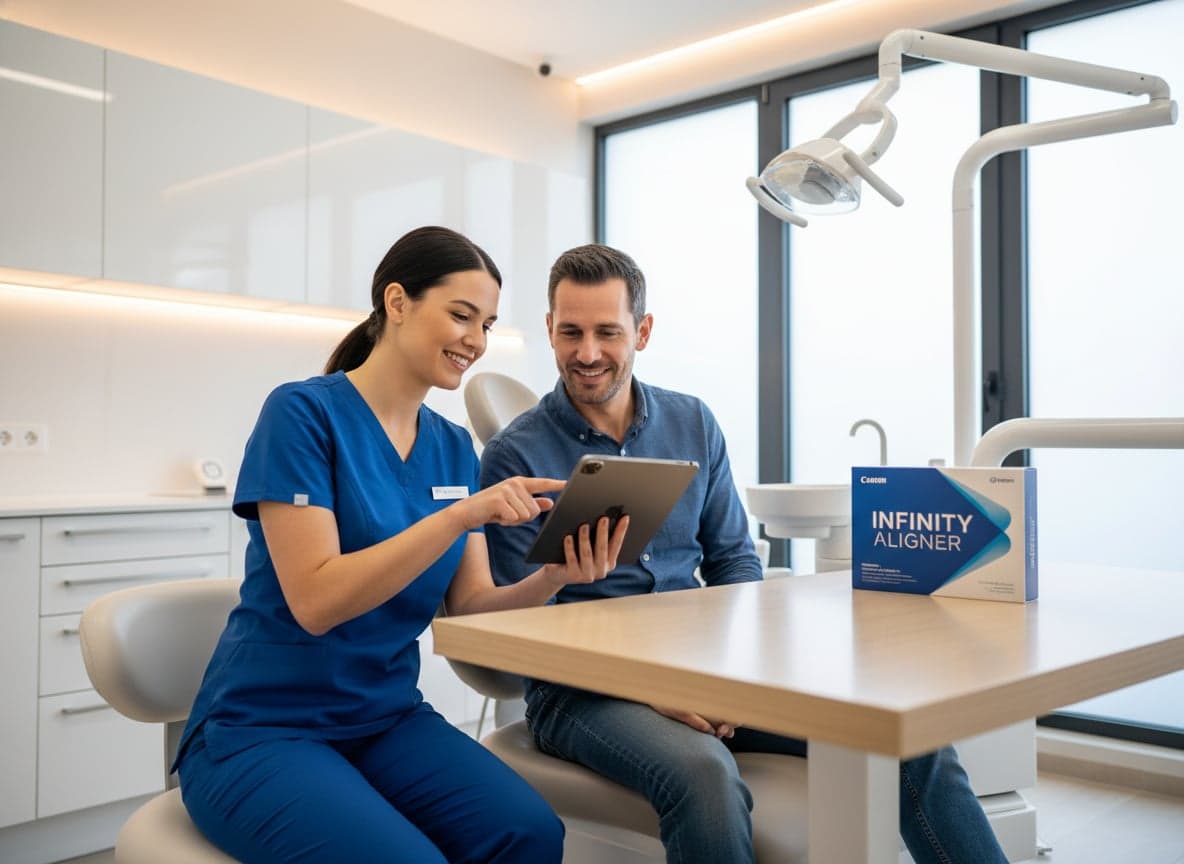
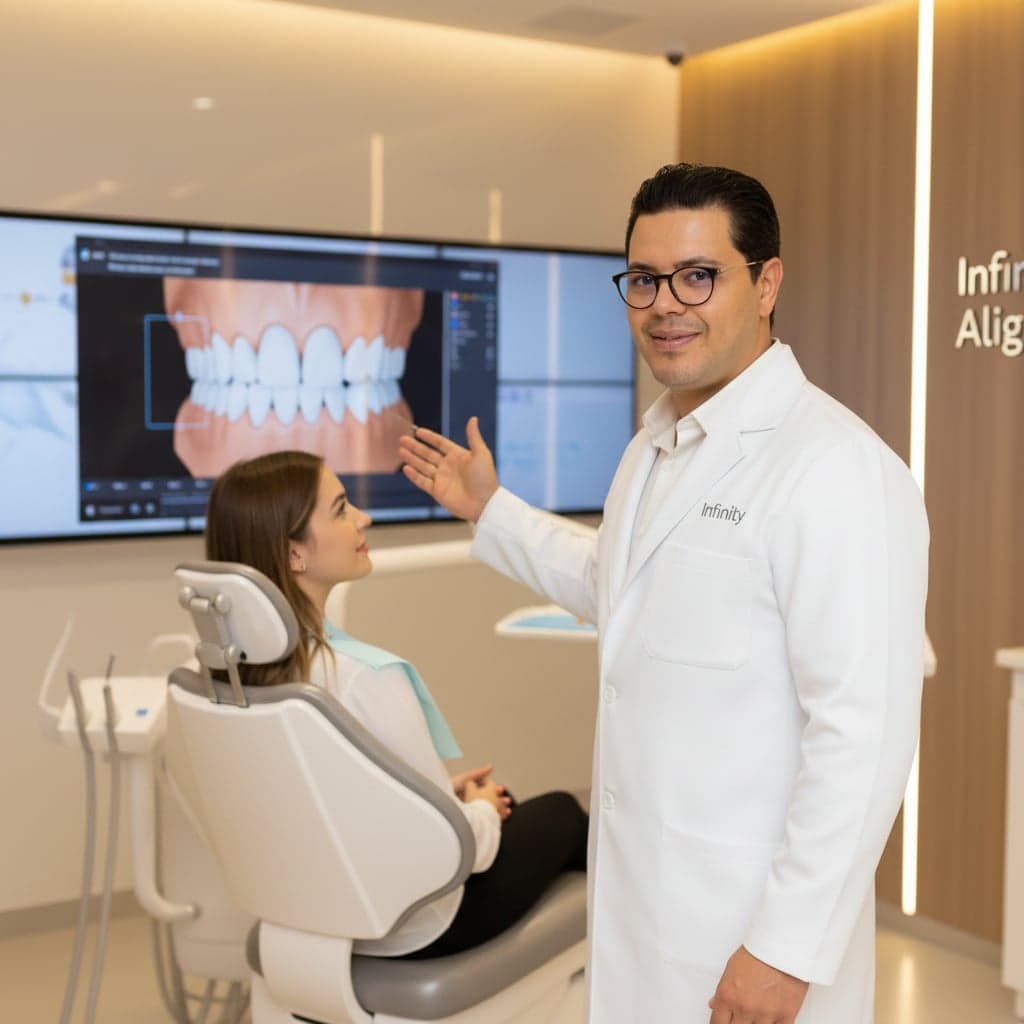
The smile simulation is the most powerful conversion tool at your disposal. Nothing replaces seeing your own smile transformed. If your workflow allows, perform an orientation scan at the first consultation and offer a preview — even an approximate one — during the appointment. Otherwise, show treated cases with their initial simulations and real results side by side. The key phrase is: "Before starting any treatment, you will see exactly where your teeth will end up. You're not committing to anything until you've validated that result."
This sentence is psychologically critical. It shifts the perceived risk: the patient understands they're not signing a blank cheque, but buying a vision first. Case acceptance rates increase systematically once the patient has seen their own simulation. This is why the highest-performing Infinity Aligner practitioners offer a free or low-cost discovery scan — the conversion investment is strongly positive.
Phase 4 — Handling Objections: Five Scripts
Objection 1: "It's Too Expensive"
Never defend the price directly — reframe around value and the relevant comparison. Script: "I understand it's a significant investment. For context: traditional metal braces often cost 80–90% of the aligner price — but they take on average 30% longer to complete, they're visible at every professional and social interaction and they come with significant dietary restrictions throughout treatment. The price difference, spread over the treatment duration, often amounts to less than a coffee a day. Is the result worth it for you?"
Alternative if the budget is genuinely limiting: offer an instalment plan if your practice allows, or explore entry-level options for simple cases. Never lose a patient to a financial barrier without having presented every option.
Objection 2: "I Need to Think About It"
"I need to think about it" almost always means "I still have a question I haven't asked." Don't let the patient leave without identifying it. Script: "Of course, it's an important decision. To help you think in the right direction — what still feels unclear or uncertain at this point?" In the vast majority of cases, one or two minutes answering that specific question is enough to unblock the decision. If the patient says "it's just the budget," return to the financial objection. If they say "I need to discuss with my partner," offer a second joint consultation — and propose a date within the week.
Objection 3: "Do Aligners Actually Work?"
This objection reveals a deficit of social proof. Respond with data AND a human story. Script: "That's a great question, and I'm glad you asked. We've treated more than 4,800 patients with Infinity Aligner, with a 98.3% satisfaction rate. [Show two or three cases with before/after photos.] What's more meaningful than statistics is that every certified patient validated their result on simulation before starting — so the final outcome never surprises them."
Objection 4: "Am I a Good Candidate?"
Never answer this question vaguely. Examine, qualify, be precise. Script: "That's exactly what I'm about to tell you in the next two minutes. [Examine.] In your case, I can see [precise description of the issue]. This type of case is well within our treatment indications — we manage it regularly with excellent results. The only thing I want to confirm is [specific point] on a more precise scan."
If the case is out of indication, be honest immediately and redirect. Your clinical integrity is your long-term trust capital.
Objection 5: "How Long Does Treatment Take?"
Reframe duration as an investment, not an inconvenience. Script: "For a case like yours, we estimate between 8 and 12 months. I know that can sound like a long time — but here's how I'd suggest looking at it: in 12 months, you're done. You have a transformed smile for the rest of your life. Does 12 months still feel as long viewed that way?"
Phase 5 — The Close: Propose a Concrete Next Step, Not a Decision
The most common mistake at the end of a consultation is asking "so, are you on board?" — a binary question that forces the patient into a defensive position. Replace it with a concrete, low-friction next step. Propose the scan, not the treatment. "What I suggest is that we do your scan today — it's three minutes, painless, no commitment. From there, I'll send you your simulation within 48 hours and you'll see for yourself what we can do. Does that work for you?"
This approach works for three reasons: it moves the decision one step back (scan vs treatment), it creates a low-cost behavioural commitment and it places the visual — the simulation — between the consultation and the final decision, where it's most persuasive.
Post-Consultation Follow-Up: The Critical 72 Hours
If the patient leaves without booking their scan, the conversion window closes quickly. Implement a three-step follow-up protocol: a WhatsApp message or email the next day ("Great to meet you yesterday — here are two cases similar to yours if you'd like to visualise the type of result possible"), a call or message at D+3 if no response ("I wanted to check whether you had any additional questions after our conversation"), and a reminder at D+7 with a concrete date proposal. This simple protocol triples the conversion rate of unclosed consultations.
The Physical Consultation Environment
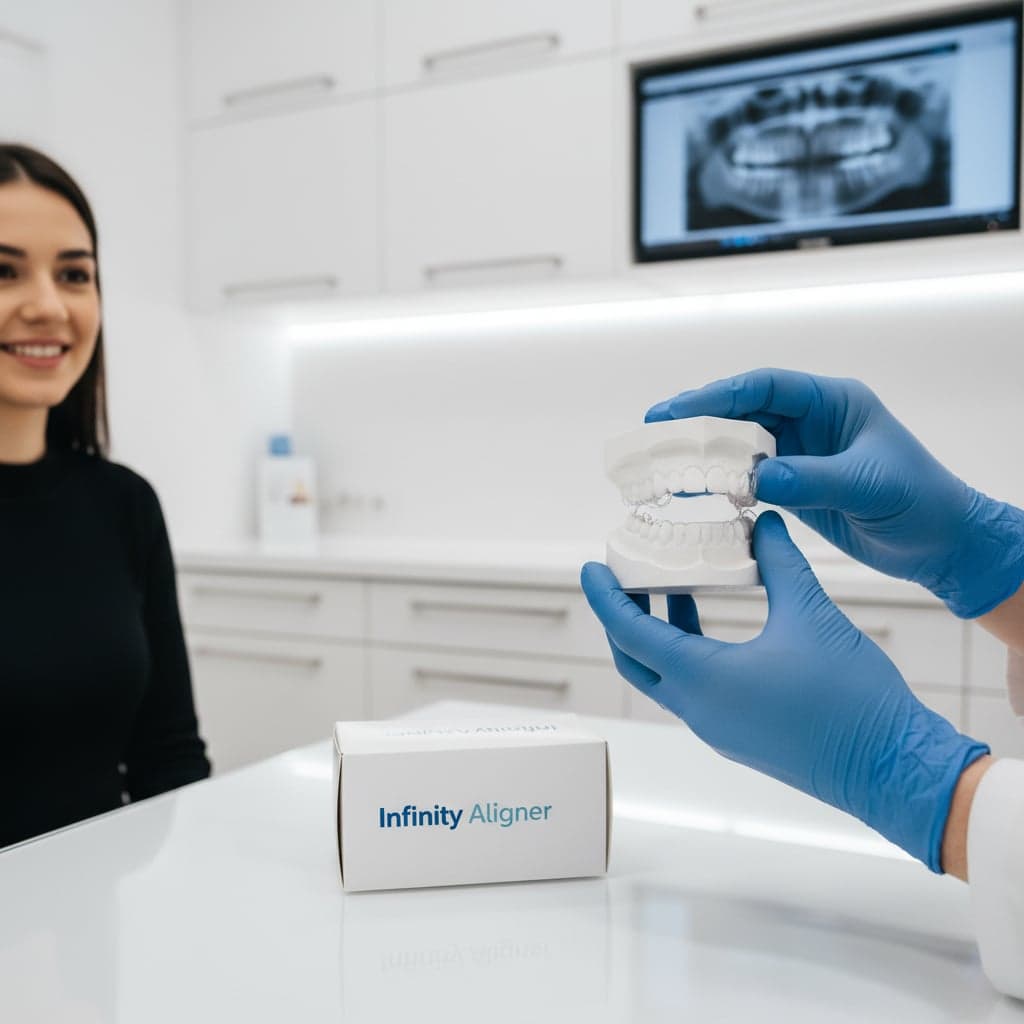
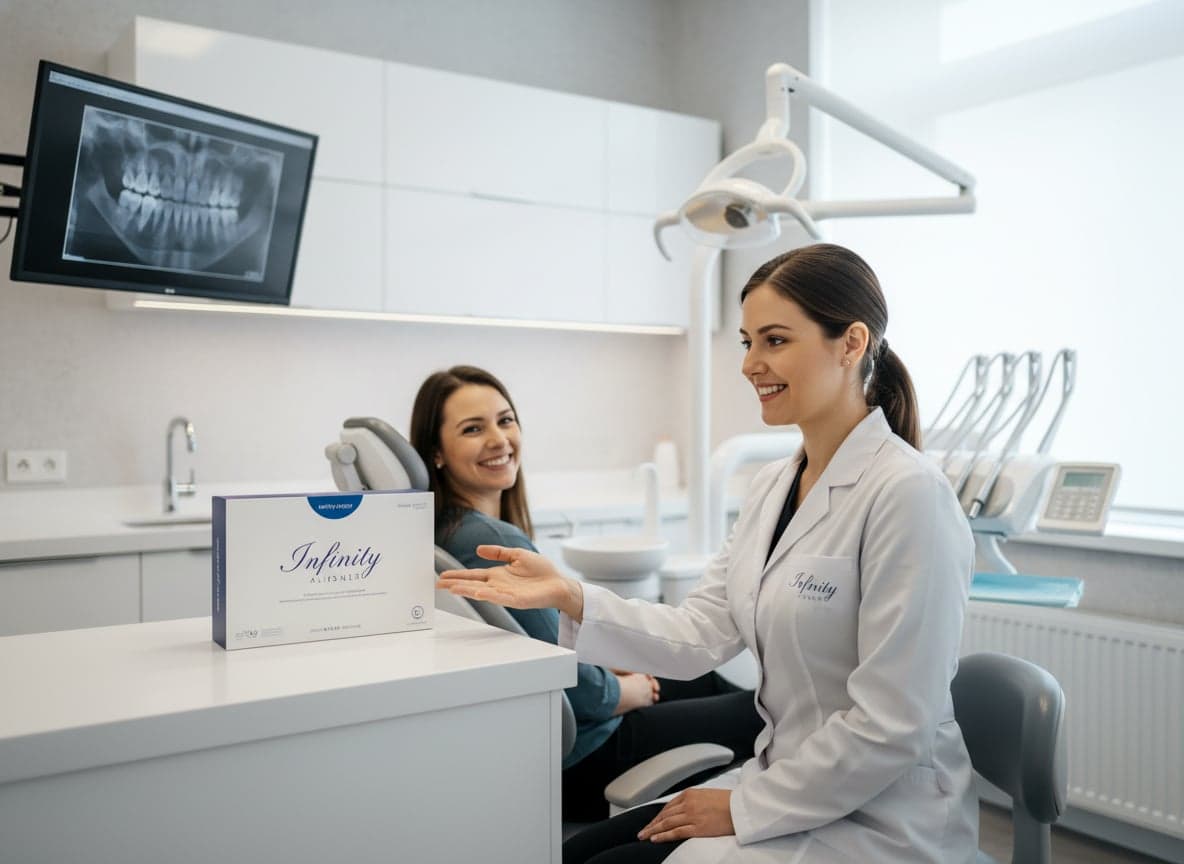
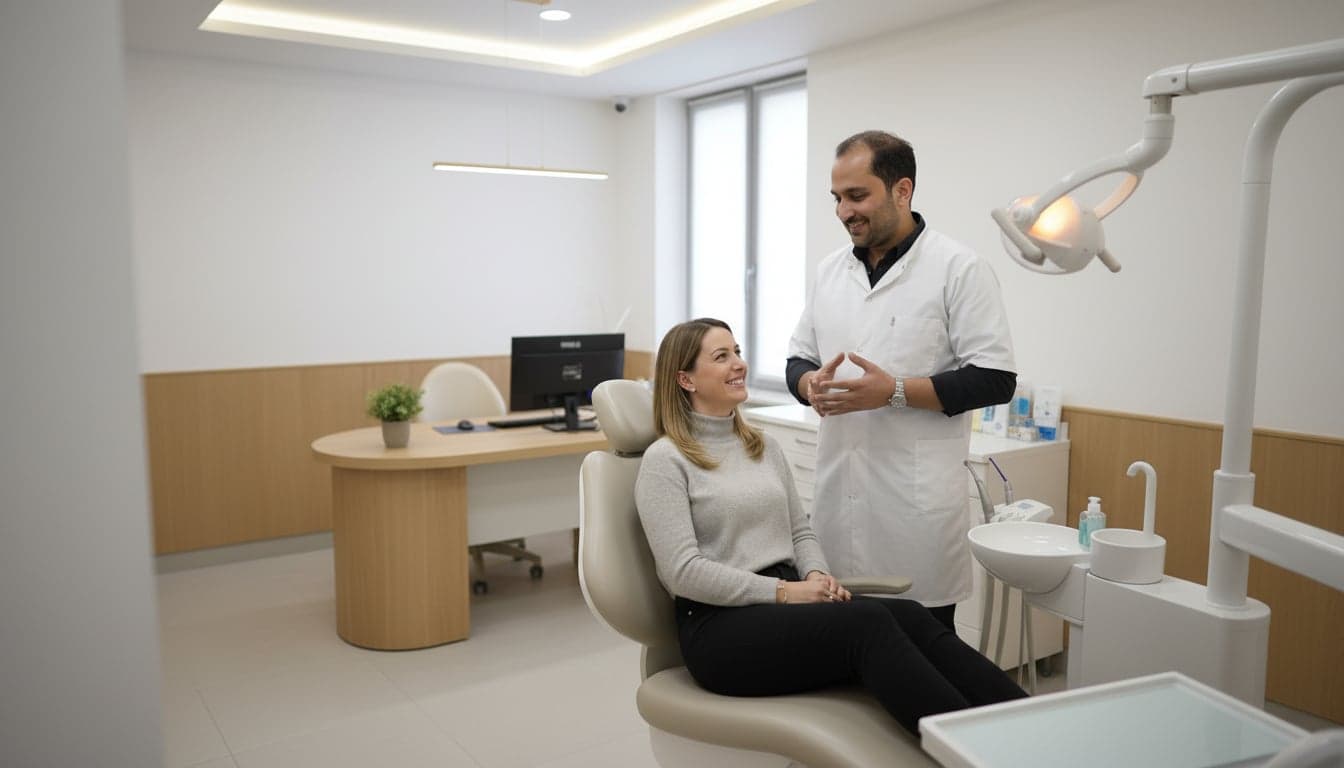
The script matters. The environment matters equally. A few simple adjustments significantly improve conversion: conduct the discovery consultation in a reception room or separate office — not in the operating chair, which activates dental fears. Always have a physical aligner within reach. Prepare a dedicated screen for simulations and before/after cases. Pay attention to lighting — a well-lit practice communicates confidence and modernity. Keep instruments out of sight during the consultation phase.
Key Takeaways
- Hesitation is a request for reassurance — not a refusal.
- The 3D simulation is the most powerful conversion tool: offer it early.
- Never defend the price — reframe around value and the relevant comparison.
- "I need to think about it" = "I still have an unanswered question": identify it.
- Close on a concrete next step (the scan), not on a treatment decision.
- A D+1 / D+3 / D+7 follow-up protocol triples post-consultation conversion.
- The physical environment influences outcomes as much as the script itself.
Infinity Aligner
Clinical & editorial team
More articles
How to Choose Clear Aligners in Tunisia
Clear Aligners vs Braces: Complete Comparison

How Much Do Clear Aligners Cost in Tunisia?
How Long Does Clear Aligner Treatment Take?
How to Clean and Care for Your Clear Aligners Daily
Clear Aligners for Teenagers: What Parents Need to Know
Gap Teeth & Diastema: Can Clear Aligners Fix Them?
Can You Play Sports with Clear Aligners?
3D Smile Simulation: How It Works and What to Expect
Orthodontic Relapse: Why Teeth Move After Treatment
Intraoral Scanner vs Traditional Impressions: What's the Difference?
Clear Aligners for Adults: Is It Ever Too Late?
Wisdom Teeth and Clear Aligners: Are They Compatible?

Clear Aligners: A Versatile Therapeutic Approach in Orthodontics
Orthodontics and Periodontal Health: What Every Patient Needs to Know
The Technology Behind Clear Aligners: From Design to Tray

How to Prepare for Your Orthodontic Consultation: 10 Questions to Ask
Bruxism and Clear Aligners: Can You Correct and Protect at the Same Time?

Class II Malocclusion and Clear Aligners: What Treatment Options Exist?
Clear Aligners and Dental Implants: Protocol, Timing and Clinical Cases
Digital Workflow and Aligner Biomechanics: The Advanced Practitioner Protocol
The Limits of Clear Aligners: Identifying Complex Cases Beyond Their Reach
Aligner Manufacturing: Thermoforming, 3D Printing and Polymer Science
Invisible Orthodontics in 2030: Predictive AI, Direct Printing and Active Materials
Smile Without Borders: The Price of Aligners Between Tunisia, Europe and Canada
Attachments in Invisible Orthodontics: The Silent Levers of Biomechanics

The Smile Beyond the Mirror: The Profound Impact of Dental Alignment on Psychological Well-being
Tunisia: The New Eldorado of Digital Dentistry and Medical Tourism
Post-Orthodontic Retention: The Forgotten Step That Decides Everything
What You Can (and Cannot) Eat With Clear Aligners
Teeth Whitening and Clear Aligners: Can You Treat and Whiten at the Same Time?
TMJ and Clear Aligners: How Invisible Orthodontics Acts on Jaw Pain
The Different Types of Dental Retainer: A Complete Guide After Orthodontic Treatment
The hidden dangers of metal braces: what patients need to know
Root resorption: the silent risk of poorly managed orthodontic treatments
Orthodontics and cavities: how metal braces compromise dental hygiene
Orthodontic relapse: why teeth return to their original position
Braces and chronic pain: the underestimated impact on daily quality of life
Intraoral scanner vs conventional impressions: dimensional analysis and clinical implications
CAD/CAM digital workflow in orthodontics: from intraoral scanning to aligner fabrication
Deformation, shrinkage and cumulative errors: why the conventional impression chain compromises aligner precision
Intraoral Scanners 2025: Complete Technical and Metrological Comparison
Why Choose Infinity Aligner? The Complete Guide for Dental Practitioners
Composite Selection for Aligner Attachments: Mechanical Analysis and Clinical Protocol
TMJ and Malocclusion: Differential Diagnosis and Clinical Approach for the Practitioner
Travelling with Clear Aligners: The Complete Guide for Stress-Free Trips
The First Month with Aligners: What to Expect Week by Week
Pre-Prosthetic Orthodontics: Preparing the Site Before Implants or Veneers
Anterior Open Bite and Aligners: Protocol, Intrusion and Relapse Risk
Posterior & Anterior Crossbite: Diagnosis and Correction with Clear Aligners
Tobacco, Cigarettes and Clear Aligners: Everything You Need to Know
Invisalign vs Infinity Aligner: Complete Price Comparison in Tunisia (2026)
What Happens If You Don't Wear Your Aligners 22 Hours a Day?
Myths and Misconceptions About Clear Aligners: What Patients and Dentists Get Wrong
Sleep Apnea and Orthodontics: The Dentist's Role in Screening and Management
Consult a certified dentist
Our 200+ certified partners in Tunis, Sfax, Sousse and the francophone zone welcome you.
Book a consultation