Aligner Manufacturing: Thermoforming, 3D Printing and Polymer Science
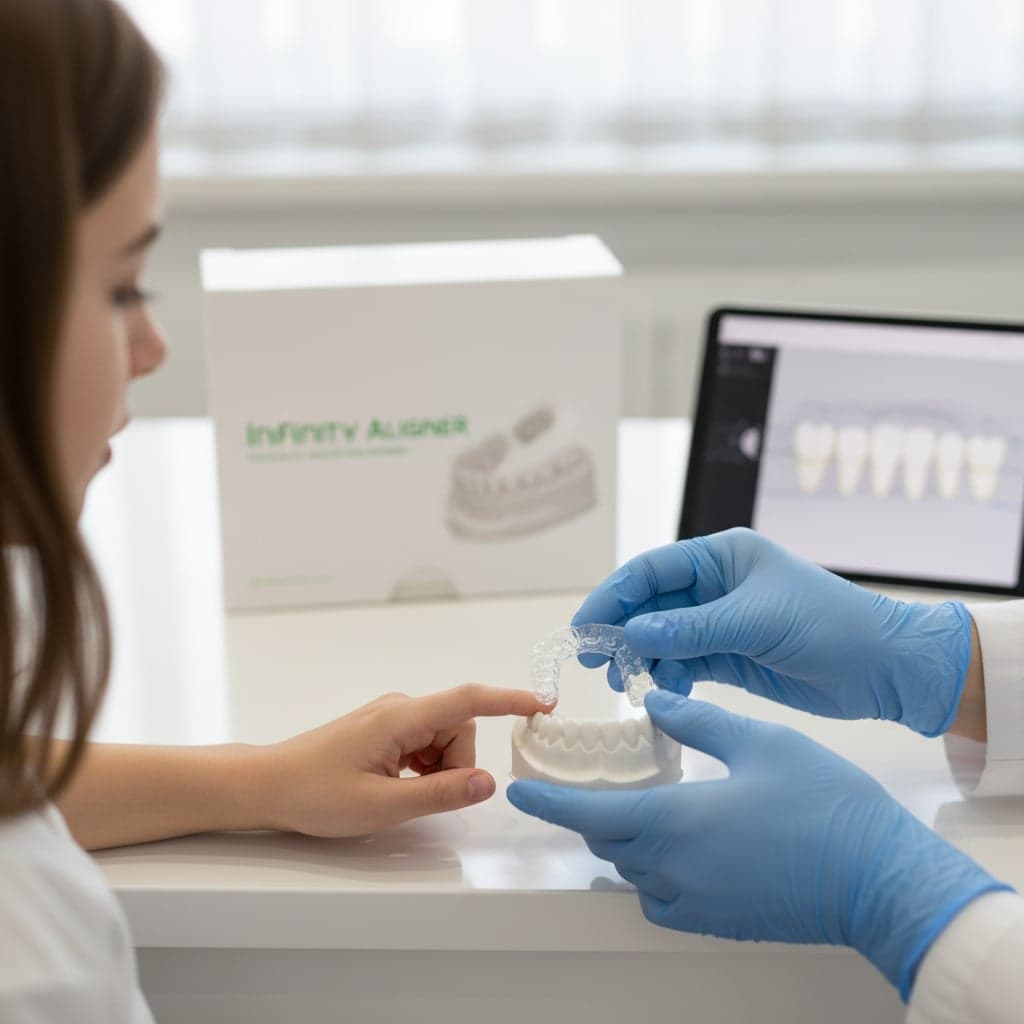
Thermoforming vs direct 3D printing, DLP/LCD resins, multilayer polymers: a complete technical analysis of orthodontic tray manufacturing methods.
Behind every orthodontic tray lies sophisticated materials engineering. Manufacturing choices — method, resin, thickness, finishing — have a direct impact on fit precision, forces exerted on teeth and patient comfort. Here is a comparative technical analysis of the main processes.
1. Thermoforming on printed models: the reference method
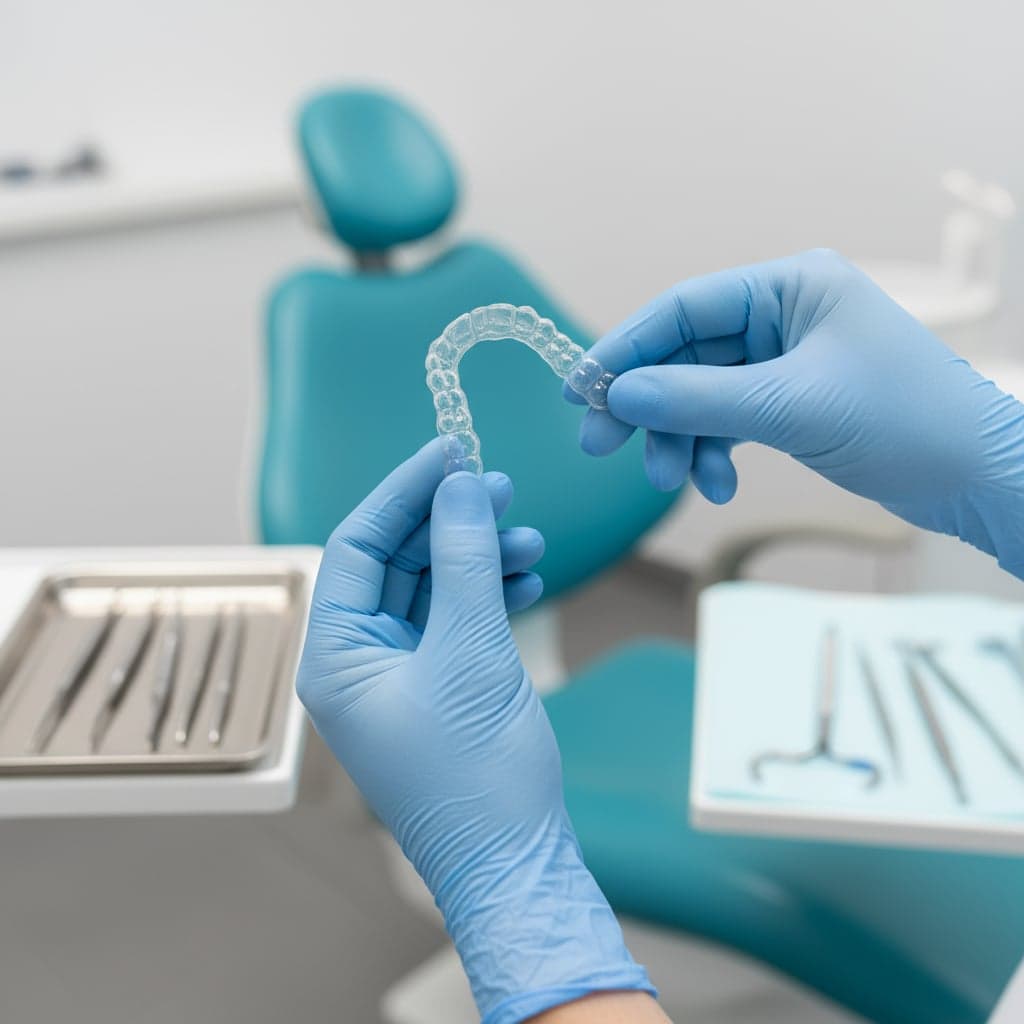
Thermoforming remains the dominant method in the aligner industry. The principle: 3D print a physical model of each intermediate step, then vacuum-thermoform a medical polymer sheet over it. This method offers several advantages: total control of sheet thickness, material choice independent of printing, and superior surface quality.
| Parameter | Thermoforming on printed model | Direct 3D printing |
|---|---|---|
| Dimensional precision | ±0.1 to 0.2 mm | ±0.05 to 0.15 mm (DLP technology) |
| Polymer choice | Total — independent of printer | Limited to available biocompatible resins |
| Surface quality | Excellent (smoothed by thermoforming) | Variable depending on post-processing |
| Waste produced | Printed model + sheet offcuts | Reduced — no intermediate model |
| Production cost | Controlled at scale | High (expensive biocompatible resins) |
| Technological maturity | Very high — industrial standard | Emerging — rapidly developing |
2. The science of polymers: towards multilayer materials
The tray material is not a simple transparent plastic. Modern polymers used in invisible orthodontics are engineering thermoplastics designed to deliver precise orthodontic forces over a defined period. Recent innovations focus on multilayer structures:
- Hard outer layer (polyurethane or copolyester): abrasion resistance, optical clarity, rigidity for force transmission
- Soft inner layer (elastomeric polyurethane): stress absorption during placement, reduction of initial discomfort, better adaptation to retentive areas
- Result: more constant force over time compared to single-layer trays, with less abrupt force drop in the first hours of wear
3. Impact of post-processing on final fit
For photopolymer resin models, post-processing is critical: washing (isopropanol or dedicated solvent) removes uncured surface resin, and post-curing (UV) completes polymerisation to reach target mechanical properties. Insufficient post-processing leaves a slightly sticky, dimensionally unstable surface — the model can deform during thermoforming. Excessive post-processing embrittles the resin and can create micro-cracks invisible to the naked eye but detectable by scanner.
Conclusion
Manufacturing a high-quality aligner is the result of an optimisation chain: print resolution, post-processing control, polymer choice and thermoforming parameters. Infinity Aligner continuously invests in improving these processes to guarantee precise fit, biomechanically appropriate forces and maximum comfort at every stage of treatment.
Infinity Aligner
Clinical & editorial team
More articles
How to Choose Clear Aligners in Tunisia
Clear Aligners vs Braces: Complete Comparison

How Much Do Clear Aligners Cost in Tunisia?
How Long Does Clear Aligner Treatment Take?
How to Clean and Care for Your Clear Aligners Daily
Clear Aligners for Teenagers: What Parents Need to Know
Gap Teeth & Diastema: Can Clear Aligners Fix Them?
Can You Play Sports with Clear Aligners?

3D Smile Simulation: How It Works and What to Expect
Orthodontic Relapse: Why Teeth Move After Treatment
Intraoral Scanner vs Traditional Impressions: What's the Difference?
Clear Aligners for Adults: Is It Ever Too Late?
Wisdom Teeth and Clear Aligners: Are They Compatible?

Clear Aligners: A Versatile Therapeutic Approach in Orthodontics

Orthodontics and Periodontal Health: What Every Patient Needs to Know
The Technology Behind Clear Aligners: From Design to Tray

How to Prepare for Your Orthodontic Consultation: 10 Questions to Ask
Bruxism and Clear Aligners: Can You Correct and Protect at the Same Time?

Class II Malocclusion and Clear Aligners: What Treatment Options Exist?
Clear Aligners and Dental Implants: Protocol, Timing and Clinical Cases
Digital Workflow and Aligner Biomechanics: The Advanced Practitioner Protocol
The Limits of Clear Aligners: Identifying Complex Cases Beyond Their Reach
Invisible Orthodontics in 2030: Predictive AI, Direct Printing and Active Materials
Smile Without Borders: The Price of Aligners Between Tunisia, Europe and Canada
Attachments in Invisible Orthodontics: The Silent Levers of Biomechanics

The Smile Beyond the Mirror: The Profound Impact of Dental Alignment on Psychological Well-being
Tunisia: The New Eldorado of Digital Dentistry and Medical Tourism
Post-Orthodontic Retention: The Forgotten Step That Decides Everything
What You Can (and Cannot) Eat With Clear Aligners
Teeth Whitening and Clear Aligners: Can You Treat and Whiten at the Same Time?
TMJ and Clear Aligners: How Invisible Orthodontics Acts on Jaw Pain
The Different Types of Dental Retainer: A Complete Guide After Orthodontic Treatment
The hidden dangers of metal braces: what patients need to know
Root resorption: the silent risk of poorly managed orthodontic treatments

Orthodontics and cavities: how metal braces compromise dental hygiene

Orthodontic relapse: why teeth return to their original position

Braces and chronic pain: the underestimated impact on daily quality of life
Intraoral scanner vs conventional impressions: dimensional analysis and clinical implications
CAD/CAM digital workflow in orthodontics: from intraoral scanning to aligner fabrication
Deformation, shrinkage and cumulative errors: why the conventional impression chain compromises aligner precision
Intraoral Scanners 2025: Complete Technical and Metrological Comparison
Why Choose Infinity Aligner? The Complete Guide for Dental Practitioners
Composite Selection for Aligner Attachments: Mechanical Analysis and Clinical Protocol
TMJ and Malocclusion: Differential Diagnosis and Clinical Approach for the Practitioner
Travelling with Clear Aligners: The Complete Guide for Stress-Free Trips
The First Month with Aligners: What to Expect Week by Week
Pre-Prosthetic Orthodontics: Preparing the Site Before Implants or Veneers
How to Present Aligners to a Hesitant Patient — A Consultation Script
Anterior Open Bite and Aligners: Protocol, Intrusion and Relapse Risk
Posterior & Anterior Crossbite: Diagnosis and Correction with Clear Aligners
Tobacco, Cigarettes and Clear Aligners: Everything You Need to Know
Invisalign vs Infinity Aligner: Complete Price Comparison in Tunisia (2026)
What Happens If You Don't Wear Your Aligners 22 Hours a Day?
Myths and Misconceptions About Clear Aligners: What Patients and Dentists Get Wrong
Sleep Apnea and Orthodontics: The Dentist's Role in Screening and Management
Consult a certified dentist
Our 200+ certified partners in Tunis, Sfax, Sousse and the francophone zone welcome you.
Book a consultation