Root resorption: the silent risk of poorly managed orthodontic treatments
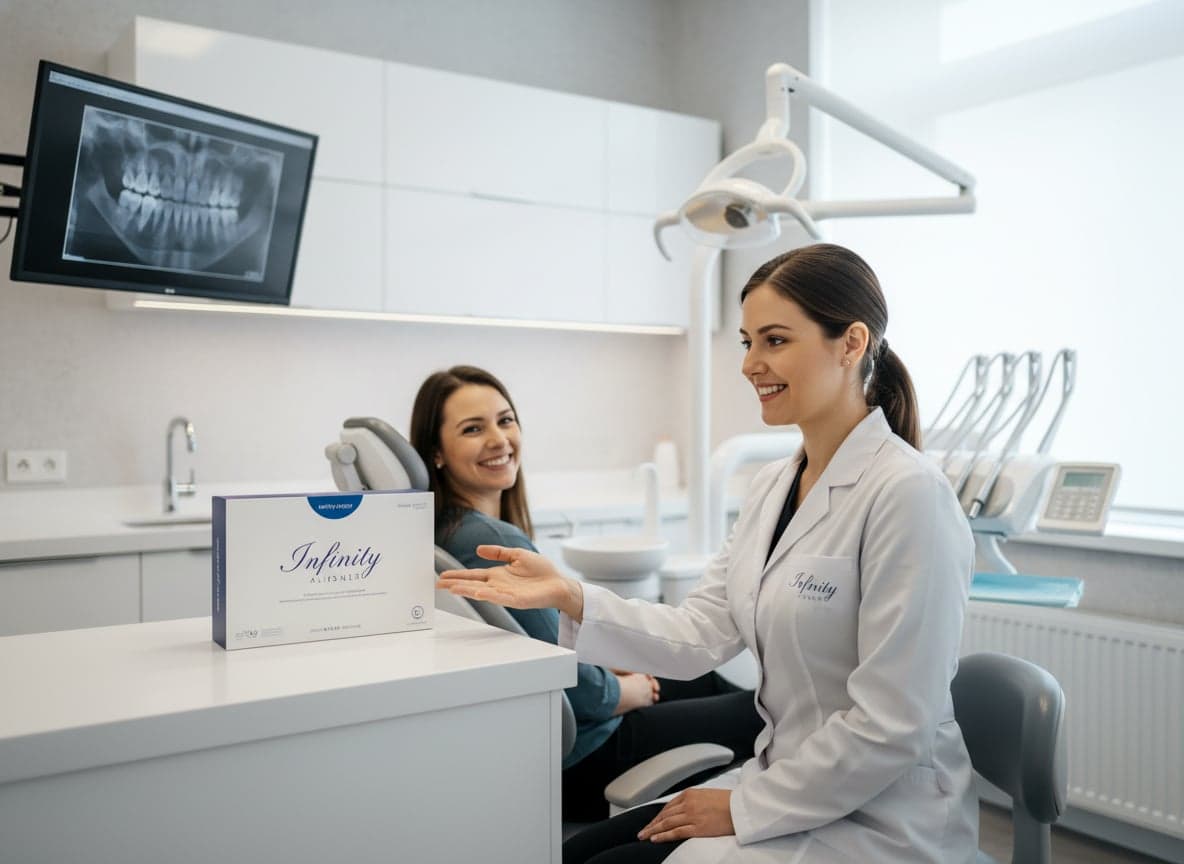
Root resorption is one of the most serious and least understood complications of conventional orthodontics. Causes, early detection and prevention strategies.
Among the complications of conventional orthodontics, external apical root resorption (EARR) is perhaps the most severe and the least well understood by patients. It refers to the shortening of the dental root under the effect of excessive or poorly directed orthodontic pressures. In severe cases, it can definitively compromise the longevity of a tooth, potentially leading to its premature loss.
1. What is root resorption?
The root of a tooth is surrounded by a periodontal ligament and a bony tissue called alveolar bone. When an orthodontic force is applied, osteoclasts — cells responsible for resorbing bone — are activated to allow tooth movement. Under certain conditions, this process spills over onto the root itself: cementoblasts, which protect the root surface, are destroyed, and the root shortens irreversibly.
- Mild resorption (< 2 mm): common, clinically acceptable in most cases
- Moderate resorption (2 to 4 mm): requires reassessment of the treatment plan
- Severe resorption (> 4 mm or loss of more than one third of root length): long-term dental prognosis compromised
- Upper central incisors are the most commonly affected teeth
2. Identified risk factors
Root resorption is not random. Several predisposing factors are now well documented in the orthodontic scientific literature:
- Treatment duration: beyond 24 months, the risk increases significantly
- High or continuous orthodontic forces (memory wire braces not regularly adjusted)
- Major torque and intrusion movements on incisors
- Atypical root morphology: pipette-shaped, short or conical roots
- History of dental trauma or pre-existing resorption
- Genetic factors: some patients are biologically more susceptible
3. Why conventional orthodontics exposes patients more
In a metal brace treatment, forces are delivered continuously 24 hours a day. The metal wire exerts constant pressure on the brackets, without the periodontal ligament having time to "rest" between activations. This phenomenon of prolonged ligament compression is one of the main mechanisms behind root resorption. Comparative studies consistently show that patients treated with clear aligners have less root resorption than those treated with conventional fixed appliances, because forces are intermittent and better numerically calibrated.
4. How to detect root resorption?
Root resorption is clinically silent: it does not hurt. The only way to detect it is radiologically. Any serious orthodontist should systematically:
- Perform a complete radiographic assessment (panoramic + cephalometric) before starting treatment
- Prescribe a mid-treatment control radiograph (between 9 and 12 months)
- Particularly monitor central incisors on periapical films
- Interrupt or modify the treatment plan if resorption > 2 mm is detected during treatment
5. Long-term consequences of undetected resorption
A tooth whose root has been shortened by more than one third has an unfavourable crown-to-root ratio. It becomes less stable in the alveolar bone, more sensitive to trauma and occlusal overloads, and its lifespan is significantly reduced. In extreme cases, patients find themselves with teeth whose loss is inevitable within 10 to 20 years following orthodontic treatment, without ever having been informed of this risk at the outset.
6. Prevention strategies and the role of aligners
Prevention of root resorption involves several levers: rigorous radiographic assessment before treatment, limiting active treatment duration, controlling applied forces and choosing less aggressive mechanics. Clear aligners present a more favourable risk profile because forces are intermittent (the patient removes the trays to eat and brush their teeth), numerically predictable and distributed over the entire crown — without concentration of load at a single point as is the case with a bracket.
Conclusion
Root resorption is a real risk of orthodontics that deserves a frank discussion between patient and practitioner before any treatment. Require a complete radiographic assessment, ask questions about the expected duration of your treatment, and find out about less aggressive alternatives for your roots — including certified clear aligners.
Infinity Aligner
Clinical & editorial team
More articles
How to Choose Clear Aligners in Tunisia
Clear Aligners vs Braces: Complete Comparison
How Much Do Clear Aligners Cost in Tunisia?
How Long Does Clear Aligner Treatment Take?
How to Clean and Care for Your Clear Aligners Daily

Clear Aligners for Teenagers: What Parents Need to Know
Gap Teeth & Diastema: Can Clear Aligners Fix Them?
Can You Play Sports with Clear Aligners?
3D Smile Simulation: How It Works and What to Expect

Orthodontic Relapse: Why Teeth Move After Treatment
Intraoral Scanner vs Traditional Impressions: What's the Difference?

Clear Aligners for Adults: Is It Ever Too Late?
Wisdom Teeth and Clear Aligners: Are They Compatible?

Clear Aligners: A Versatile Therapeutic Approach in Orthodontics

Orthodontics and Periodontal Health: What Every Patient Needs to Know
The Technology Behind Clear Aligners: From Design to Tray

How to Prepare for Your Orthodontic Consultation: 10 Questions to Ask
Bruxism and Clear Aligners: Can You Correct and Protect at the Same Time?

Class II Malocclusion and Clear Aligners: What Treatment Options Exist?
Clear Aligners and Dental Implants: Protocol, Timing and Clinical Cases

Digital Workflow and Aligner Biomechanics: The Advanced Practitioner Protocol

The Limits of Clear Aligners: Identifying Complex Cases Beyond Their Reach
Aligner Manufacturing: Thermoforming, 3D Printing and Polymer Science
Invisible Orthodontics in 2030: Predictive AI, Direct Printing and Active Materials

Smile Without Borders: The Price of Aligners Between Tunisia, Europe and Canada
Attachments in Invisible Orthodontics: The Silent Levers of Biomechanics

The Smile Beyond the Mirror: The Profound Impact of Dental Alignment on Psychological Well-being
Tunisia: The New Eldorado of Digital Dentistry and Medical Tourism
Post-Orthodontic Retention: The Forgotten Step That Decides Everything
What You Can (and Cannot) Eat With Clear Aligners
Teeth Whitening and Clear Aligners: Can You Treat and Whiten at the Same Time?
TMJ and Clear Aligners: How Invisible Orthodontics Acts on Jaw Pain
The Different Types of Dental Retainer: A Complete Guide After Orthodontic Treatment
The hidden dangers of metal braces: what patients need to know

Orthodontics and cavities: how metal braces compromise dental hygiene
Orthodontic relapse: why teeth return to their original position

Braces and chronic pain: the underestimated impact on daily quality of life
Intraoral scanner vs conventional impressions: dimensional analysis and clinical implications
CAD/CAM digital workflow in orthodontics: from intraoral scanning to aligner fabrication
Deformation, shrinkage and cumulative errors: why the conventional impression chain compromises aligner precision
Intraoral Scanners 2025: Complete Technical and Metrological Comparison
Why Choose Infinity Aligner? The Complete Guide for Dental Practitioners
Composite Selection for Aligner Attachments: Mechanical Analysis and Clinical Protocol
TMJ and Malocclusion: Differential Diagnosis and Clinical Approach for the Practitioner
Travelling with Clear Aligners: The Complete Guide for Stress-Free Trips
The First Month with Aligners: What to Expect Week by Week
Pre-Prosthetic Orthodontics: Preparing the Site Before Implants or Veneers
How to Present Aligners to a Hesitant Patient — A Consultation Script
Anterior Open Bite and Aligners: Protocol, Intrusion and Relapse Risk
Posterior & Anterior Crossbite: Diagnosis and Correction with Clear Aligners
Tobacco, Cigarettes and Clear Aligners: Everything You Need to Know
Invisalign vs Infinity Aligner: Complete Price Comparison in Tunisia (2026)
What Happens If You Don't Wear Your Aligners 22 Hours a Day?
Myths and Misconceptions About Clear Aligners: What Patients and Dentists Get Wrong
Sleep Apnea and Orthodontics: The Dentist's Role in Screening and Management
Consult a certified dentist
Our 200+ certified partners in Tunis, Sfax, Sousse and the francophone zone welcome you.
Book a consultation