
Your smile,your way.
Infinity Aligner clear aligners are custom-made for your teeth, supervised by a certified dentist and designed to fit around your life — not the other way around.
0+
Patients treated
0.3%
Satisfaction rate
0+
Certified dentists
0
Cities in Tunisia
What are clear aligners?
Clear aligners are a modern alternative to traditional metal braces. A series of custom-fabricated, removable trays gently repositions your teeth over time — without wires, brackets or monthly tightening appointments.
- Virtually invisible — most people will never notice you're in treatment
- Removable — eat, drink and brush your teeth normally
- Comfortable — smooth edges, no metal to irritate gums or cheeks
- Predictable — see a digital preview of your final smile before you start
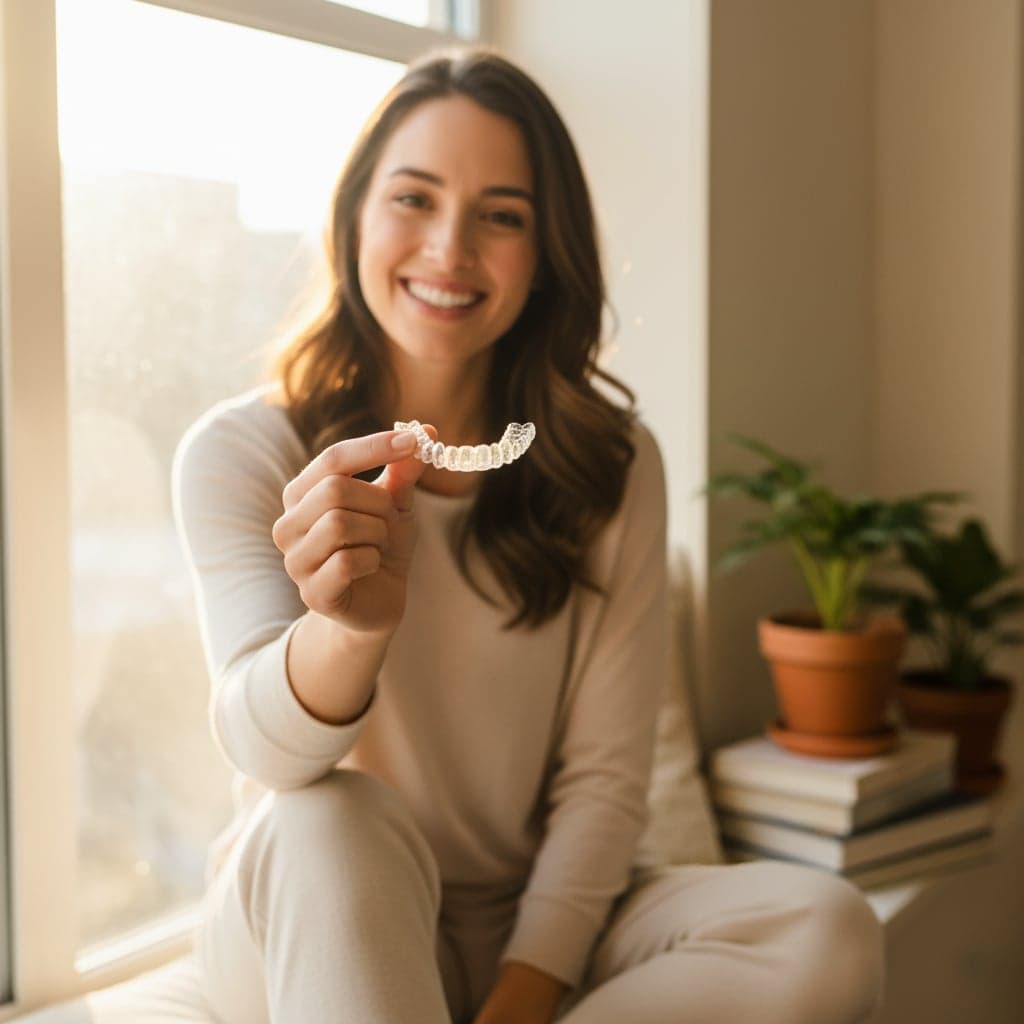
FDA-certified medical material
BPA-free, odourless, crystal-clear
Invisible
0.7 mm ultra-thin edges
Removable
Eat whatever you want
Comfortable
Full comfort within 48 hours
Predictable
See your 3D result upfront
Clear aligners vs Fixed braces
Both techniques work — but they don't suit the same lifestyles.
Am I a good candidate?
Clear aligners treat a wide range of orthodontic conditions. Your certified Infinity Aligner dentist will assess your suitability at the initial consultation.
💡 Good news
The vast majority of adults and older teens with mild to moderate alignment issues are good candidates. Initial consultation is free and no-commitment.
Successfully treated cases
Severe cases involving major skeletal discrepancies require in-depth evaluation. Your practitioner will advise the best approach during consultation.
Aligners adapt to your life.
No food restrictions, no social compromises. Your treatment follows you — not the other way around.
Sport & activity
Running, swimming, gym — keep your aligners in. Contact sports: remove them, wear a mouthguard, reinsert after. Zero compromise on performance.
Eat what you love
Remove aligners, eat anything. Brush, reinsert. No forbidden food list — your treatment adapts to your life, not the other way around.
Musical instruments
1–2 weeks of adaptation is enough for most wind instruments. The vast majority of musicians play comfortably without removing aligners after a few days.
Social & professional life
Interviews, presentations, big dates — aligners are so discreet most people will never notice. Smile freely from day one.
Accessible treatment, lasting value.
Total cost depends on case complexity and treatment length. A detailed estimate is provided at your initial consultation — no commitment, no surprises.
- Full quote included in your free initial consultation
- Instalment payment plans available through our partner practitioners
- All treatment aligners included in the total fee
- Final retention retainer included in most treatment plans
Indicative estimate — Tunisia
Depending on case complexity. Simple cases: 1,800–2,200 DT. Moderate–complex: 2,400–3,500 DT.
Local treatment
Save 40–60% vs treatment abroad, without compromising clinical quality.
All-inclusive fee
Scan, 3D plan, all aligners, follow-ups, retention — one total quote, no hidden costs.
Instalment payment
Several partner practitioners offer payment plans. Ask during your consultation.
Real people. Real results.
"I was nervous about the commitment but my dentist walked me through every step. By month three I barely thought about the aligners at all."
Yasmine Boubaker
Patient, Sousse — 9-month treatment
"As a teacher I'm in front of people all day. I needed something discreet and effective. Infinity Aligner delivered both."
Hanen Trabelsi
Patient, Tunis — 7-month treatment
"The smile preview sold it for me. Seeing the end result before starting gave me total confidence in the process."
Karim Mellouli
Patient, Tunis — 8-month treatment
All your aligner questions answered.
Complete answers, written with our clinical practitioners.
Clear aligners are a series of custom-made, removable transparent trays that apply gentle, controlled pressure to shift your teeth gradually into their correct positions. Each set of aligners moves your teeth by approximately 0.25 mm before you progress to the next set, typically every 1–2 weeks. Treatment is based on a biomechanical plan designed by a certified practitioner from a digital scan of your dental arch — no silicone impressions required.
Most adults and older teenagers with mild to moderate alignment issues are good candidates. Infinity Aligner treats dental crowding, spacing (diastemas), overbites, underbites, crossbites and certain Class II malocclusions. Severely complex cases involving significant skeletal discrepancies or complex periodontal histories require a more detailed assessment. Your certified dentist will evaluate your suitability at an initial consultation — no commitment is required at that stage.
Duration varies depending on the complexity of your case. Mild corrections (simple gaps, slight crowding) take 3–6 months. Moderate cases average 8–12 months. More complex bite corrections — deep overbites, crossbites — may require 14–20 months. Your personalised 3D treatment plan will include a precise timeline, with the exact number of aligners, before any financial commitment.
Aligners do not cause the sharp discomfort associated with traditional wire tightening. You may notice pressure or mild sensitivity for 24–48 hours after switching to a new aligner set — this is normal and indicates that orthodontic forces are active. Most patients describe it as moderate tightness rather than pain. If discomfort persists beyond 72 hours or is accompanied by unusual tooth mobility, contact your practitioner.
For optimal results and within the planned timeframe, aligners should be worn for 20–22 hours per day — a maximum of 4 hours of removal spread across 24 hours. They are removed only for eating, drinking anything other than cold still water, brushing and flossing. Compliance is the number-one factor in treatment success: every missed hour of wear slows the programmed tooth movements and can extend the overall treatment duration.
Yes — always remove your aligners before eating or drinking anything other than cold still water. This is one of the main advantages over fixed braces: there are no food restrictions whatsoever. After each meal, brush your teeth and rinse your mouth before reinserting your aligners to prevent staining and cavities. Coffee, tea and red wine consumed with aligners in place will irreversibly discolour the thermoplastic.
Rinse your aligners under cold or lukewarm (never hot — thermoplastic deforms above 40 °C) water every time you remove them. Clean them morning and evening with a soft toothbrush and a small amount of clear, non-abrasive liquid soap, or with specialist cleaning crystals (such as Retainer Brite). Avoid abrasive toothpastes, which scratch the surface and create bacterial niches. Never leave them exposed to air to dry — store them in their protective case when not in use.
Once active treatment is complete, your dentist will provide a custom retention appliance — a thin clear night-time retainer, and/or a fine bonded wire on the inner surface of the anterior teeth. Teeth have a natural tendency to return towards their original position (relapse), due to the elastic memory of the periodontal ligament fibres. Consistent retainer wear protects the long-term result. The standard recommendation: nightly wear every day for the first 2 years, then 3–5 nights per week for life.
Coverage varies by insurer and policy. Some complementary health schemes in Tunisia provide partial reimbursement for adult orthodontic treatment, typically capped between 500 and 1,500 DT depending on the contract. In France and Belgium, adult orthodontics is rarely covered by state health insurance, but complementary mutuals often offer partial coverage. In Canada, many extended health benefit plans include orthodontics with a lifetime maximum. We recommend contacting your insurer directly. Our partner dentists can issue the documentation and quotes required for your reimbursement claim.
Don't panic. If you lose or damage an aligner, temporarily wear the previous set (from the prior series) to maintain the position achieved, and contact your practitioner within 48 hours. Depending on your progress in the treatment plan, they will either order a replacement or advance you to the next aligner if the majority of the movement is already complete. Avoid leaving your aligners exposed to heat, pets or easily accessible surfaces.
Both techniques move teeth by applying controlled forces to the peri-dental bone tissue, but their mechanics differ fundamentally. Aligners are removable — a major advantage for dental hygiene and dietary freedom — but require strict compliance (20–22 hours per day). Fixed braces (brackets and wires) are permanent and do not depend on patient compliance, but restrict toothbrush access, increase the risk of cavities and gingivitis, and can be uncomfortable after tightening. Aligners are aesthetically invisible; braces, even ceramic ones, remain visible. In terms of clinical outcomes, both techniques achieve comparable results on moderate cases — the choice depends on the patient's profile, case complexity and lifestyle preferences.
For non-contact sports (running, swimming, cycling, fitness), aligners can be kept in without restriction — hydrating with cold still water is possible with aligners in place. For contact sports (rugby, boxing, martial arts) or sports with a risk of facial impact, it is recommended to remove aligners and wear a custom mouthguard during training, then reinsert the aligners immediately afterwards. For wind instruments (flute, trumpet, clarinet), an adaptation period of 1–2 weeks is typical — the vast majority of musicians recover their playing ease without removing their aligners.
Yes, significantly. The removability of aligners allows standard brushing, flossing and oral irrigation without any constraint from brackets or wires. Comparative studies show that patients using aligners present significantly lower plaque scores and gingival bleeding than those treated with fixed braces at 12 months. However, this hygiene advantage is only maintained if the aligners are cleaned regularly and if teeth are systematically brushed before each reinsertion — habits your Infinity Aligner practitioner will help you establish from the very first appointment.
Follow-up check-ups are typically scheduled every 6–10 weeks depending on case complexity and your practitioner's protocol. At each appointment, the practitioner checks aligner fit (tracking), movement progression against the 3D plan, attachment integrity and periodontal health. If you are following an international hybrid protocol (initial consultation in Tunisia + remote monitoring), standardised photos are sent every 4–6 weeks with practitioner feedback within 48 hours. In-person visits remain recommended at mid-treatment and at the end of treatment.
Yes — this is one of the lesser-known advantages of aligner orthodontics. It is possible to apply a low-concentration hydrogen peroxide (3–6%) or carbamide peroxide (10–16%) whitening gel directly into your aligner trays, which then serve as natural whitening trays. This technique is particularly effective on the labial and buccal surfaces of the teeth. However, whitening is not recommended during pregnancy, in cases of marked dentine sensitivity, or on teeth with aesthetic restorations (composite, ceramic) — it does not bleach prosthetic materials. Consult your practitioner before initiating a concurrent whitening protocol.
Yes, from approximately 12–13 years of age, once the permanent dentition is sufficiently established (eruption of the first and second permanent molars). Aligners for teenagers incorporate compliance indicators (small coloured dots that gradually fade according to actual wear time), reserve spaces for teeth still erupting, and integrated replacement kits for lost aligners. The prerequisite remains the teenager's own motivation — voluntary compliance is essential. Your practitioner will assess your child's orthodontic and psychological readiness at the initial consultation.
Find a certified dentist near you.
Our network of 200+ certified clear aligner dentists covers all of Tunisia (Tunis, Sfax, Sousse, Monastir, Nabeul). Book your consultation today.
Your treatment, step by step.
Free consultation
Your dentist evaluates your teeth, takes digital photographs and explains whether you're a suitable candidate. No impressions, no commitment.
Intraoral scan
A quick, comfortable digital scan creates a precise 3D model of your teeth — the foundation of your personalised treatment plan.
Smile preview
Before a single aligner is made, you see a realistic simulation of your final result. Approve the plan, then production begins.
Receive your aligners
Your full set of aligners arrives at your dental clinic. Your dentist shows you exactly how to insert, remove and care for them.
Progress check-ins
Every 6–8 weeks your dentist checks your progress. Change to the next aligner set every 1–2 weeks at home — no clinic visit required.
Retention & results
Once treatment is complete, a custom retainer keeps your new smile in place. Results that last, protected from day one.