Artificial Intelligence and Predictive Dental Diagnosis: Towards Precision Dentistry
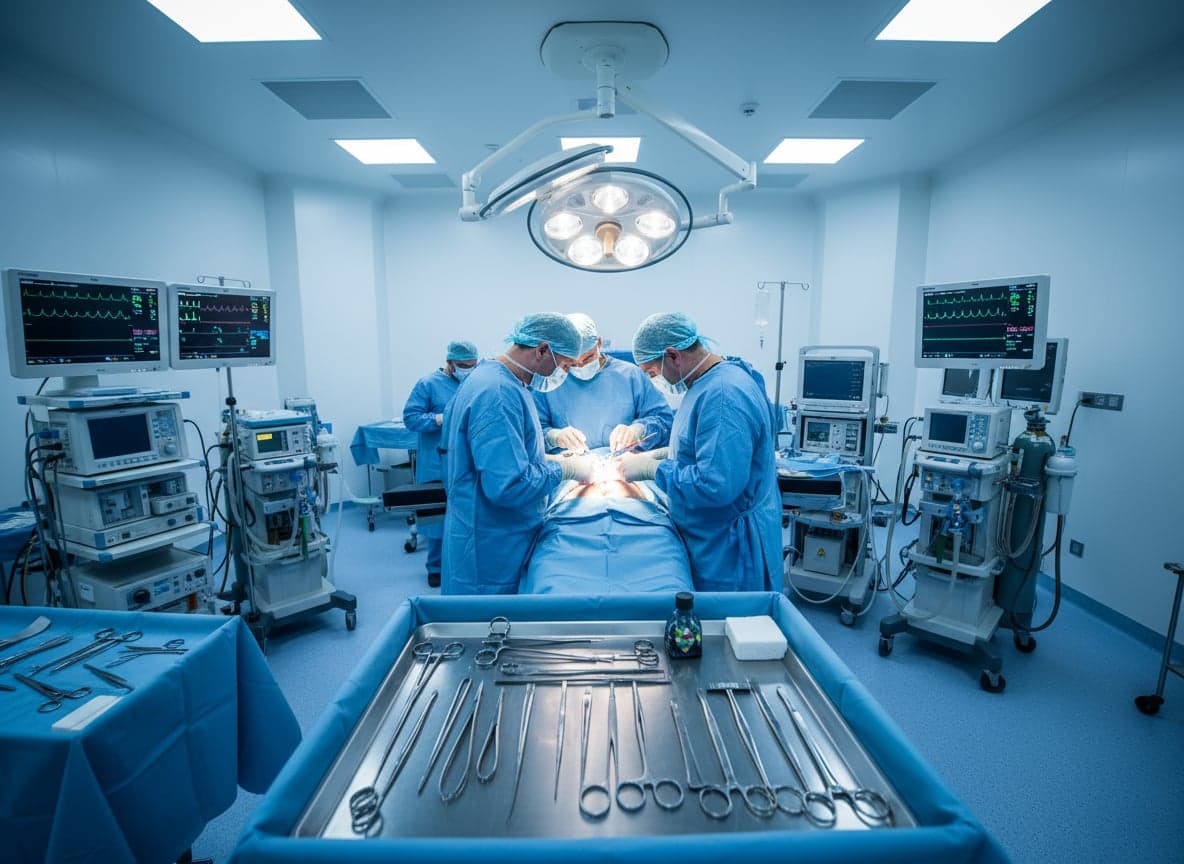
Deep learning algorithms capable of detecting cavities invisible to the naked eye on a standard radiograph, predicting the risk of periodontitis with 91% accuracy, or identifying anomalies on a CBCT scan in real time — this is no longer science fiction.
Artificial intelligence (AI) is asserting itself as the catalyst for a silent revolution in dentistry. Deep learning algorithms capable of detecting carious lesions invisible to the naked eye on a standard radiograph, predicting the risk of periodontitis with 91% accuracy, or identifying anomalies on a CBCT scan in real time — this is no longer science fiction. It is what the most recent publications in the Journal of Dental Research and the Journal of the American Dental Association are documenting with increasing rigour.
1. Deep Learning in Dental Radiology: State of the Art
Convolutional neural networks (CNNs) — an AI architecture specialised in image analysis — have reached diagnostic detection performance superior to that of human practitioners in several imaging domains. In dental radiology, the work of Schwendicke et al. (2019, Radiology) demonstrated that a CNN trained on 38,000 periapical radiographs detected early interproximal caries with a sensitivity of 90.4% compared to 72.3% for an expert radiologist. In 2024, the latest generation models — based on Vision Transformer (ViT) architectures — are reaching a new milestone: simultaneous analysis of caries, bone loss, radicular anomalies and restoration quality on a single panoramic radiograph.
2. Periodontal Risk Prediction: From Reaction to Prognosis
One of the most significant advances concerns predictive periodontology. A multicentre study published in the Journal of Clinical Periodontology (2024) evaluated a machine learning model integrating 47 clinical variables — pocket depth, bleeding index, IL-1 genotype, smoking habits, glycaemic control (HbA1c) — to predict 5-year periodontal progression. Result: an area under the ROC curve (AUC) of 0.91, compared to 0.74 for conventional clinical assessment alone. This type of tool makes it possible to identify, with unprecedented accuracy, patients requiring close monitoring, and to adapt the intensity of periodontal maintenance care on an individualised basis.
| AI Application | Performance (AUC/Sensitivity) | Source | Clinical Status |
|---|---|---|---|
| Interproximal caries detection | Sensitivity 90.4% vs 72.3% (expert) | Schwendicke et al., Radiology 2024 | Deployed (Diagnocat, Denti.AI) |
| Periodontal progression prediction | AUC 0.91 vs 0.74 (clinical) | J. Clin. Periodontol. 2024 | Multicentre validation ongoing |
| CBCT anomaly detection | Specificity 95.2% | AAOMR Annual Meeting 2024 | Prototype (Carestream AI) |
| AI implant planning | 67% reduction in positioning errors | Clin. Implant Dent. 2023 | Deployed (Straumann CoDiagnostiX AI) |
| Early oral tumour detection | Sensitivity 88% (photographs) | JADA 2024 | Phase II clinical trial |
3. AI and Orthodontic Planning: Predictive Simulation
In orthodontics, AI is redefining treatment planning on two levels. The first is automated cephalometric analysis: landmark detection algorithms identify anatomical reference points on a lateral cephalogram in under 3 seconds, with accuracy comparable to that of a senior orthodontist (Archwire AI study, 2024: mean error 0.8 mm vs 1.1 mm for human operator). The second is therapeutic outcome simulation: generative models (GANs — Generative Adversarial Networks) can predict the post-treatment facial result from a CBCT and a frontal photograph, enabling enriched patient communication and joint validation of the treatment plan before any commitment.
4. Limitations and Ethical Challenges
The diagnostic power of AI should not obscure its current limitations. Models trained on homogeneous populations (predominantly Western radiographs) underperform on dental morphologies under-represented in training datasets. Algorithmic bias is documented in several studies: a systematic review by Leite et al. (2024) identifies a performance degradation of 8 to 15% on African and Asian populations compared to Caucasian reference cohorts. The question of medical liability is also raised: if AI misses a lesion, who is responsible — the practitioner or the software publisher? These regulatory questions are being addressed by the FDA (510k pathway) and CE Medical (MDR 2017/745, Annex IX) for AI devices used for diagnostic purposes.
5. Outlook 2025–2030
Current scientific consensus suggests that AI will not replace the dental practitioner — but that the practitioner who uses AI will replace the one who does not. By 2030, MarketsandMarkets projections estimate that the global AI in dentistry market will reach USD 3.8 billion, with a compound annual growth rate (CAGR) of 30.1%. In Tunisia, the first Infinity Aligner partner clinics are already integrating AI panoramic analysis into their initial consultation workflow — an advance that places the country on the global map of precision dentistry.
Editorial note
This article is written for scientific and professional monitoring purposes. The studies cited are drawn from peer-reviewed publications. Infinity Aligner does not endorse the results of third-party studies and recommends that professionals consult the original publications for any clinical application.
Infinity Aligner — Scientific team
Technology watch & dental literature review
More analyses
Mar 2026
Photobiomodulation (LLLT) and Bone Healing in Implantology: Clinical Evidence, Dosimetry Protocols and 2024 Post-surgical Applications
Mar 2026
Osteodensification and Bone Condensation in Implantology: Versah Technique, Condensation Osteotomes and Bone Quality Improvement Protocols in D3–D4 Bone
Mar 2026
Peri-Implantitis: Diagnosis, Implant Surface Decontamination and Surgical Bone Regeneration — Evidence-Based Protocols 2024
Integrate innovation into your practice
Join the Infinity Aligner network and access the most advanced digital tools for your patients.
Become a partner