Bone Substitutes: Xenograft, Allograft and Synthetic Materials — Clinical Comparison for the Implant Surgeon
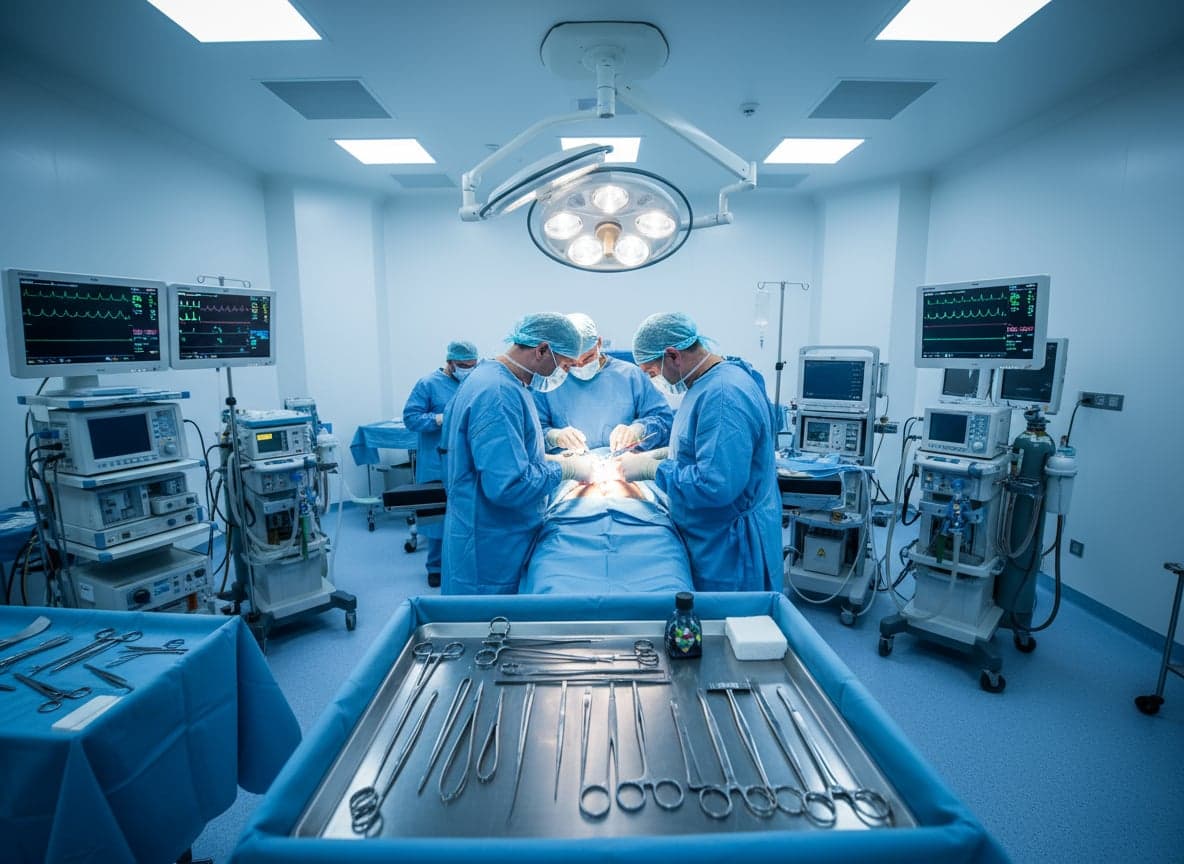
When faced with peri-implant bone deficiency, the choice of grafting material determines the quality of regeneration and long-term implant prognosis. This article reviews the comparative clinical evidence for xenograft, allograft and synthetic substitutes.
Guided bone regeneration (GBR) and bone grafting techniques form the fundamental cornerstone of pre-implant surgery. In 2024, the literature lists more than 200 commercialised bone substitute materials worldwide, for a global market estimated at $3.2 billion. For the implant surgeon, navigating this abundance requires precise knowledge of the biological properties, clinical evidence levels and indications of each category. The reference publication in Biomaterials (2024) and the meta-analysis by Sanz et al. (Journal of Clinical Periodontology, 2024, n = 4,720 sites) provide rigorous scientific framing.
1. Classification of Bone Substitute Materials
Bone substitutes are divided into four main families according to their origin: autograft (autologous bone harvested from the patient — the absolute gold standard but with limited availability), allograft (bone of human origin — cadaveric or cortical from a bone bank), xenograft (bone of animal origin, predominantly bovine — with Bio-Oss® by Geistlich being the world reference product), and alloplastic or synthetic substitutes (hydroxyapatite, beta-TCP, biphasic calcium phosphate, bioactive glasses). Each family presents a distinct profile on the three fundamental biological criteria: osteoconduction (providing a structural scaffold for cell migration), osteoinduction (capacity to recruit and differentiate mesenchymal stem cells into osteoblasts) and osteogenesis (supply of living bone-forming cells).
| Category | Osteoconduction | Osteoinduction | Osteogenesis | Resorption | Infection risk |
|---|---|---|---|---|---|
| Autograft | +++ | +++ | +++ | Variable (6–24 months) | None |
| Allograft DBBM | +++ | +/− | − | Slow (18–36 months) | Very low |
| Bovine xenograft (Bio-Oss®) | +++ | − | − | Very slow (> 36 months) | None (deproteinised) |
| Synthetic hydroxyapatite | ++ | − | − | Very slow or none | None |
| Pure beta-TCP | ++ | − | − | Fast (6–12 months) | None |
| Biphasic calcium phosphate | ++ | +/− | − | Intermediate | None |
| Bioactive glasses (S53P4) | ++ | + | − | Moderate | None |
2. Bovine Xenograft (Bio-Oss®): World Clinical Reference
Bio-Oss® (Geistlich Pharma) is the most studied bone substitute in the world, with more than 2,400 publications indexed in PubMed. It is a deproteinised bovine cancellous bone produced by calcination at 300°C followed by chemical treatment, preserving a three-dimensional trabecular architecture with perfect osteoconductive properties, with 75–80% porosity and pore size of 400–600 µm. Its resorption is deliberately slow: volume maintenance at 5 years is approximately 85–90% according to the Hammerle & Jung meta-analysis (2003, updated 2024). The Bio-Oss® + Bio-Gide® (bioresorbable collagen membrane) combination is the most documented pair in horizontal and vertical GBR: mean horizontal bone gain of 4.1 mm (95% CI: 3.6–4.6 mm) at 6 months, from meta-analysis of 28 RCTs (Sanz et al., JCP 2024).
3. Allografts: Mineralised DBBM and FDBA/DFDBA
Allografts come in two main subtypes. Demineralised freeze-dried bone allograft (DFDBA) exposes the demineralised collagen matrix containing bone growth factors (BMP-2, BMP-7) in variable quantities depending on the donor and demineralisation method. Its osteoinductive potential is real but heterogeneous, lot-dependent (inter-lot variance documented). Freeze-dried bone allograft (FDBA) retains the mineral phase and is purely osteoconductive. The meta-analysis by Troiano et al. (JOMI 2024, 38 studies) concludes clinical equivalence between DFDBA and bovine xenograft for post-extraction socket volume maintenance at 6 months (non-significant difference: p = 0.34), with a potential DFDBA advantage on histomorphometric bone density at 3 months.
4. Synthetic Substitutes: 2024 Innovation
Next-generation alloplastic substitutes overcome the ethical and infectious constraints of biologically derived grafts while approaching their biological performance. Cerasorb® M (micro-macroporous beta-TCP, Curasan) presents a controlled resorption profile over 12–18 months with documented bone substitution. Bioactive glasses (Actifuse® — Apatech; S53P4 — BonAlive® Biomaterials) stand out for their capacity to chemically bond to bone tissue via the formation of a carbonated apatite layer and their intrinsic antibacterial action. A major 2024 innovation: HAP/TCP nanocomposites incorporating growth factors (IGF-1, VEGF) encapsulated in PLGA micro-spheres for controlled release over 4–8 weeks, currently in Phase II/III clinical trial (NCT05412381).
5. Clinical Selection Guide
| Clinical indication | First-line recommendation | Alternative | Evidence level |
|---|---|---|---|
| Post-extraction socket preservation | Bovine xenograft (Bio-Oss®) | FDBA or beta-TCP | Level I — RCT meta-analyses |
| Horizontal GBR (< 5 mm) | Xenograft + collagen membrane | DFDBA allograft + membrane | Level I |
| Vertical GBR (> 3 mm) | Autograft ± xenograft (50/50 mix) | Titanium mesh + xenograft | Level II — case series |
| Lateral sinus lift (residual height ≥ 5 mm) | Xenograft alone or + autograft | Pure beta-TCP | Level I |
| Sinus lift (residual height < 5 mm) | Autograft + xenograft 30/70 | DFDBA + xenograft | Level II |
| Peri-implantitis regeneration | DFDBA or xenograft + decontamination | Bioactive glasses (antibacterial) | Level II |
| Large defects (trauma/resection) | Block autograft (iliac crest) | Structural allograft + fixation | Level II–III |
Deproteinised bovine xenograft remains in 2024 the reference biomaterial for the majority of current indications for peri-implant GBR, with the highest level of evidence. Its systematic association with a quality bioresorbable membrane is the key to predictability.
— Sanz M. et al., Journal of Clinical Periodontology, 2024
Editorial note
This article is written for scientific and professional monitoring purposes. The studies cited are drawn from peer-reviewed publications. Infinity Aligner does not endorse the results of third-party studies and recommends that professionals consult the original publications for any clinical application.
Infinity Aligner — Scientific team
Technology watch & dental literature review
More analyses
Mar 2026
Photobiomodulation (LLLT) and Bone Healing in Implantology: Clinical Evidence, Dosimetry Protocols and 2024 Post-surgical Applications
Mar 2026
Osteodensification and Bone Condensation in Implantology: Versah Technique, Condensation Osteotomes and Bone Quality Improvement Protocols in D3–D4 Bone
Mar 2026
Peri-Implantitis: Diagnosis, Implant Surface Decontamination and Surgical Bone Regeneration — Evidence-Based Protocols 2024
Integrate innovation into your practice
Join the Infinity Aligner network and access the most advanced digital tools for your patients.
Become a partner