All-on-4 vs All-on-6: Clinical Decision Criteria and Compared Protocols
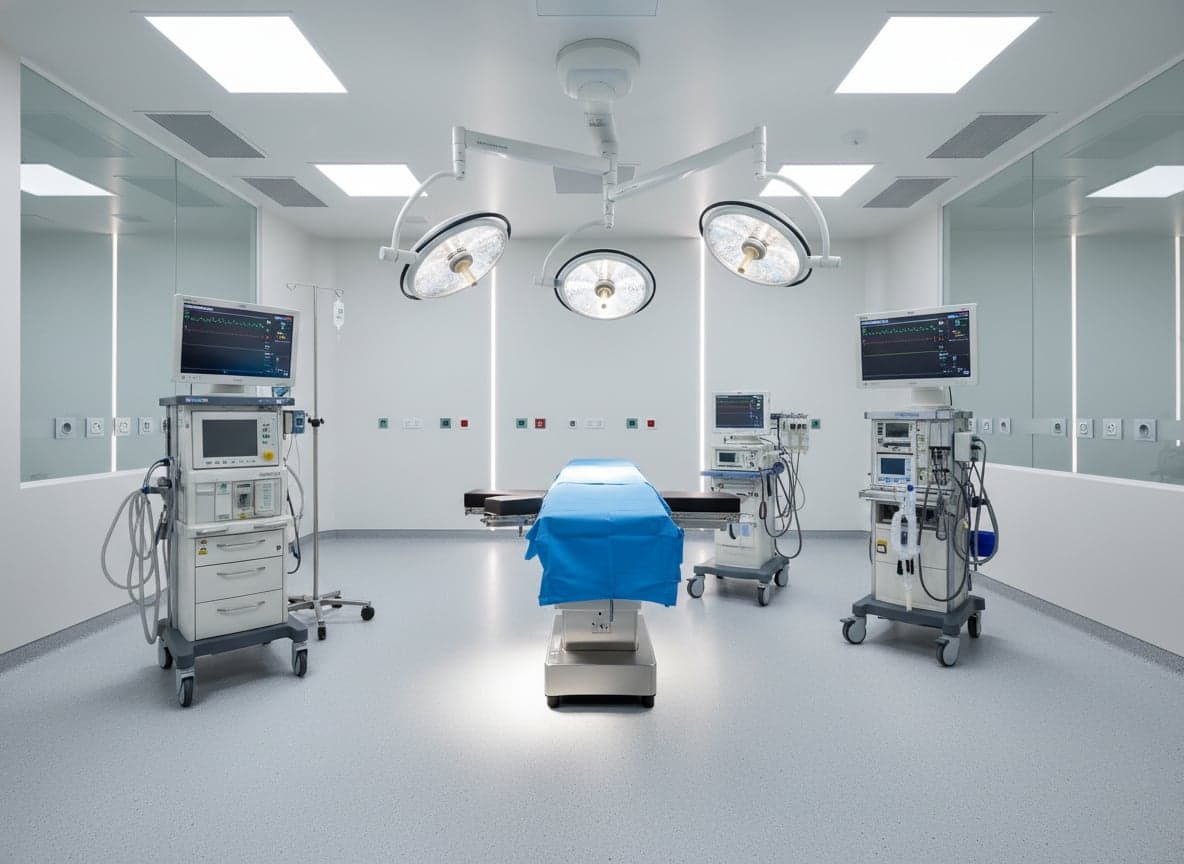
The choice between 4 and 6 implants for a full-arch rehabilitation is not trivial. Bone quality, AP spread, force distribution, trabecular density, systemic risk factors: mastering decision criteria allows long-term prognosis optimisation and complication rate reduction.
The "4 or 6 implants?" question is one of the most recurrent in prosthetic implantology. While the All-on-4 concept offers an elegant and well-validated protocol for the majority of cases, the use of 6 implants (All-on-6) or more offers indisputable biomechanical and clinical advantages in certain situations. The decision must be based on rigorous analysis of osseous, prosthetic and systemic parameters — not on purely economic or surgical convenience considerations.
1. AP Spread: The Fundamental Biomechanical Parameter
Anteroposterior spread (AP spread) is the distance between the most anterior prosthetic contact point with the implant support and the most posterior implant emergence point. This parameter directly determines the maximum length of distal cantilevers and the stress distribution across the entire prosthetic structure. The Shackleton clinical rule (validated by FEA — Finite Element Analysis) establishes that maximum distal cantilever length should not exceed 1.5 to 2.0 times the AP spread. In practice: with 4 implants, average AP spread is 18–22 mm in the maxilla and 14–18 mm in the mandible, allowing cantilevers of 27–33 mm corresponding to 1 to 2 molars. With 6 implants, AP spread increases to 22–28 mm, enabling reduction or elimination of cantilevers.
2. Comparative Table of Clinical Indications
| Criterion | All-on-4 (4 implants) | All-on-6 (6 implants) | Recommendation |
|---|---|---|---|
| Bone quality | D1–D3 (dense to medium bone) | D2–D4 (medium to cancellous bone) | All-on-6 if D4 or grafted bone |
| Anterior bone volume | Minimum 5 mm height / 6 mm width | Same + exploitable posterior zone | All-on-6 if sufficient volume available |
| Severe bruxism | Not recommended alone — overload risk | Preferred — better force distribution | Systematic All-on-6 |
| Maxillary arch | Possible with tilted implants | Preferred if bone available > sinus | All-on-6 if no enlarged sinus |
| Mandibular arch | Well-suited (dense symphyseal bone) | Useful if canal bilaterally high | All-on-4 generally sufficient |
| Smoker > 10 cig/day | ISQ target ≥ 70 required | Preferred — implant redundancy | All-on-6 recommended |
| Controlled diabetes (HbA1c < 7) | Acceptable with monitoring | Preferred for biological safety | All-on-6 recommended |
| Desired cantilever length | Max 2 distal molars | Can be reduced or eliminated | All-on-6 if < 2 molars desired |
3. Finite Element Analysis (FEA): Stress Distribution
FEA (Finite Element Analysis) studies from 2023–2024 allow precise quantification of the impact of implant number on stress distribution in peri-implant bone. A study published in the Journal of Dental Biomechanics (2024) compares three configurations — 4, 6 and 8 implants — under a 200 N occlusal load applied to the distal cantilever. Results: maximum von Mises stress in peri-implant cortical bone is 142 MPa in the 4-implant configuration, 89 MPa in the 6-implant configuration and 67 MPa with 8 implants. Since the fatigue stress threshold of human cortical bone is estimated at 80–100 MPa in the biomechanical literature, the 4-implant configuration sits at the upper acceptable limit — confirming the importance of rigorous occlusal control and cantilever limitation in this protocol.
4. All-on-6 Protocol: Technical Specificities
The All-on-6 protocol generally positions the 6 implants in a 2-2-2 distribution (2 central anterior axial implants + 2 para-canine axial or slightly tilted implants + 2 posterior implants tilted at 17–30°) or 3-3 distribution (3 per sector). The 6-point distribution frequently allows cantilever elimination by including a premolar or molar within the implant support surface. The recommended minimum inter-implant spacing is 3 mm (centre-to-centre: 4 mm diameter implant → 7 mm spacing) to preserve interproximal bone papillae and avoid inter-implant bone septum necrosis. Immediate loading follows the same criteria as All-on-4 (torque ≥ 35 N·cm, ISQ ≥ 65) but with superior biological redundancy: loss of one implant does not necessarily lead to failure of the full rehabilitation.
5. Comparative Survival Data
| Protocol | Implant survival (5 yr) | Implant survival (10 yr) | Prosthetic complications (5 yr) | Mean marginal bone loss |
|---|---|---|---|---|
| All-on-4 | 96.1% (CI 94.8–97.4) | 94.8% (CI 93.1–96.5) | 22.4% | 1.8 mm at 5 years |
| All-on-6 | 97.3% (CI 96.2–98.4) | 96.1% (CI 94.8–97.4) | 16.8% | 1.5 mm at 5 years |
| All-on-8 | 98.1% (CI 97.2–99.0) | 97.2% (CI 96.1–98.3) | 12.1% | 1.3 mm at 5 years |
6. Clinical Recommendation: The Decision Algorithm
In daily practice, the decision algorithm can be summarised as follows: All-on-4 is the reference choice in a patient with no systemic risk factors, D2–D3 bone quality, a mandibular arch or a maxilla without severe posterior resorption. All-on-6 is preferred whenever any of the following factors is present: severe bruxism, diabetes or smoking, D4 bone, maxillary arch with access to the posterior sector, desire to eliminate cantilevers for optimal aesthetics, or patient age < 60 years (anticipating long prosthesis service life). In all cases, the final decision belongs to the practitioner-patient pair, informed by digital biomechanical simulation and 3D pre-operative visualisation of the treatment plan.
Editorial note
This article is written for scientific and professional monitoring purposes. The studies cited are drawn from peer-reviewed publications. Infinity Aligner does not endorse the results of third-party studies and recommends that professionals consult the original publications for any clinical application.
Infinity Aligner — Scientific team
Technology watch & dental literature review
More analyses
Mar 2026
Photobiomodulation (LLLT) and Bone Healing in Implantology: Clinical Evidence, Dosimetry Protocols and 2024 Post-surgical Applications
Mar 2026
Osteodensification and Bone Condensation in Implantology: Versah Technique, Condensation Osteotomes and Bone Quality Improvement Protocols in D3–D4 Bone
Mar 2026
Peri-Implantitis: Diagnosis, Implant Surface Decontamination and Surgical Bone Regeneration — Evidence-Based Protocols 2024
Integrate innovation into your practice
Join the Infinity Aligner network and access the most advanced digital tools for your patients.
Become a partner